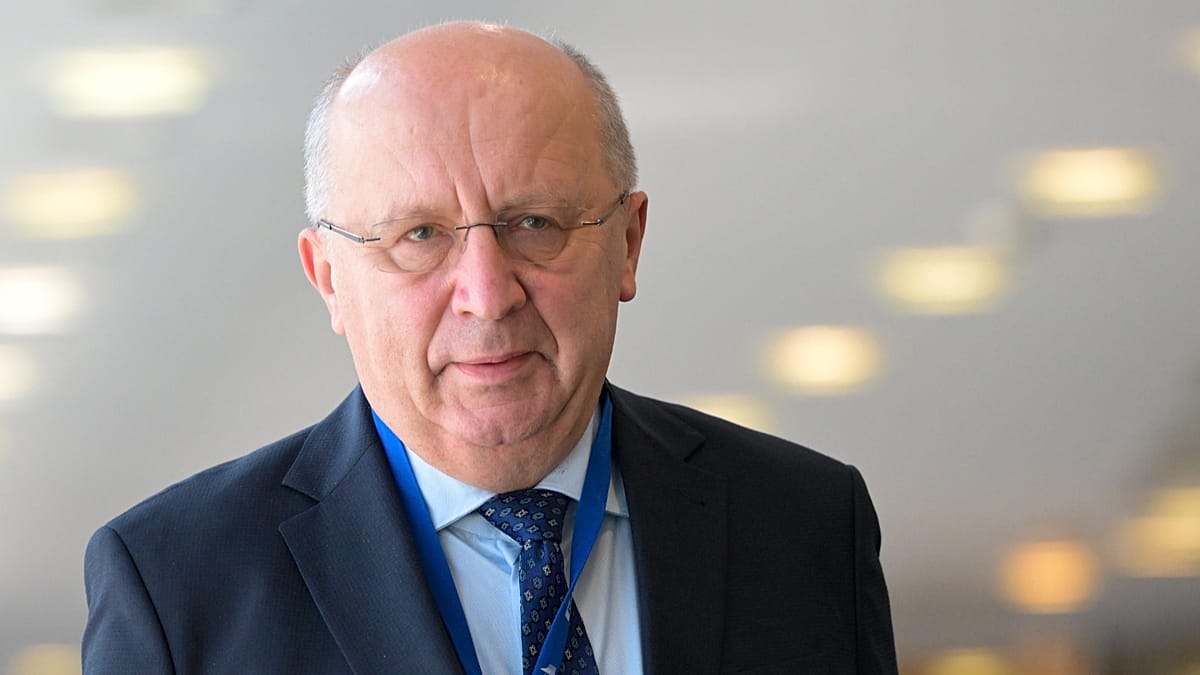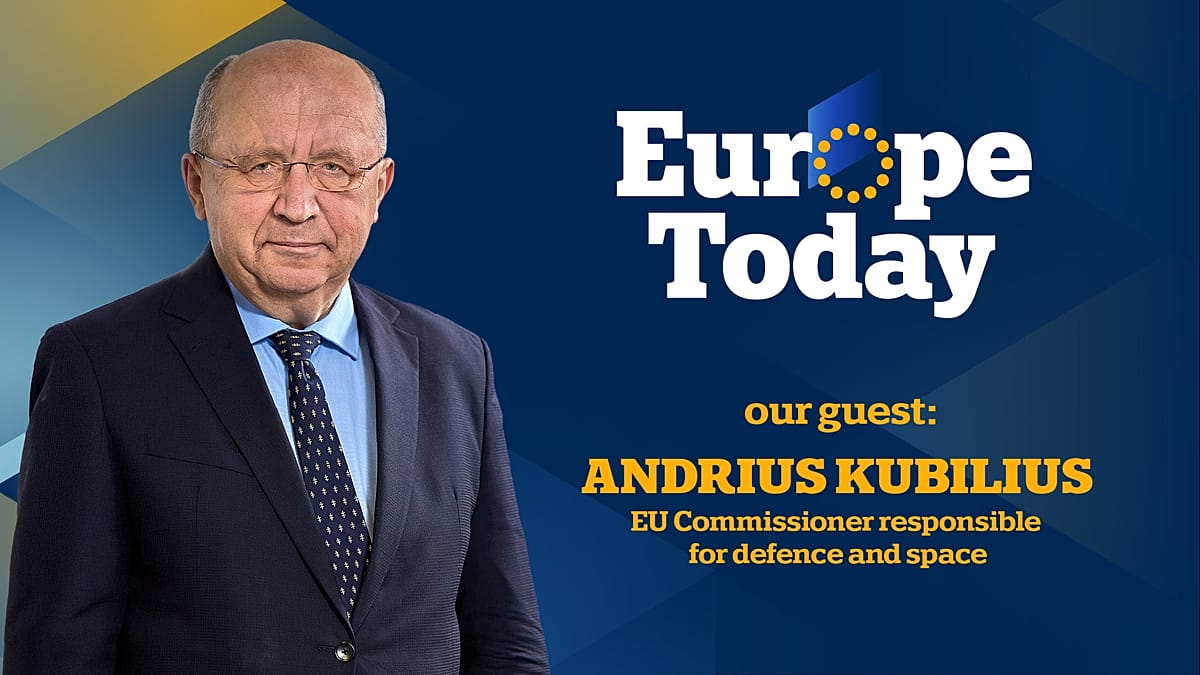



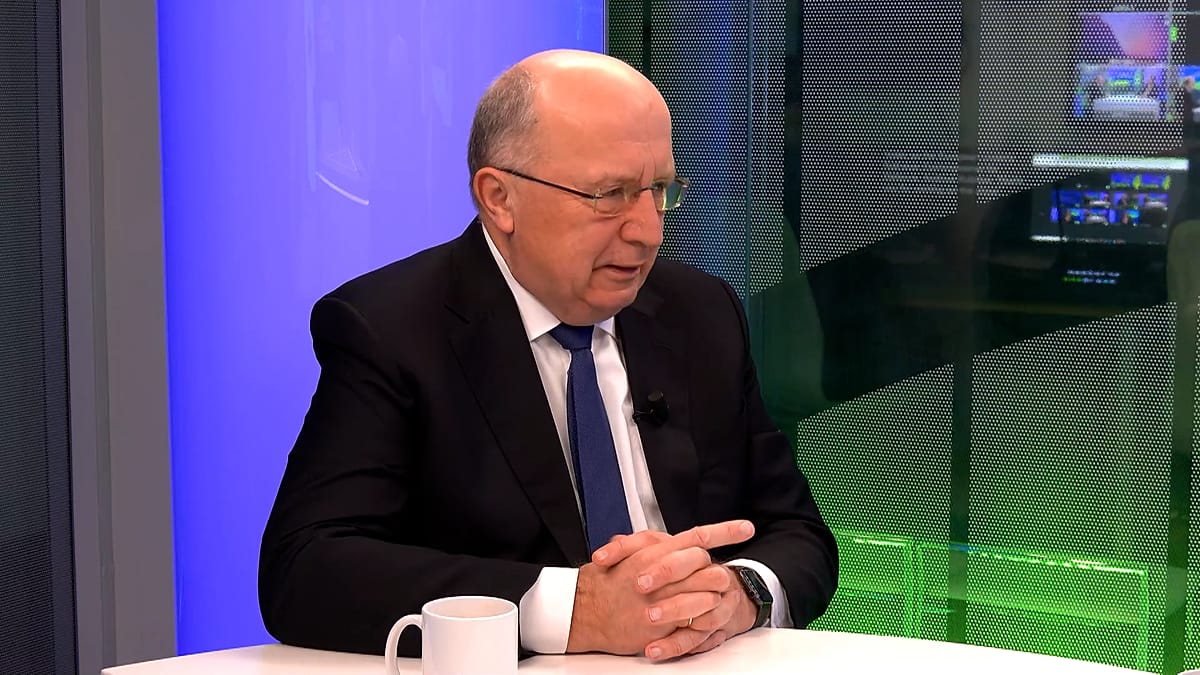
Russia’s suspected provocations, including drone incursions and the recent bombing of a Polish rail line, are changing warfare doctrines, European Commissioner for Defence Andrius Kubilius said on Euronews’ flagship programme The Europe Conversation.
“What we have seen from a technical point of view is that we do not have enough detection capabilities, we have no cost-effective means to destroy drones,” he said.
Here, he referred to the fact that drones with a value of around €10,000 are being shot down by €1 million missiles. “That’s not the best way to defend yourself,” Kubilius added.
“It shows that our way of how we are preparing, how we can change our understanding of modern warfare doctrines, is again not at the required level.”
To boost European production of weapon systems and improve defence readiness, the Commission is bidding on its new Defence Industry Transformation roadmap. This includes a plan to upskill people to meet the bloc’s rearmament needs and a so-called Talent Platform to support traineeships in defence companies.
“We need to move ahead. That’s the major message that we need to understand,” Kubilius said.
He said this much-needed, clearer strategy should be two-fold. “We need to develop those technological capabilities to detect and destroy the drones, but on the other hand, we need to be really much clearer on our political reactions,” Kubilius explained.
“Because if we do not find ways of stopping them, we can just predict that the Russians will increase those provocations. You know, they will be happening much more often.”
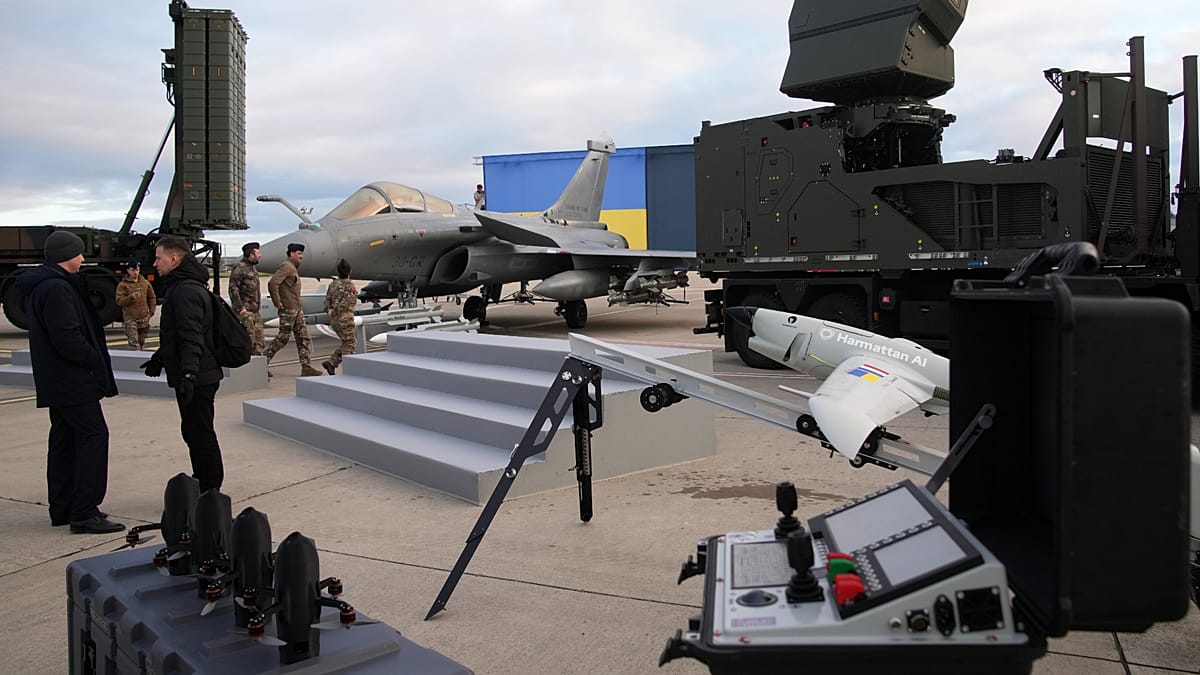
The marked escalation of Russian hybrid warfare directed against EU and NATO member states prompted talks of concrete initiatives such as building a drone wall — now called the drone defence initiative — and “Eastern Flank Watch” on the EU’s eastern borders.
“Discussions are ongoing. Finland is calling a summit of Eastern Flank countries, from the Baltic Sea to the Black Sea, where some of those ideas will be discussed. The programme of Eastern Flank Watch also includes a strong element related to drone defence.”
Learning from Ukraine
Kubilius noted that the bloc as a whole can learn a lot from Ukraine and Eastern flank countries when it comes to responding to Russian provocations.
“Really, we can say that Ukrainians built a drone wall, because they are really very effective in defending themselves against the hundreds of drones flying into their country each night,” he said.
As part of this learning process, Kubilius said, the EU should streamline its procurement process to ensure that weapons get into the hands of those who need them as quickly as possible.
Ukraine manages to do so through its “drone ecosystem”, which sees operators work together with producers, and information from the frontline regarding what technology works or doesn’t is computerised.
“They inform them whether the drone, which is used at the moment, will become obsolete in two months because Russians learn how to jam or destroy those drones. We need to work together with Ukrainians to get that knowledge and that experience.”
Kublius is a long-time Russia hawk. In 2000, as the prime minister of Lithuania, he supported a law seeking compensation from Russia for damages incurred during the Soviet occupation.
Asked whether Russia would ever change, Kubilius said, “I still hope that we shall see, at some time, many years in the future, a more normal Russia.
“Today, definitely, Russia under Putin is a bigger threat to European security, and we see the terrible war in Ukraine, and we were able to predict this almost ten years ago, where Russia is moving.”