


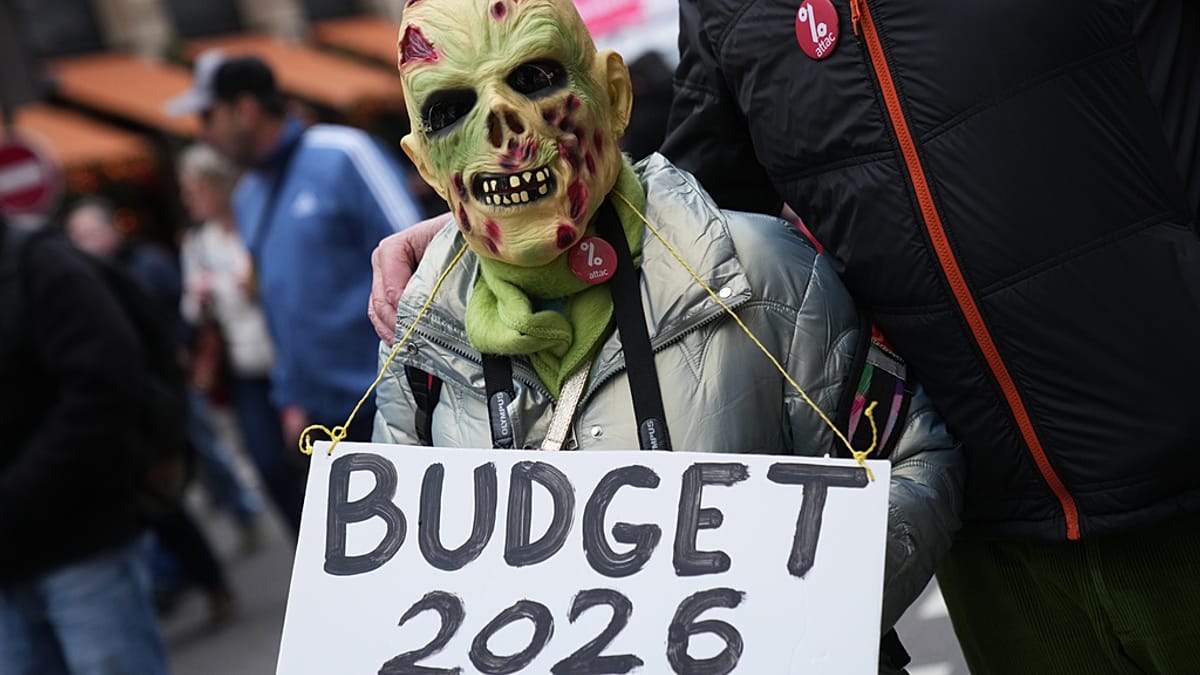
Three major French unions launched a nationwide day of strikes and demonstrations on Tuesday to protest government austerity policies, wage stagnation and looming cuts to public services.
But despite weeks of preparation, mobilisation remained weak with turnout being far less than the large rallies seen earlier this autumn.
The CGT, FSU and Solidaires called for the action as the National Assembly debates the 2026 Social Security budget, which union leaders describe as carrying “numerous and serious regressions” for workers, pensioners and the public sector.
What is driving the anger?
At the heart of Tuesday’s mobilisation are demands for wage increases, stronger social and fiscal justice and greater investment in public services, particularly hospitals and care homes, which unions say are already overstretched.
In a statement published on 18 November, the CGT accused the government of “running down the clock” while “the right and far right do everything possible to strip the budget of any measure that might inconvenience the ultra-rich or big business.”
Axel, a CGT trade union representative who works at the Goethe Institut in Paris, told Euronews he joined the protest because he sees the burden “falling disproportionately on working people.”
“There is money amongst the rich, so why is the government coming after us? Honestly, I pay a lot of taxes. And it’s not easy. But for others, it’s very easy. And it isn’t fair. That’s why I’m out protesting,” he said.
Limited impact on transport and schools
The strike caused minimal disruption nationwide. Rail traffic was “almost normal”, according to rail operator SNCF, with delays largely limited to the central Centre-Val de Loire and southern Occitanie regions.
Schools were also largely unaffected – the Education Ministry reported a 5.27% teacher strike rate.
Meanwhile, participation in the wider civil service reached 3.43% in state administration and 1.84% in local government.
A smaller crowd in Paris
In Paris, a march of a few thousand people set off around 2 pm, but by 3:30 pm most participants had already dispersed, according to Euronews’ correspondent on the ground.
Another protest was announced at 4 pm, but by 4:45 pm only a dozen people were present.
The CGT union estimated there were 17,000 demonstrators in the capital, a sharp drop compared to previous rallies.
Nationwide, the Interior Ministry estimated 31,900 protesters took part in Tuesday’s strike.
The figures fall well below earlier mobilisations. On 18 September, 55,000 protesters were in Paris and 24,000 on 2 October, when larger inter-union coalitions joined the call for action, according to French authorities.