


NEWYou can now listen to Fox News articles!
Democrats waltzed into Tennessee and tried to swipe the seat held by Former Rep. Mark Green, R-Tenn., this week.
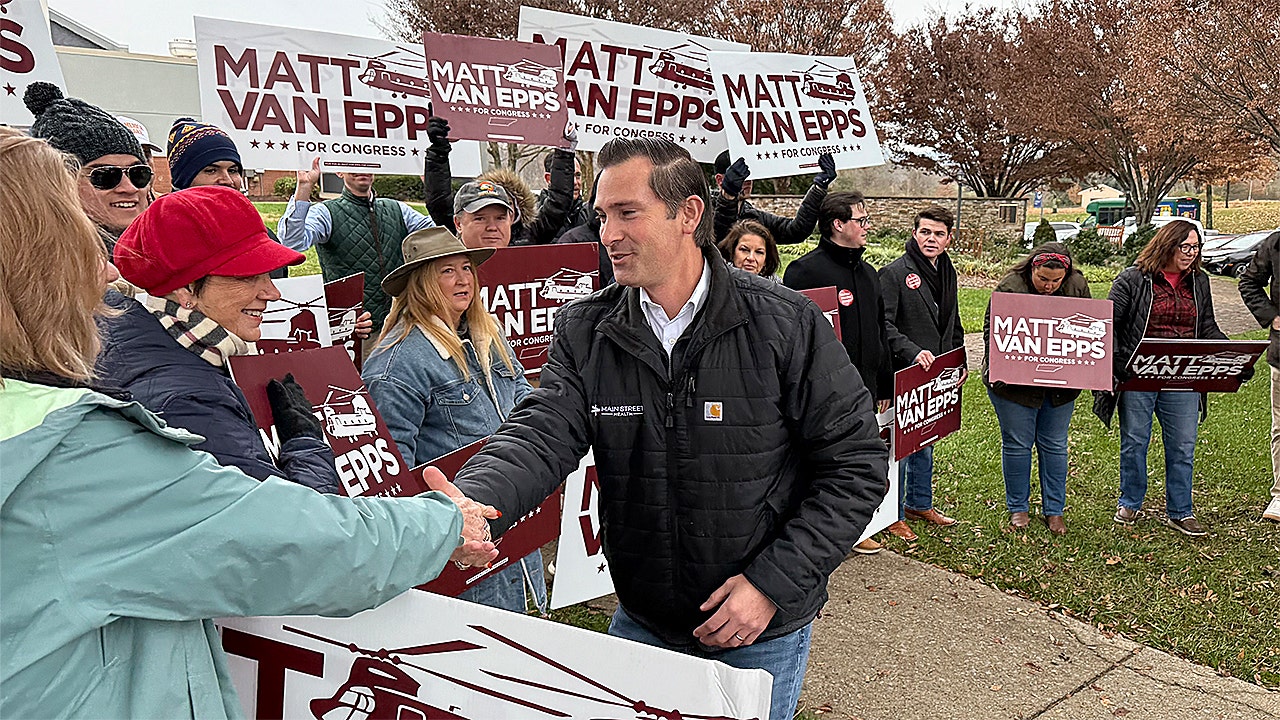
Winning special elections for House seats is a delicate dance. But Rep.-elect Matt Van Epps, R-Tenn., defeated Democrat Aftyn Behn by nine points.
House Speaker Mike Johnson, R-La., noted that the Cook Political Report rates that district to favor the GOP by about 10 points.
TRUMP-BACKED REPUBLICAN TOUTS ‘GREAT TURNOUT FOR US’ IN MUST-WIN SPECIAL ELECTION FOR GOP
“It’s not an R-plus-25. The President won it by 22 points. It’s actually rated to be a slightly Republican district. So, winning it by nine points is almost exactly on the nose of what we might expect,” said Johnson.
In other words, Republicans won the special election by the precise margin expected. That’s even though Republicans fretted that a Democratic surge could serve as a weather vane as to how popular the party is, if there are dents in the Trump coalition and what the path looks like in the 2026 midterms.
“Democrats put millions of dollars in. They were really trying to set the scenario that there’s some sort of wave going on. There’s not. We just proved that there’s not,” said Johnson.
Maybe. Maybe not. Special elections are special. A snapshot of where a given district stands at a point in time — often without the benefit of the regular electorate, which shows up in November every two years. That’s why House special elections are sometimes closer than what can be expected in the general. And the party out of power often dumps truckloads of cash into these contests to win.
If nothing else, it forces the other party to burn lots of money too. But trying to make a race seem important gins up the base and concocts an illusion that things aren’t going well for the other side. Maybe people believe that voters are fed up and are demanding a change.
A special election is kind of like checking the score of a football game partway through the second quarter. Maybe one team’s passing game is really clicking. That may dictate the outcome. But we haven’t yet seen the two fumbles in the second half. That’s to say nothing of the botched snap on the field goal and blocked punt.
A lot can happen.
MUSIC CITY MIRACLE: A LOOK AT AN UNUSUALLY CONTENTIOUS ELECTION IN THE VOLUNTEER STATE
Frankly, flipping seats in House special elections is arduous. The party out of power in the House or opposite of who occupies the White House often makes a race of it. That can signal a weakness in the party in power or even the president as you approach the next election. One of the best examples of this came in 2017. House Democrats came close to flipping four special elections in solid Republican seats ranging from Montana to Kansas to South Carolina to Georgia.
But Democrats didn’t capture any of those seats.
However, Democrats did make a few of them closer than you might think.
In fact, one of the best examples involved Rep. Ron Estes, R-Kan.
President Donald Trump tapped former Rep. Mike Pompeo, R-Kan., to serve as CIA director and, later, secretary of state. Estes ran to succeed Pompeo. Pompeo won his district with 61% of the vote in 2016. Estes held off a challenge from Democrat James Thompson, vanquishing his opponent by six points and scoring 52% of the vote.
Despite the defeat, Democrats and political observers noted the relative strength of Thompson in the special election. Many wondered if this was an omen about a 2018 Democratic wave.

But the Kansas district is a Republican stronghold. Democrats gained control of the House in the 2018 midterms. However, Estes won re-election the next year by nearly 19 points.
And despite the clamor surrounding special elections, there have truly only been four major “flips” in House special elections in the past 18 years. And one of those in a Hawaii special election was an anomaly where the Republican won in a three-way contest while two Democrats siphoned votes from one another.
But back to Tennessee.
Could Democrats have scored more success with a moderate candidate? Behn was progressive. A centrist may have had a better shot at winning a district like this, especially when one considers the success of Virginia Gov.-elect Abigail Spanberger, D-Va., last month.
DEMOCRATS’ SURGE IN TENNESSEE THROWS NEW UNCERTAINTY ONTO GOP’S 2026 HOUSE MAP
Could a Van Epps win encourage other Republicans to quit? The House majority will be 220-214 once Johnson swears him in on Thursday. But some in the GOP are itching to leave. They may think there’s enough of a cushion, even though Rep. Marjorie Taylor Greene, R-Ga., departs in January.
Fox is told there are several House Republicans who want to head for the exits. Some are upset at the White House controlling the entire agenda and Johnson keeping the House at bay for weeks during the government shutdown. Another factor: President Trump’s approach to the war in Ukraine.
Moderate Republicans may look at the Tennessee result and insist on the party addressing healthcare in the coming weeks. That’s a looming factor considering that Democrats withheld their votes to fund the government over healthcare this fall. It’s also possible that moderate Republicans in California and New York might see the relative Democratic strength in this contest as a signpost that they face a tough re-election next year. As we said, Democrats flipped the House seven years ago after coming close in several special elections.

Then there is redistricting and gerrymandering. The Van Epps win underscores the concept that drawing favorable lines for your party works.
But this redistricting took place several years ago. Tennessee Republicans drew former Rep. Jim Cooper, D-Tenn., a Blue Dog, and any other Democrat out of a Nashville-area district. The GOP trifurcated Nashville and the suburbs, diluting the Democratic vote among several GOP districts. That served as a safety valve to assure a GOP win Tuesday. It also explains the risks of the current wave of redistricting by both parties. Plus, it underscores how redrawing the lines can make some contests closer than they should be.
Both sides are now dancing around with interpretations of what unfolded Tuesday. Republicans say this is why they will hold the House next year. Democrats say they won – even though they lost. And that’s why they will capture the House in the midterms.
Call it the Tennessee “waltz.”
But special elections loom in Texas, New Jersey and Georgia.
CLICK HERE TO DOWNLOAD THE FOX NEWS APP
It’s doubtful that those seats are in play.
So don’t expect the Texas Two-Step, the Garden State Stomp or The Night The Lights Went Out In Georgia.