

It’s not a beating, it’s a pounding.
That’s how one European diplomat described a week-long political hammering from the Trump administration directed straight at the European Union.
First, a US government National Security Strategy warned that the bloc needs to either reverse course on a range of issues or risk “civilisational erasure”, igniting a week of tensions.
From Europe’s international standing to entirely sovereign, domestic matters like migration and regulation, the Trump establishment has gone after the EU more sharply than ever. The question for Europeans now is whether the US remains a true ally.
The campaign went global when Elon Musk, the world’s richest man and owner of the social media platform X, formerly known as Twitter, lashed out at European officials over a fine issued for breaching digital rules, suggesting the EU should be abolished. Calling its leaders “commissars”, Musk declared on X that the bloc is no longer a democracy.
In comments to reporters on Monday, President Donald Trump echoed those remarks, saying the fine by the Commission “was nasty” and that Europe “is going in a bad direction”.
A European diplomat told Euronews that the comments emanating from the US looked more like meddling in domestic politics than a matter of national security.
A second diplomat argued the fine of €120 million against Musk, much lower than the average of penalties imposed against Big Tech for breaching similar rules, is being exploited for political purposes. As a comparison, the Commission fined Google €2.95 billion for breaching EU antitrust rules earlier this year.
The issue, the diplomat said, is not the fine, but the principle behind it.
The EU is walking a fine line. On the one hand is the need to keep the US engaged at a delicate time for the bloc and with the future of Ukraine at stake; on the other is the EU’s sovereign right to set its own rules and execute its own policies.
Making Europe Great Again
Ultimately, the two sides have increasingly divergent views of the world.
While the EU looks at itself as the champion of multilateralism, rules-based trade and international law, Trump has always pushed for “America First”.
The president has taken that agenda a step further in his second term, looking to reshape global relations via tariffs, bilateral rather than multilateral relationships, and a return to great power politics.
The US argues that while Europe remains strategically important to the interests of Washington and a natural ally, the US can only remain on good terms with it if the EU machine changes, stripping back the supranational regulations and returning to its core identity. As the administration likes to repeat: “Europe should stay Europe.”
To change the course that the continent is on, the US declared in its National Security Strategy that it would cultivate relations with Europe’s “patriotic parties”. It did not elaborate which parties those would be, but it’s largely understood that the strategy refers to conservative parties who oppose what they call “unelected officials” in Brussels.
For Trump, the Hungarian Prime Minister Viktor Orbán is a natural ally. So is Italy’s Giorgia Meloni, who argues the unity of the West must be preserved. But there are nuanced differences between the two leaders: where Orbán’s persona is built on directly resisting Brussels, Meloni has followed a dual track approach, working closely with the EU institutions while maintaining her conversative profile at home and abroad.
European ‘domestic matters stay in the EU’
But making Europe great again comes with strings attached for Europeans, and that is not lost on the continent’s leaders.
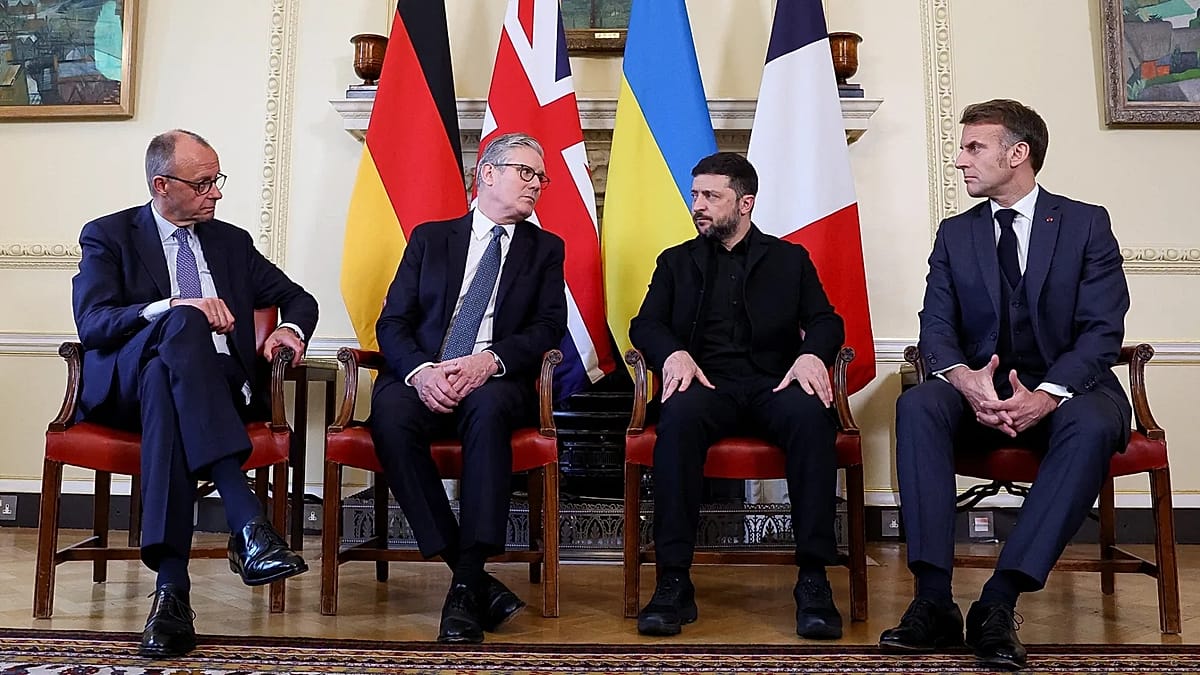
European Council President António Costa, who leads the group of 27 leaders, rebuffed the National Security Strategy in the strongest terms of any sitting EU official to date, saying that allies do not interfere in each other’s internal democratic processes.
German Chancellor Friedrich Merz added to that sentiment, saying democracy in Europe does not need saving and that internal matters should be handled by Europeans. He also said some of the points raised by the US in the document are “unacceptable”.
Kaja Kallas, who heads the EU’s external action service and served as prime minister of Estonia, told Euronews over weekend that domestic matters are handled by Europeans, while “threats from Russia to Iran require cooperation between the two.”
Her predecessor, Josep Borrell, known for his blunt language, went a step further suggesting that the US is calling for the breakup of the EU as a union; dividing up countries into single entities and promoting ideologically aligned parties.
By keeping Europe “Europe”, he said, the administration wants to see a “white Europe divided into nations” subordinated to the US’s external needs. In comments on social media posted Tuesday, Borrell said European leaders must now respond by asserting Europe’s sovereignty and “stop pretending President Trump is not our adversary.”
Competing interests, different approaches
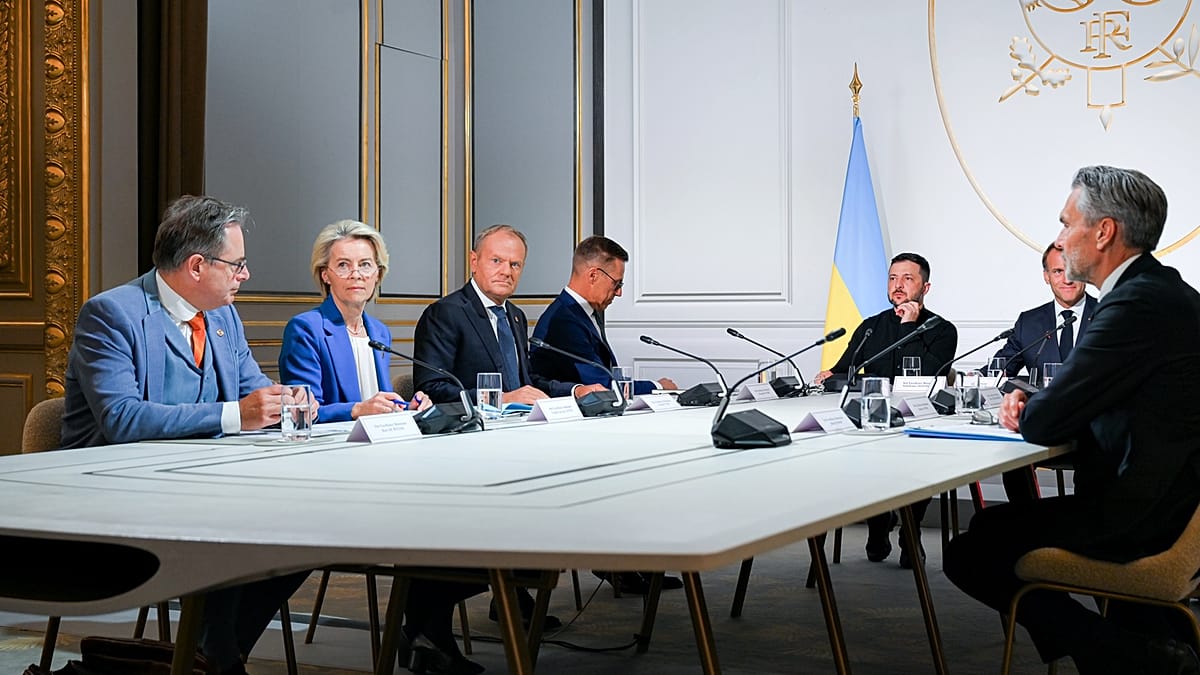
But adding to the complications of the US’s approach is the cacophony emerging out of the bloc. While most are irritated by the Trump administration’s tone, there is no sign of a unified response yet. The President of the European Commission, Ursula von der Leyen, has not addressed the US national security document nor the Musk fine.
In fact, for the most part, the Commission has opted to de-escalate tensions in order to stabilise the relationship with Washington at a complex time for international relations.
That thinking, coupled with concerns about the economic impact a diplomatic escalation could have, led both the Commission and the member states to accept an unbalanced trade deal over the summer which saw US tariffs on EU exports tripled to 15% while duties were cut on most US industrial goods.
Critics called it a humiliation, while international bodies like the International Monetary Fund commended the EU for making a responsible choice.
At the time, Commission officials argued that with Ukraine weighing heavily on everyone’s minds, the deal was simply a price to pay to keep Washington engaged. That, however, has not translated into a larger seat at the table for Europe in Trump’s negotiations with Moscow and Kyiv. The US has also implied multiple times that Europe has “unrealistic” expectations about the war.
Meanwhile, the European hard right is resisting attacking the administration publicly on the basis that they share ideological similarities. They too want to see a harder line on migration and hailed the return of Trump as the end of woke, even if the definition varies.
For the EU, the answer may lie in taking greater responsibility and becoming more independent in critical areas.
Speaking to Euronews, Defense Commissioner Andrius Kubilius said Europe needs to walk its own path, rather than simply reacting to events.
“We need to be more independent both in our defense capabilities but also in our geopolitical standing,” he added.
“We need perhaps to overcome our sort of mental (hesitations) that usually mean we await that these plans will come from Washington.”
For Europe, that is uncharted territory.