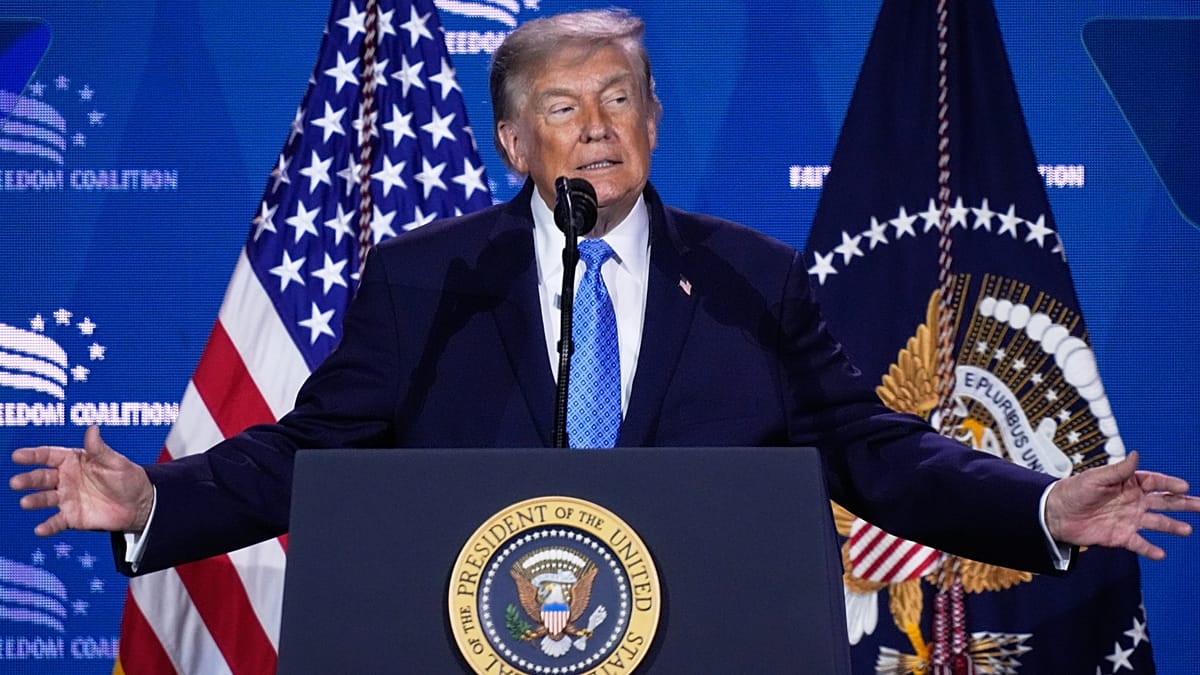

Faced with tight deadlines, strict demands, and repeated tariff threats from US President Donald Trump, EU negotiators from the European Parliament and the Council are entering crucial EU–US trade talks with slim prospects of a breakthrough.
ADVERTISEMENT

ADVERTISEMENT
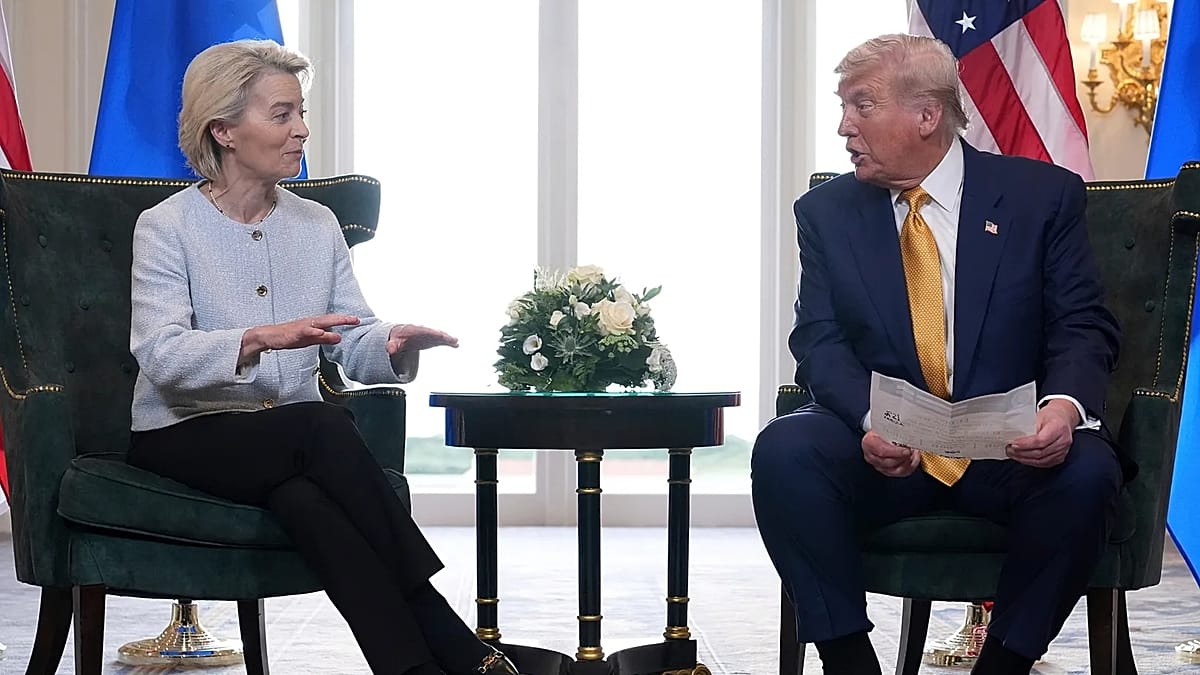
On Wednesday evening, German MEP Bernd Lange (S&D), chair of the European Parliament’s influential trade committee, and the Cypriot EU presidency, representing member states, will attempt to finalise a deal agreed last summer in Turnberry between US President Donald Trump and European Commission President Ursula von der Leyen.
Negotiators are under pressure following Trump’s recent threats to raise tariffs on EU-made cars from 15% to 25%, a move that has further increased the urgency of implementing the agreement.
At the same time, they are constrained by sharply divided views both between institutions and within parliamentary groups over whether the deal should be pushed through at all costs to avoid ongoing uncertainty, or whether negotiations should continue in pursuit of a more balanced agreement.
“We want to get this deal through as soon as possible without any conditionality,” Željana Zovko, the EPP’s lead negotiator, told Euronews.
EPP push for implementation
Zovko’s political party, the conservative European People’s Party has been advocating for the deal to be implemented, regardless of the conditions MEPs had attached to it.
In March, lawmakers negotiated until the last minute a compromise including a clause allowing the EU to suspend the agreement if the US imposes tariffs above the 15% ceiling or threatens the territorial integrity of EU member states — as Trump did over Greenland.
They also want US tariffs on steel and aluminium, still set at 50%, reduced to the 15% cap included in the Turnberry deal.
The EPP had pushed for a “sunrise clause,” making EU tariff cuts conditional on US implementation of the Turnberry deal, including respect for the 15% tariff cap.
But the party has added pressure on Lange after the US threatened last Friday to impose 25% tariffs on EU cars, and it is now prepared to drop the demand.
“We gave this forward as a way out during negotiation with other political groups to vote on a mandate in March,” Zovko said. “But we have businesses crying for help and for certainty. Lange has to take responsibility.”
EPP leader Manfred Weber is also pushing to accelerate the process, according to parliamentary sources.
“If the trilogue does not produce a result, we will simply put [the agreement] to a vote,” he told reporters Tuesday during a press conference.
But other EU lawmakers insist that conditions must be respected to protect the agreement from shifts in the US administration and repeated tariff threats from Trump.
Lange is expected to retain as many of Parliament’s demands as possible, which form the central logic of the negotiations.
“I don’t see how the Parliament can come back to plenary empty-handed given how strong its demands are,” an EU diplomat told Euronews.
Too ambitious for a breakthrough?
Members of the Socialists & Democrats group say they are sceptical that negotiators will emerge from this evening with a deal.
“Do we want everything we have put on the table? Of course not,” an S&D source said, while arguing however that the EU must nevertheless “protect” businesses from Trump’s erratic social media posts and the US’s use of tariffs as leverage.
“Trump’s threats compel the Parliament to insist for solid guarantees on this agreement,” Socialist MEP Brando Benifei told Euronews. “Considering the US aggressive stance, only a balanced deal would provide stability to European businesses and citizens.”
Similar divisions have also emerged among diplomats, many of whom are sceptical that a breakthrough will be reached.
“We are ready to move toward Parliament’s position, but it is going too far for what we can accept,” another EU diplomat told Euronews.
Germany, whose carmakers were directly targeted by Trump’s latest tariff threat last week, is pushing for the agreement to be adopted quickly, though not at any price. France, meanwhile, has supported Parliament’s safeguards.
“There is definitely common ground to suspend the deal if the US doesn’t deliver,” a third EU diplomat told Euronews. “But it’s also in our interest not to feed Trump’s narrative that the EU does not deliver.”
Continue negotiations
An EPP official told Euronews negotiations need to move “fast” or pressure would continue to “pile-up.” The official added political groups at the Parliament expected at least an agreement in principle from this evening’s talks.
But Anna Cavazzini of the Greens/EFA group warned that “the EPP is playing a dangerous game,” accusing conservatives of trying to force Parliament to soften its position under pressure from the car industry.
“Undermining the mandate painstakingly negotiated between our groups risks blowing up the deal. Instead we should continue negotiations as foreseen,” she said.
The second EU diplomat said that tonight’s negotiations would aim at both sides “laying out” their political positions, while “the harder and more technical discussions” would come in a later round.