
International tourist arrivals in Organisation for Economic Co-operation and Development (OECD) countries rocketed by an estimated 3.4% in 2025 to reach a record 847 million.
ADVERTISEMENT

ADVERTISEMENT
However, as geopolitical tensions, shifting traveller behaviour and extreme weather-related events continue to shape the tourism landscape, destinations will need to strengthen their ability to anticipate and adapt to uncertainty, according to a new report.
Here’s how visitors might see destinations changing their approach to tourism in the future.
Which countries saw record tourist arrivals in 2025?
The recently released report, OECD Tourism Trends and Policies 2026, found that one-third of OECD countries expect tourism performance to exceed 2025 levels by the end of this year, with many breaking new records. But the picture varies significantly across OECD countries.
Four countries recorded double-digit growth in 2025 to reach record levels of inbound arrivals, led by Finland (up 16.5%), Japan (up 15.8%), Korea (up 15.7%) and Norway (up 12.5%). This builds on a strong recovery in 2024 in Korea and Japan (up 48.4% and 47.1% respectively), aided by expanded connectivity and a weak yen.
Meanwhile, international tourist arrivals fell in four countries in 2025 and have yet to recover to pre-pandemic levels: Canada (down 0.6%); Germany (down 0.8%); Ireland (down 2.8%); and the United States (down 5.5%).
Inbound tourism in Israel has also been significantly impacted by conflicts in the Middle East, and arrivals remain significantly below pre-pandemic levels (down 70.8%).
Travellers react to crises with changing habits
The report shows that the conflict in the Middle East has disrupted global travel flows and increased costs, which is weighing on traveller confidence.
Countries in the region are most impacted, along with destinations reliant on the Gulf for air connectivity. These effects are likely to persist in the near term.
“This means applying the lessons of the pandemic and the conflict in the Middle East to strengthen crisis preparedness, and managing tourism and visitor flows to ensure the sector delivers lasting benefits,” OECD Secretary-General Mathias Cormann said.
Concerns about safety, affordability and cancellations may influence travel decisions, leading travellers to favour more familiar and affordable destinations, shorter stays and lower-cost options, the report added.
As airlines, tour operators and other tourism providers adjust their programmes for 2027 and beyond, destinations will need to anticipate changing travel patterns and adapt their strategies to evolving geopolitical, economic and weather-related risks.
Destinations prone to extreme weather
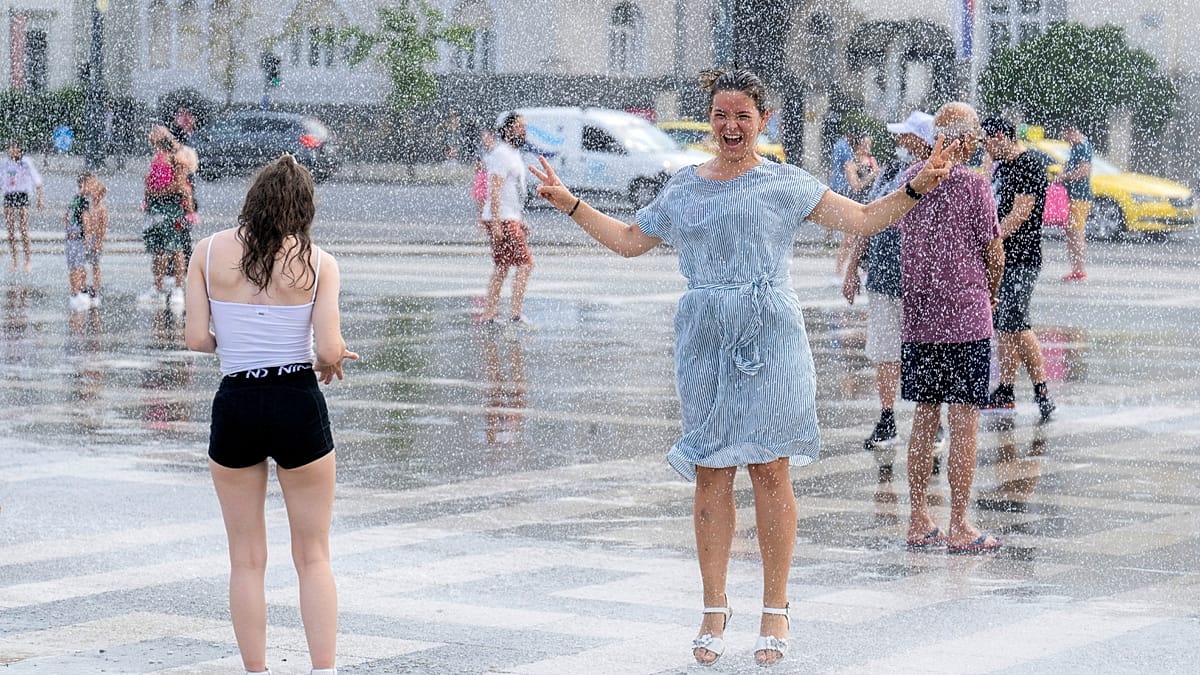
Extreme weather like heatwaves, wildfires and cyclones has become a key factor to consider when choosing a holiday location or the period in which to travel.
The report emphasises that destinations need to start adapting to this by embedding risk assessment, early warning systems and crisis response into tourism planning to better anticipate and respond to more frequent and intense extreme weather-related events.
For example, destinations have launched multilingual emergency alert apps (Japan’s ‘Safety Tips’, Austria’s ‘AT-Alert’, Croatia’s 112 app, and the pan-European MeteoAlarm system) that now push real-time warnings on storms, wildfires and extreme heat directly to visitors’ phones.
The report also urges investment in resilient tourism infrastructure to withstand extreme weather, including nature-based solutions.
Some cities are building ‘heat refuges’ into the visitor experience – Madrid’s Refúgiate en la cultura (Take refuge in culture) initiative promotes museums as air-conditioned shelters during heatwaves.
Making tourism more responsible
The report also highlights the need for destinations to ensure their tourism practices are benefiting local communities.
It urges the management of tourism growth to balance benefits and pressures by spreading visitor flows to prepared areas, investing in shared infrastructure and integrating tourism into wider regional development.
This could likely translate into more destinations promoting local-business certification schemes, community-based tourism and incentives to spend beyond big chains.
In addition, more destinations might introduce tourist taxes, visitor caps, timed-entry systems, or the promotion of ‘second cities’ and off-season travel to distribute crowds.
