
NEWYou can now listen to Fox News articles!
OTTAWA: Residents of Alberta began voting Monday in a non-binding referendum that will determine whether the western-Canadian province should pursue separation from Canada.
The vote comes at a time when the province is mourning the deaths of four soldiers, while dozens of others were injured from a fast-moving fire that burned through a military base in Alberta.
While the results of a poll involving 1,021 respondents released by Abacus Data on Saturday showed that 74% of decided voters favor Alberta remaining within the Canadian Confederation, the independence issue won’t disappear for the nearly 30% (26%) who want Alberta’s government to begin the process to hold a binding provincial referendum on whether Alberta should separate from Canada, according to veteran separatist organizer Cory Morgan, who leads a group called Pathway to Independence.
“It will say that about one in three Albertans have had it,” Morgan told Fox News Digital. “There is a big rift within Alberta and if things don’t change, it will be a growing faction in this province – so this vote is an important one.”
EXCLUSIVE: ‘BROKEN COUNTRY’ FILMMAKER WARNS CANADA’S SLOW DECLINE OFFERS CAUTIONARY TALE FOR AMERICANS
About three million Albertans are eligible to vote in the referendum.
Another recent Abacus poll found that 61% of the 1,021 eligible voters surveyed expect Albertans will vote again on separation, even if most will choose to remain in Canada.
On Friday, the Angus Reid Institute released the results of its poll that found 62% of 1,010 Albertans surveyed believe “there will never be an end to the separatist movement” in the province.
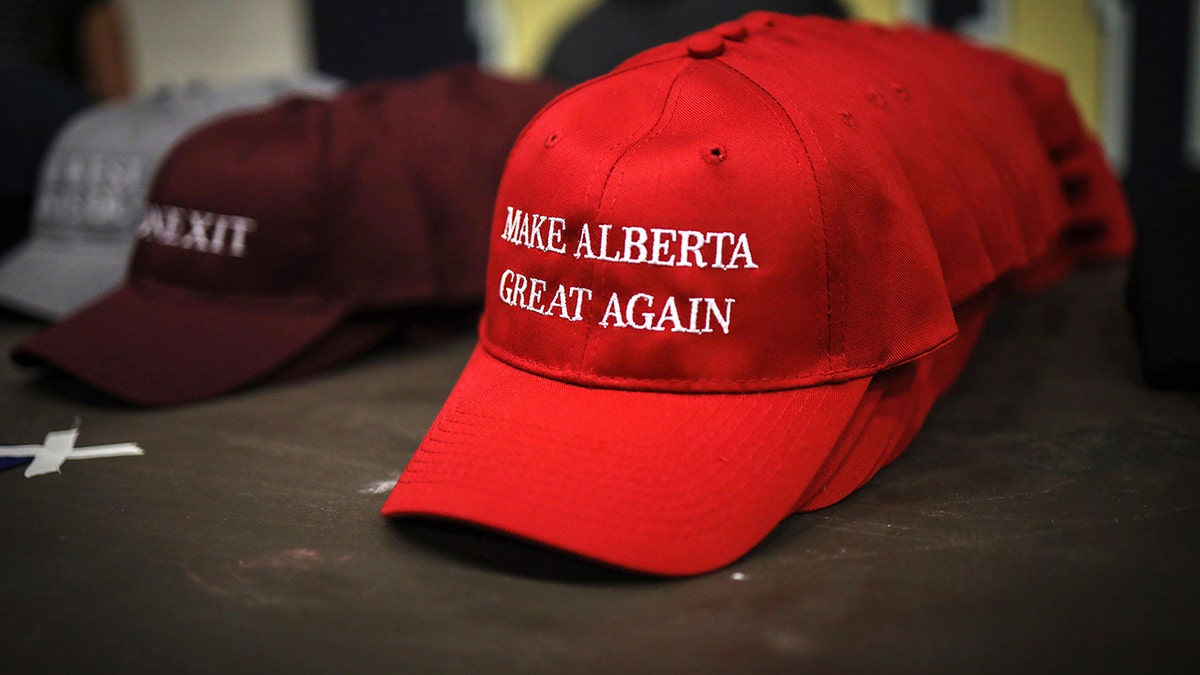
Morgan, who led the short-lived Alberta Independence Party from 2000 to 2001, said that while “a vocal minority” within the separatist movement favor Alberta becoming the 51st state, most pro-independence Albertans “don’t want to become a small fish in an even bigger pond.” He added that “Albertans in general are not too thrilled with President Trump right now and that makes them less inclined to leave the federation.”
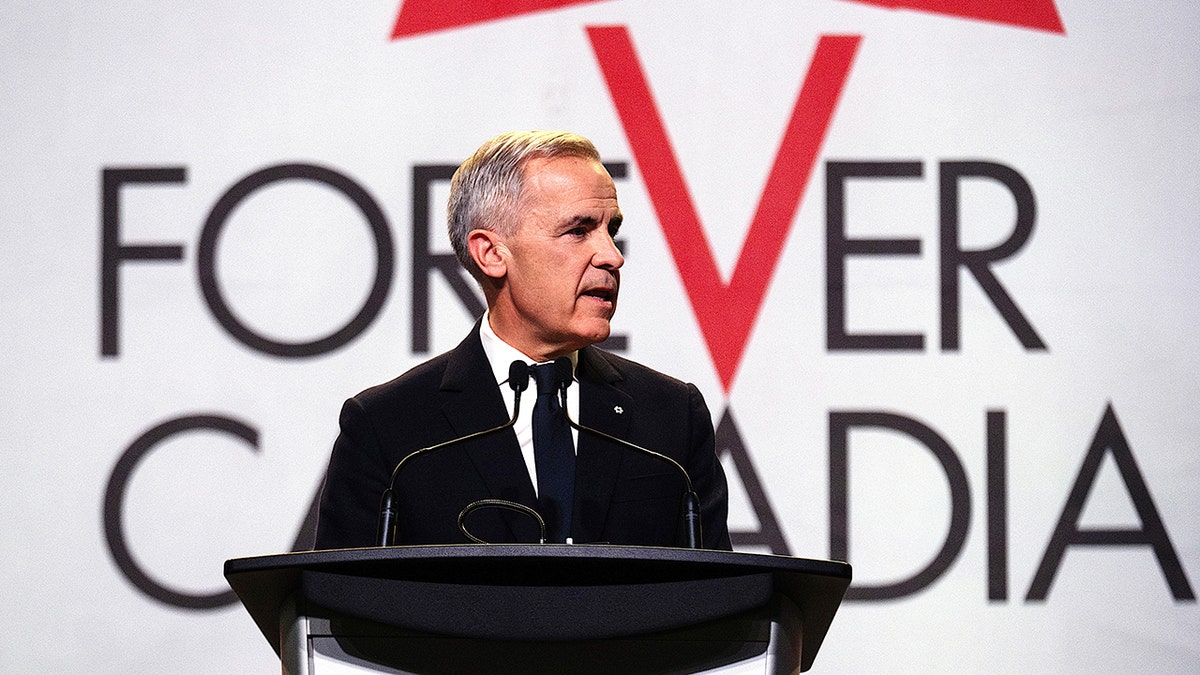
At a “Forever Canadian” rally on Friday in Edmonton, where he was raised, Prime Minister Mark Carney told a crowd of over 5,000 people that “this referendum comes at the worst possible time.” He said that “the world is becoming more dangerous and divided [and] some outside our borders are working to break us so they can own us,” making an indirect reference to Trump’s trade war against and annexation talk about Canada.
Alberta-born and raised, 55-year-old Morgan said that his home province is “politically and culturally different” than eastern Canada. “There’s a lot more focus on individual freedoms and property rights,” he noted, acknowledging that those values are traditionally viewed as American.
“Most Albertans are going to feel much more comfortable sitting down for a beer with people from Great Falls, Montana than they would in Ottawa,” said Morgan. He explained that when Alberta became a Canadian province in 1905, its population grew largely from a migration of Montanans, and when oil was discovered in the 1940s, U.S. companies Chevron and Mobil helped develop what became Alberta’s biggest industry.
Also earlier this year during an appearance on Real America’s Voice at Davos, Treasury Secretary Scott Bessent described Alberta as “a natural partner for the U.S.” and described Albertans as “very independent people.”
In response, Carney said that he “expect[ed] the U.S. administration to respect Canadian sovereignty.”
Earlier this month, The Globe and Mail reported that Alberta separatist leaders met with Republican strategists in Calgary in January to look at software designed to identify and mobilize supporters. Separatist leaders also reportedly suggested exchanging water and oil for U.S. support when they met with State Department officials in Washington last year.
CANADIAN PM TELLS TRUMP TO ‘STOP TRYING TO BE TOUGH’ IN TRADE FIGHT
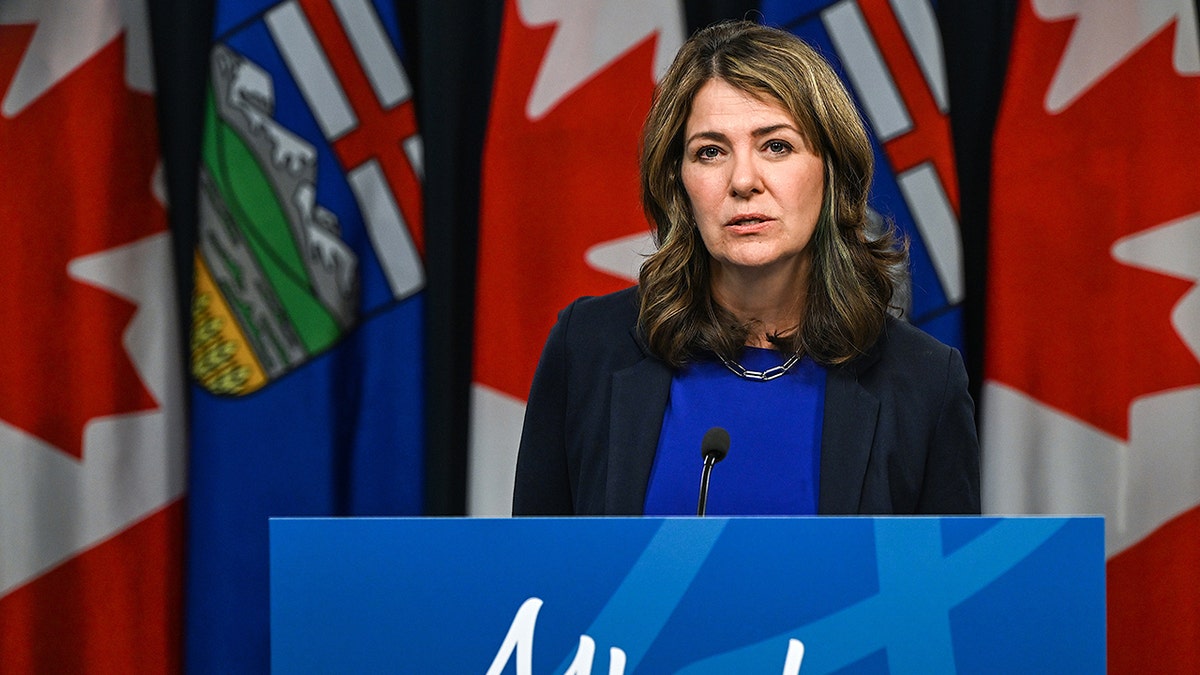
Alberta Premier Danielle Smith told CBC News that if most Albertans support staying in Canada, she would not hold another referendum on the matter as long as she heads the provincial government.
However, on Oct. 18, 2027, residents of the province will vote again in a general election, and Smith could be out of her job by then, warned Morgan, a founding member of the former conservative Wildrose Party, for which Smith served as leader.
That party merged with the then-Progressive Conservative Party of Alberta in 2020 to form the United Conservative Party (UCP) that Smith heads. But Morgan explained that more than half of the UCP’s nearly 55,000 members support Alberta’s independence. The premier has said that she will vote to keep the province in Canada.
Angus Reid, founder and chairman of the Angus Reid Institute, told Fox News Digital that in his firm’s recent polling, 67% of the 293 UCP voters who support a future binding referendum on separation, said that they would either “definitely support” or “consider” supporting the creation of a separatist provincial political party – not unlike the Parti Québécois, which won the recent election in Quebec.
The emergence of an independence party in Alberta “would probably spell the death of the UCP since it is so badly divided between separatists and non-separatists, and it would likely end the career of Danielle Smith because of the amount of breakage in her party,” said Reid, whose firm’s survey found that 60% of the respondents who support a future binding referendum are “more likely sending a message to Ottawa” about the Canadian government’s often fractious relationship with Alberta.
“Separatist types are looking at how much leverage Quebec has been able to achieve in Canada as a result of its threats of exiting, and saying ‘Hold it, we can pay that game too,’” explained Reid.
CLICK HERE TO DOWNLOAD THE FOX NEWS APP
As of Saturday, more than 1.2 million Albertans had cast a ballot on the referendum, which, in addition to the question on separation, has nine others, five focusing on immigration, such as one asking voters whether their province should take more control “for the purposes of decreasing immigration to more sustainable levels, prioritizing economic migration and giving Albertans first priority on new employment opportunities.”
Read the full article here
