
NEWYou can now listen to Fox News articles!
Seattle’s effort to protect renters allegedly helped destroy a $39 million investment meant to provide affordable housing, sending a 254-unit apartment complex that served lower-income residents into receivership. Now, its owners have scored a court victory in a battle that could influence similar fights in Philadelphia and other Democrat-led cities.
The Washington Court of Appeals ruled Monday that GRE Downtowner LLC, the company behind Seattle’s 254-unit Addison on Fourth affordable housing development, can proceed with claims that the city’s sweeping rental regulations amounted to an unconstitutional taking of private property. GRE alleges the restrictions, including an ordinance requiring landlords to accommodate certain additional occupants without their consent, sent rent collections plummeting, triggered millions in losses and ultimately made the once-viable affordable housing investment financially unsustainable.
The development operated under the federal Low-Income Housing Tax Credit program, which offers tax incentives to private investors in exchange for providing rent-restricted apartments to lower-income residents. Sean Flynn, executive director of the Rental Housing Association of Washington, explained that while such developments typically generate relatively modest profits, the federal tax credits make them financially attractive to investors, helping bring private money into affordable housing projects that might otherwise struggle to get built.
Flynn, who is working with GRE Downtowner in its case against the City of Seattle, told Fox News Digital that the city’s successive ordinances targeting landlords ultimately created a “toxic cocktail of legislation” that took a functioning affordable housing property and “destroyed it.”
PROPERTY OWNER ADVOCACY GROUPS PUSH BACK ON MAMDANI’S ‘RENTAL RIPOFF REPORT,’ PUBLIC DATABASE OF LANDLORDS
According to court filings, GRE’s investment initially proved financially viable, with the property generating positive cash flow from 2015 through 2018. But as Seattle enacted a series of ordinances restricting criminal-background checks, expanding tenants’ ability to bring additional occupants into their apartments, limiting certain evictions and requiring relocation assistance following qualifying rent increases, GRE alleges its rent collections collapsed from 93.9% in 2018 to just 44.1% in 2023, contributing to nearly $5.8 million in cumulative operating losses.
The financial deterioration ultimately culminated in a federal judge appointing a receiver in January 2026 to take control of the property following a mortgage default.
“The policies they’re passing are detrimental to the folks they’re actually trying to help,” Flynn warned, arguing that excessive restrictions on landlords ultimately hurt renters by discouraging housing investment. “No one will invest to build more housing if they believe that the government can come in and effectuate a taking – to take the property out from under them – and they have no legal recourse.”
OREGON DEMOCRATS PROPOSE ‘RIGHT TO REST ACT’ DECRIMINALIZING PUBLIC CAMPING AS HOMELESS CRISIS SURGES
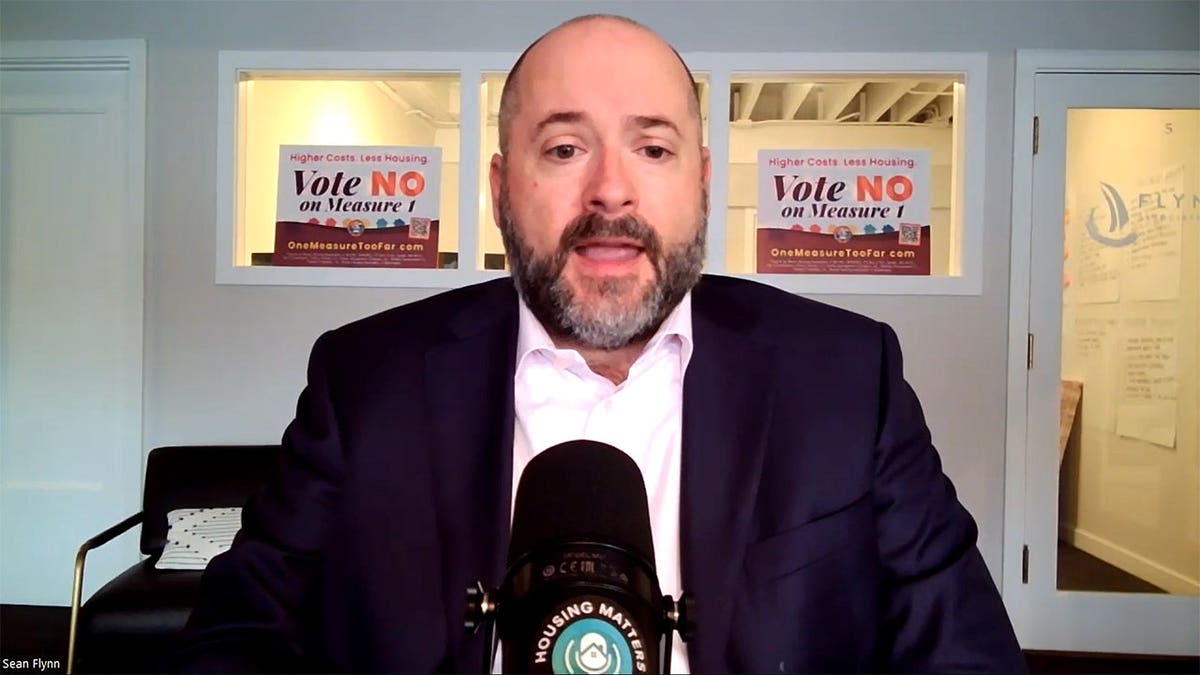
“What this decision says is government, you can regulate, you can regulate to your heart’s content,” Flynn added. “But if your regulations amount to the point of which you take my real property, I’m allowed to sue you for it.”
Ilya Somin, a George Mason University law professor specializing in constitutional law and property rights, told Fox News Digital that the ruling is more consequential than a routine procedural decision but cautioned against overstating its broader impact.
“This is only moderately significant, but it’s more significant than just a routine legal decision that only affects the people immediately involved,” Somin said, explaining that courts in other states could consider the Washington ruling when weighing similar constitutional challenges. He also said the case could theoretically go to the U.S. Supreme Court, but said that was fairly unlikely.
Seattle is hardly alone in imposing sweeping restrictions on landlords. San Francisco has long enforced rent controls and limits on evictions, and New York City expanded eviction protections in 2024 under the state’s Good Cause Eviction law, limiting landlords’ ability to remove certain tenants or refuse lease renewals while allowing renters to challenge excessive rent increases. Portland, Oregon, limits landlords’ use of criminal histories when screening prospective tenants and requires relocation payments following certain rent increases of 10% or more. Philadelphia has also adopted restrictions involving criminal-history screening. These policies reflect a broader push to strengthen renters’ rights in major Democrat-led cities, even as property owners raise concerns about the consequences of increasingly restrictive housing regulations.
OBAMA-ERA MANDATE SLASHED AFTER BEING BLAMED FOR ‘SKYROCKETING’ HOUSING COSTS
Flynn warned that the consequences of Seattle’s housing policies extend well beyond Addison on Fourth, arguing that mounting restrictions have driven developers and smaller landlords away from Seattle — a city once bustling with residential construction.
“Once upon a time in Seattle, you could stand from my office and you could see crane after crane after crane building housing,” Flynn said. “They’re gone, and they’re not coming back.”
Flynn argued that the resulting decline in investment ultimately hurts ordinary renters, leaving them with fewer housing options and higher costs.
“When you take the investment incentive out of providing a product, you get worse products at a higher cost,” he said. “Investors listen and they vote with their feet. And as a result, there’s less housing and the housing that is available is of lesser quality.”
NYC RENT BOARD DISSENTER WARNS MAMDANI-BACKED FREEZE COULD HURT AFFORDABLE HOUSING OVER TIME: ‘SLOW BURN’
GRE’s lawsuit seeks compensation under a legal principle known as inverse condemnation, which allows property owners to pursue payment when they believe government actions have effectively taken or damaged their property without providing just compensation. GRE argues that Seattle’s ordinances, individually and collectively, went so far in restricting its property rights that the city should be held financially responsible for the resulting losses.
The Seattle City Attorney’s Office told Fox News Digital that officials are reviewing the appellate ruling and weighing their next steps. “We haven’t made a decision on an appeal yet,” Chief of Staff Dan Nolte said in an email Thursday.
“I believe the plaintiffs in this case deserve to win at least on that roommate provision,” Somin told Fox News Digital, referring to Seattle’s restrictions on landlords’ ability to exclude certain additional occupants from rental properties.
CLICK HERE TO DOWNLOAD THE FOX NEWS APP
Somin pointed to the Supreme Court’s 6-3 decision in Cedar Point Nursery v. Hassid , which ruled that a California regulation requiring agricultural employers to allow union organizers onto their private property constituted a physical taking under the Fifth Amendment. He argued that Seattle’s Roommate Ordinance raises a similar constitutional question because it requires landlords to accommodate additional occupants with whom they never entered into a rental agreement.
SIGN UP TO GET THE POLITICS NEWSLETTER
“I think the strongest per se argument is simply an argument against this provision of the ordinance, which says they have to take these people who they never made any contract with at all, never screened, and so on,” Somin said. “The additional requirement to let them on their land is going beyond what’s in the contract, and the same thing you know would apply here in the Seattle case.”
