



Armenia, located in the highlands of West Asia, has just become easier to visit for Europeans.
ADVERTISEMENT


ADVERTISEMENT
The country of windswept peaks, medieval stone monasteries and a capital city of monumental architecture is often overlooked, despite being a short to mid-haul flight away from many countries in Europe.
New entry rules mean citizens of dozens of countries, including those in the EU and the UK, can now visit without needing a visa.
Here’s why you should put Armenia on your travel list for 2026.
Armenia relaxes visa requirements
Armenia has temporarily scrapped visa requirements for 113 countries until 1 July 2026.
These include holders of valid residence permits for the EU and Schengen area countries (Iceland, Norway, Switzerland and Liechtenstein), the UK, the USA and the UAE.
Visitors from these nations can now enter Armenia for up to 180 days within a one-year period without a visa.
The relaxed entry requirements hope to boost tourism and bring travellers to the country throughout the year.
“This decision is a clear invitation to travellers around the world,” said Lusine Gevorgyan, chairman of the Tourism Committee of Armenia.
“Armenia is open and welcoming, and we look forward to sharing our culture, landscapes and hospitality with more visitors throughout 2026.”
Why visit Armenia in 2026?
Armenia offers a breadth of experiences to tempt adventure seekers, culture lovers and gourmands.
“With its ancient monasteries, dramatic mountain scenery, vibrant food scene and rich traditions, Armenia offers travellers a unique blend of history and modern life,” Gevorgyan said.
“From exploring Yerevan’s cafe culture and museums to discovering hiking trails and UNESCO World Heritage sites, the country provides diverse experiences year-round.”
Hiking routes and monasteries
The Lesser Caucasus Mountains are criss-crossed by wild trekking routes leading to volcanic peaks like Mount Aragats – at 4,090 metres – and Azhdahak. The epic Transcaucasian Trail also runs for just over 800 kilometres through the country.
Culture and nature can be combined with hikes that lead to Armenia’s dramatically isolated monasteries, including routes through Dilijan National Park – dubbed the “Switzerland of Armenia” – to seek out forest-encroached Goshavank, Matosavank and Jukhtakvank monasteries.
Not far away is Lake Sevan, one of the largest high-altitude freshwater lakes in the world.
The Haghpat and Sanahin monasteries, located in the far north, are also recognised by UNESCO. Dating between the 10th and 13th centuries, they were once major religious centres of learning and manuscript production.
If you’re exploring the south, instead, there’s also no shortage of spiritual sites.
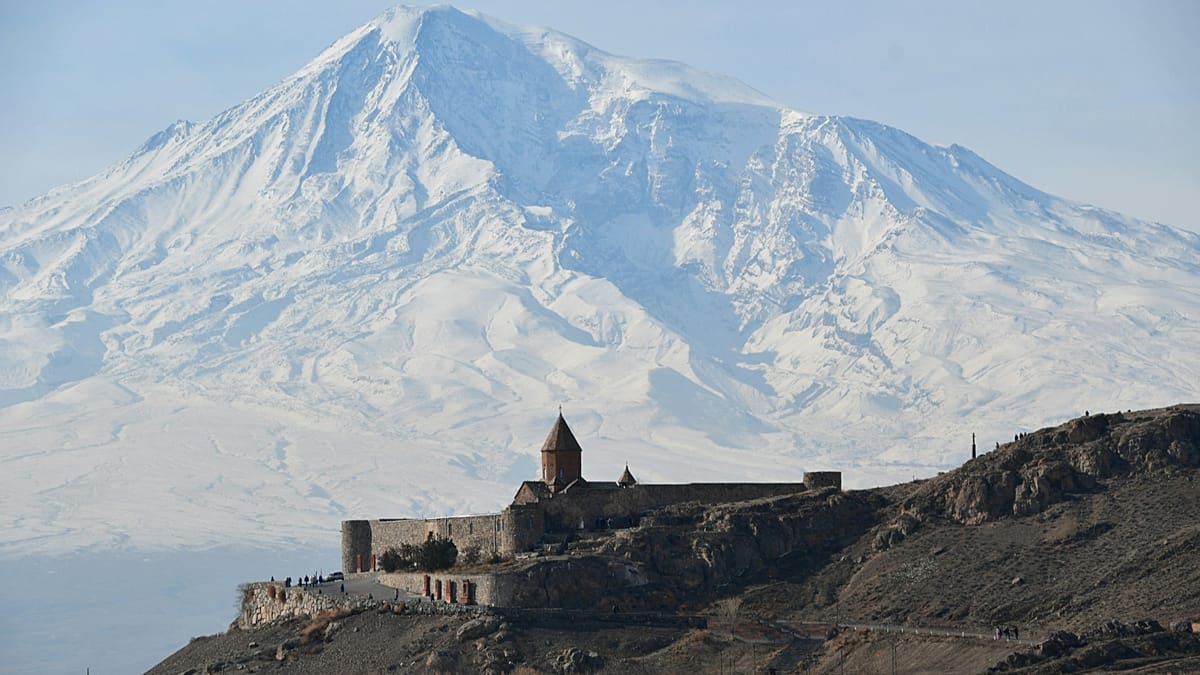
“It’s worth taking a trip to Dilijan to see the most sacred monastery in Armenia – Khor Virap Monastery, which is over 1,000 years old,” Ance Švajnzger, Intrepid Travel’s general manager of East Europe, tells Euronews Travel.
Hikers can follow trails leading to the Geghard monastery, a UNESCO World Heritage Site partially hewn into the solid rock of the Upper Azat Valley.
Museums and a cafe culture
To offset adventures in the wilderness, head to the capital, Yerevan. The city is a force of Soviet-era architecture, from neoclassical arcades to bold Brutalist statements.
There are several museums of calibre, including the Matenadaran library, housing thousands of ancient Greek and Armenian manuscripts, and the History Museum of Armenia, with a wealth of archaeological treasures.
Contemporary culture is in abundance, too, at the energetic cafes along North Avenue, the Vernissage flea market, and the Cafesjian Centre for the Arts with a rich programme of emerging artists’ exhibitions, international collaborations and festivals.
Švajnzger’s favourite urban centre, however, is Gyumri, in the north west of the country.
“It’s a town full of the most warm, open-hearted locals and a food scene that will make you never want to leave,” she says.
“Be sure to visit Aregak bakery and cafe – Armenia’s first inclusive café that employs young adults living with disabilities and mothers with special needs children. It’s a wonderfully welcoming and inclusive space where you’ll feel immediately at home.”