

Longtime Pacific Palisades residents Janna Kohl and her husband say they consider themselves lucky.
“What really breaks my heart is people like our next-door neighbor. They were in their late 70s, early 80s. They’d lived in their house for 60 years. It was their original house, and they were pillars of the community. And people like that aren’t coming back,” Kohl told Fox News Digital.
January 7 marks the one-year anniversary of the start of the deadly Los Angeles wildfires — the Palisades and Eaton fires. Though the fires were contained by the end of the month, the Los Angeles County Economic Development Corporation reports that they caused up to $53.8 billion in property damage alone.
The department’s research also found extraordinarily high destruction rates, with the Palisades Fire destroying 56.3% of all assessed structures and 55.8% of single-family homes. The Eaton Fire destroyed about 50% of all structures and single-family homes.
PALISADES FIRE ARREST: THE FINANCIAL COST OF ONE OF L.A.’s MOST DEVASTATING BLAZES
But the fires didn’t just destroy homes — they forced families into a yearlong decision cycle shaped by insurance, infrastructure and time.
“All of a sudden there was just this numbness that I’m not going back to that house ever. But you can’t really dwell on that because, at that time, you had to mobilize,” Kohl said. “Everybody was snatching up every rental you could possibly get. There weren’t even hotel rooms. The rest of the city was still burning. And you just had to think, oh my gosh, where are we going to go and how’s this going to sort out?”
“I think when these fires happened, like I said, I’ve been in the business over 25 years, I would say this is the most emotionally trying year as a broker I’ve had and as [has] my team,” Douglas Elliman’s Cory Weiss – and Kohl’s real estate agent – also told Fox Digital.
“You had people come to you in shock. And I think once you saw the shock wear off, then there was anger, and then they were really trying to figure out where their lives are gonna go.”
According to Kohl and Weiss, about 25% to 30% of residents will rebuild, while most will walk away; and the deciding factor is often not desire, but rather the math around insurance disputes, labor shortages, permitting delays and rebuilding costs.
“I don’t think anyone knows what their insurance cost is going to be. I think everybody’s like, ‘I got to figure this out, I just got to get my house built, and I’ll just cross that bridge when I come to it,’” Kohl said. “As much as I want to go back, it’s not going to be what it was for seven to 10 years, in my opinion.”
“Every single case is different. Not everybody had the same insurance policy,” said Weiss, who has helped 30 families displaced by the fires relocate.
“When someone’s going back to meet with their insurance adjuster or if they have to meet with a contractor, that meeting takes them two to three hours a day,” he continued. “So they’re saying, ‘Look, I can’t do this. It’s affecting my life in such a way that we’re going to have to make another decision. We’re going to move to another part of Los Angeles, we are going to leave LA because the commitment and cost and time cost of this is unlike anyone even predicted in the first couple of months since the fires.'”
Kohl estimates that about 75% of her Palisades neighbors are dealing with insurance struggles, and even motivated homeowners face a slow grind: utilities, roads, water and sewer, traffic, contractor access and life disruption.
NEWSOM ACCUSES TRUMP OF SPREADING ‘HURRICANE FORCE BULLS—’ DURING DEADLY CALIFORNIA WILDFIRES
“We haven’t decided not to rebuild,” Kohl said of her now-gone 23-year-old home. “But the problem is it’s not just the insurance. The infrastructure is not there… They don’t have the roads in our neighborhood.”
“I have two clients [whose] homes were heavily damaged… The one client with the three-year-old house is still not even started [clean-up efforts] and his house is full of soot because he’s negotiating and fighting with his insurance company,” Weiss detailed. “The other friends and clients who are going back, the restoration of the house, getting the smoke out, dealing and negotiating with the insurance company has become a full-time job for them.”
Both sources describe a widening gap: Wealthier residents can absorb delays and costs, while others cannot.
“People with means, right after the fire, they just ran out and bought another house,” Kohl described. “The people that I mentioned next door to us, the older couple, they moved to outside of L.A. up towards Santa Barbara… They don’t have five to 10 years to go through the rebuild process and live in a rental. They want to move on with their life, so I don’t blame them at all.”
“Another maybe slight misconception is, everyone in the Palisades is wealthy. You know, that’s not necessarily always the case,” Weiss argued. “I have a single mom of four that was in a home that she had grown up in that lost everything, and is not going to be able to go back… A client with an 86-year-old mother that was in a two-bedroom apartment with a nurse had to move to the desert because it was just not possible.”
Weiss said about 50 homes are currently under construction in the Palisades, with two nearing completion, but added that only real estate developers have been actively looking in the marketplace.
The two diverge on accountability — Kohl says the “fake news” narrative around red tape doesn’t match her experience — but both describe frustration with governance and policy.
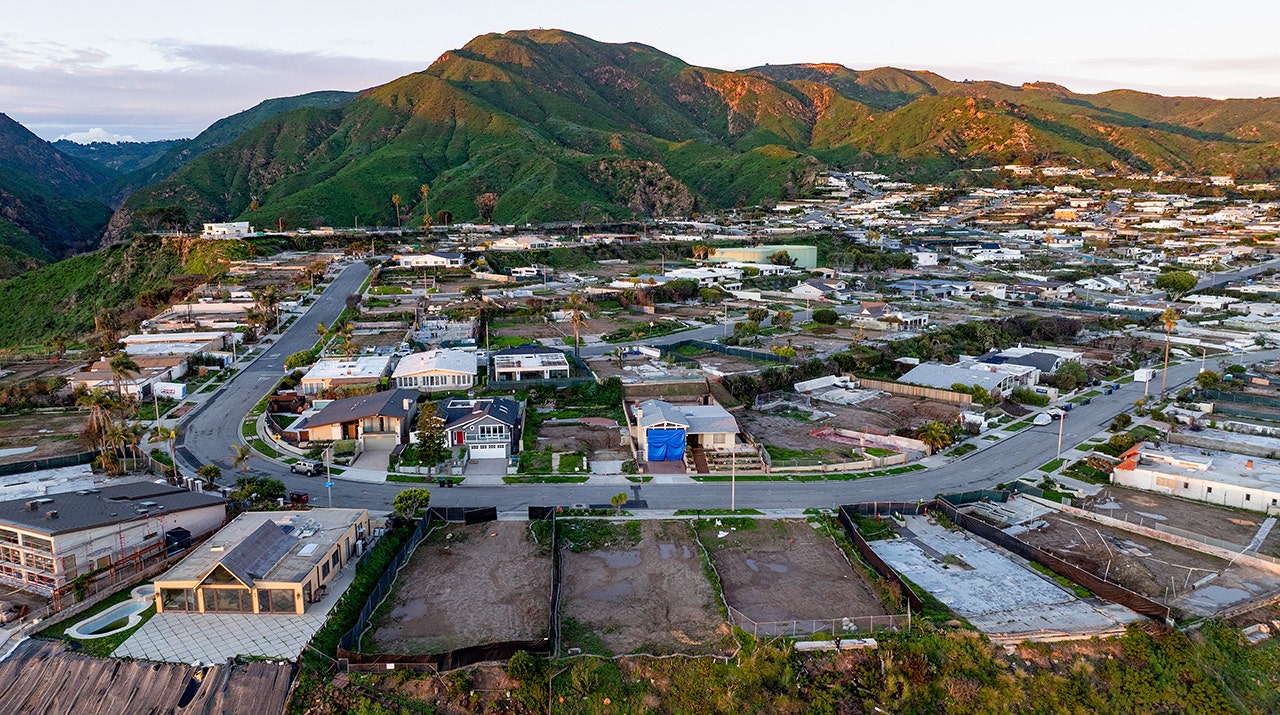
“There has been a lot of unrealistic timelines that were given… ‘We’re gonna be in back in one or two years.’ That is not the case. When you drive through the Palisades, it is still like a war zone.
“No one comes forward and says, ‘We failed you. We are sorry.’ Everybody points the finger to somebody else,” Kohl criticized. “I think in the Palisades, if somebody would come forward and be accountable and say, ‘I’m sorry, we really messed up your lives,’ it would go a long way… Maybe make the Palisades its own municipality where we have our own resources.”
“I don’t think our local mayor has done a great job… I think there’s so much red tape. And I know this from people in all price ranges and income levels that are struggling,” Weiss said. “I also think there has been a lot of unrealistic timelines that were given to the community, the world that, ‘Oh, it’s gonna be back, we’re gonna be back in one or two years.’ That is not the case.”
Kohl, her husband and their cat now primarily live in their second home in Idaho, and she said neighbors have relocated to states including Texas, Florida, Tennessee and Colorado.
“I think [of] their resilience and then their strength of losing everything they had… This is their first holidays not in their homes. All of their pictures are gone, their heirlooms, they’re just trying to be strong,” Weiss reflected.
“We’ve seen in our marketplace… they care more about their family. We don’t really need all of what we had… That is very remarkable to see, and the community [is] still trying to come together and support each other.”
READ MORE FROM FOX BUSINESS