



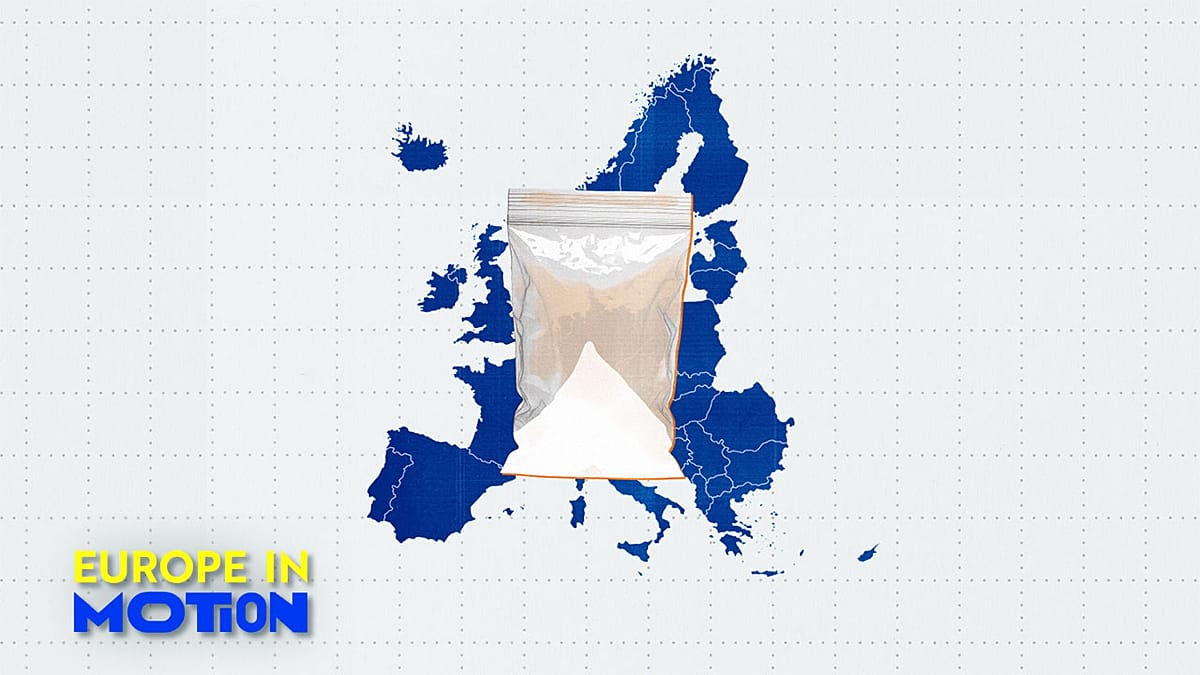
After cannabis, cocaine is the most widely used illegal drug in Europe.
ADVERTISEMENT


ADVERTISEMENT
The latest report by the European Union Drugs Agency (EUDA) gives a picture of where use might be more widespread, based on residual quantities found in wastewater.
Spanish and Belgian cities collected the largest samples.
Lleida, in western Catalonia, topped the continent’s chart with 1,405 mg of cocaine found per 1,000 residents on average. Antwerp, in Belgium, is second (1,382), followed by Spain’s Granada (1,238), Amsterdam (1,172), Belgium’s Liège (1,039) and Brussels (1,020).
Spain’s Santiago de Compostela is also in the top 10 (1,008), followed by Austria’s ski resort town of Kufstein (998), Barcelona (997) and Belgium’s Namur (927).
Where is cocaine use rising fastest?
Wastewater data also reveals where cocaine use is rising fastest.
Europe in Motion analysed the growth rates among cities which collected from their wastewater at least 500mg of cocaine residuals/1,000 residents.
Spain appears to be the main hotspot at the moment.
Barcelona (+185% or +647mg) and Lleida (+782mg or +125%) saw the steepest rise in Europe in both percentage and absolute terms.
Elsewhere, Slovenia also had a sharp increase in absolute terms, particularly around the towns of Velenje, Domžale and Kamnik (growth between +329mg and +272mg).
Denmark is another growing cluster, with levels increasingly in Esbjerg (+266mg), Aalborg (+234mg), and Copenhagen (+148mg).
Country by country: Who uses cocaine the most?
The EUDA also ran a survey asking European citizens whether they had taken cocaine in the 12 months before the study was published. Here, the picture shifts a bit.
Norway and the Netherlands showed the highest consumption rates.
At least 2.9% of adults in those countries took cocaine in the last 12 months before the study was published. France came next with 2.7%, followed by Spain with 2.5% and Ireland with 2.4%.
But rates are higher among younger people, aged between 15 and 34.
Norway (5.6%) and the Netherlands (5.3%) came out on top again, followed by Ireland (5%)
What is the Atlantic Cocaine Highway?
The latest EUDA data shows that Spain reported the largest quantity of cocaine seized, at 124 tonnes in 2024 alone. France was second with 53.5, the largest batch ever confiscated there.
At the same time, quantities decreased significantly in Belgium (by 64%), Germany (by 45%) and the Netherlands (by 36%)
Although the overall quantity seized by EU members decreased in 2024, the number of individual crackdowns actually went up to 97,000, “suggesting shifting trafficking routes and methods rather than a decrease in the quantities shipped to Europe”, according to the agency.
Competition within the cocaine market is a major driver of crime, involving gang-related violence and homicides in some countries.
Traffickers are increasingly using smaller ports and at-sea transfers via a variety of vessels, manned and unmanned semi-submersibles, drones and complex physical and chemical concealment.
Across Europe, the final stage of delivery is often operated by smaller boats, landing at remote coastal areas in Portugal and Spain, using beaches or small marinas to avoid detection.
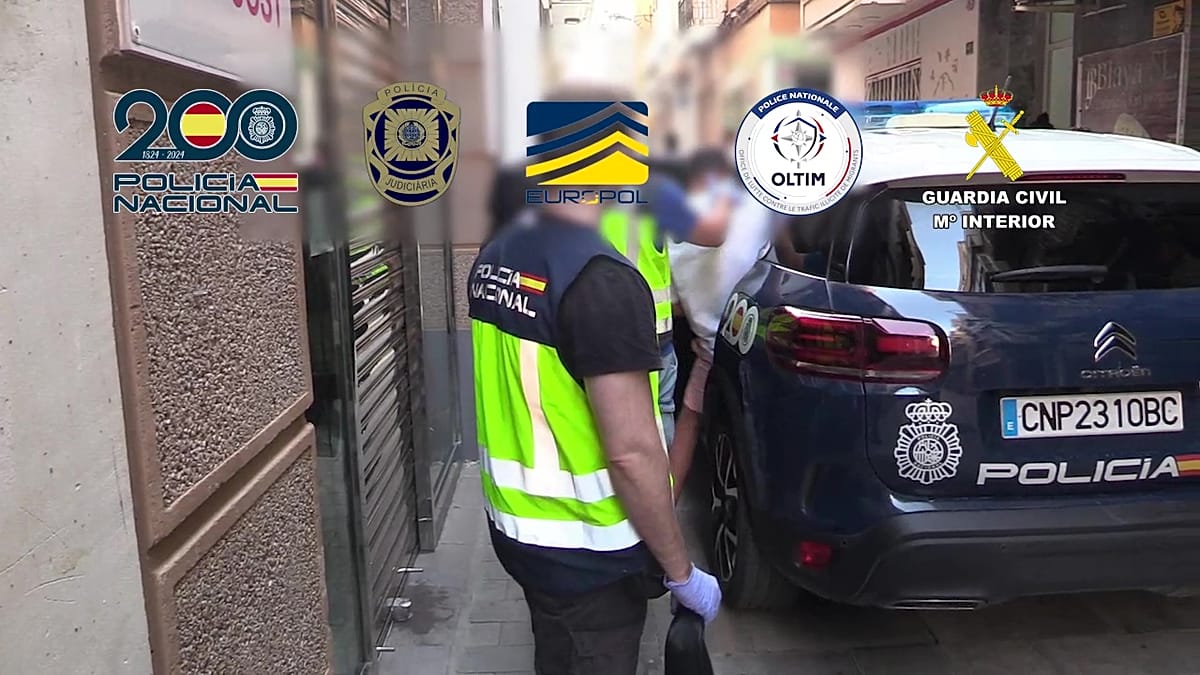
Last April, a massive Europol-coordinated operation hit a major drug trafficking route across the ocean, known as the Atlantic Cocaine Highway.
Law enforcement activity focused on the eastern Atlantic corridor between the Spanish Canary Islands and the Portuguese Azores.
The operation resulted in 11 tonnes of cocaine seized, 8.5 tonnes of hashish seized, 54 people arrested, and eight vessels intercepted.