

U.S. consumer confidence slumped to the lowest level since 2014 in January, sinking below pandemic-era lows as Americans are concerned about the labor market.
The Conference Board released its preliminary consumer confidence reading for January, which showed it declined by 9.7 points to 84.5, from an upwardly revised reading of 94.2 in December. That December revision flipped the initially reported decline to a slight increase, though the January data showed confidence resumed its decline.
The 84.5 preliminary consumer confidence reading for January was the lowest since the consumer confidence index dipped to 82.2 in May 2014, and fell below the worst readings of the COVID-19 pandemic.
“Confidence collapsed in January, as consumer concerns about both the present situation and expectations for the future deepened,” said Dana M. Peterson, chief economist of The Conference Board. “All five components of the Index deteriorated, driving the overall Index to its lowest level since May 2014 (82.2) – surpassing its COVID-19 pandemic depths.”
FED’S FAVORED INFLATION GAUGE SHOWS CONSUMER PRICES REMAINED ELEVATED IN NOVEMBER
The Conference Board’s present situation index, which measures consumers’ views of current business and labor market conditions, fell by 9.9 points to 113.7 in January. Perceptions of business conditions and employment both dipped lower.
The report showed the expectations index – which is based on consumers’ short-term outlook for income, business, and labor market conditions – declined by 9.5 points to 65.1, which is well below the threshold of 80 that usually signals a recession is ahead.
Expectations around business and labor market conditions six months ahead both slipped further into negative territory, while the outlook for household incomes became less positive.
US ECONOMY GREW AT FASTEST PACE IN 2 YEARS IN THIRD QUARTER, FUELED BY CONSUMER SPENDING
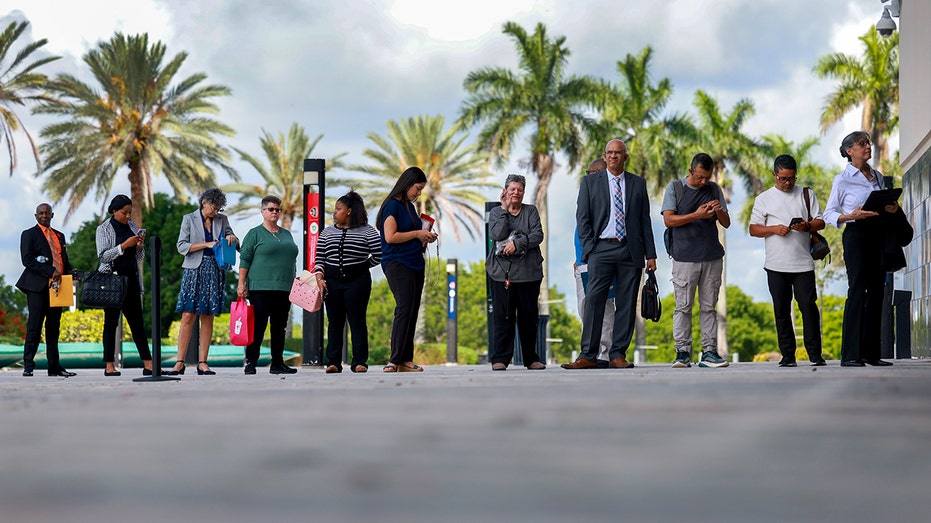
The deterioration in The Conference Board’s overall consumer confidence index was broad-based across respondents identifying as Democrats, Republicans and Independents – while the sharpest decline was among Independents.
Confidence also slumped across all age and income groups. Consumers under the age of 35 were more confident than their peers aged 35 and older, while Gen Z was the most optimistic of all generations in the survey. Among income groups, consumers earning less than $15,000 remained the least optimistic.
US CEOS FEAR ECONOMIC UNCERTAINTY MORE THAN THEIR GLOBAL PEERS AS THEY HEAD INTO 2026
The report found that consumers’ views of their family’s current financial situation improved slightly in January after December’s reading was revised from a decline into negative territory to a small net positive. However, consumers’ expectations surrounding their family’s future financial situation fell in January after it improved in December.
The share of consumers who believe the U.S. economy is “somewhat likely” to experience a recession in the next 12 months ticked lower, as did the share who said a recession is “not likely.”
Respondents who see a recession as being “very likely” in the next year rebounded and the small share of consumers who said the U.S. is “already in one” ticked higher.