


Published on
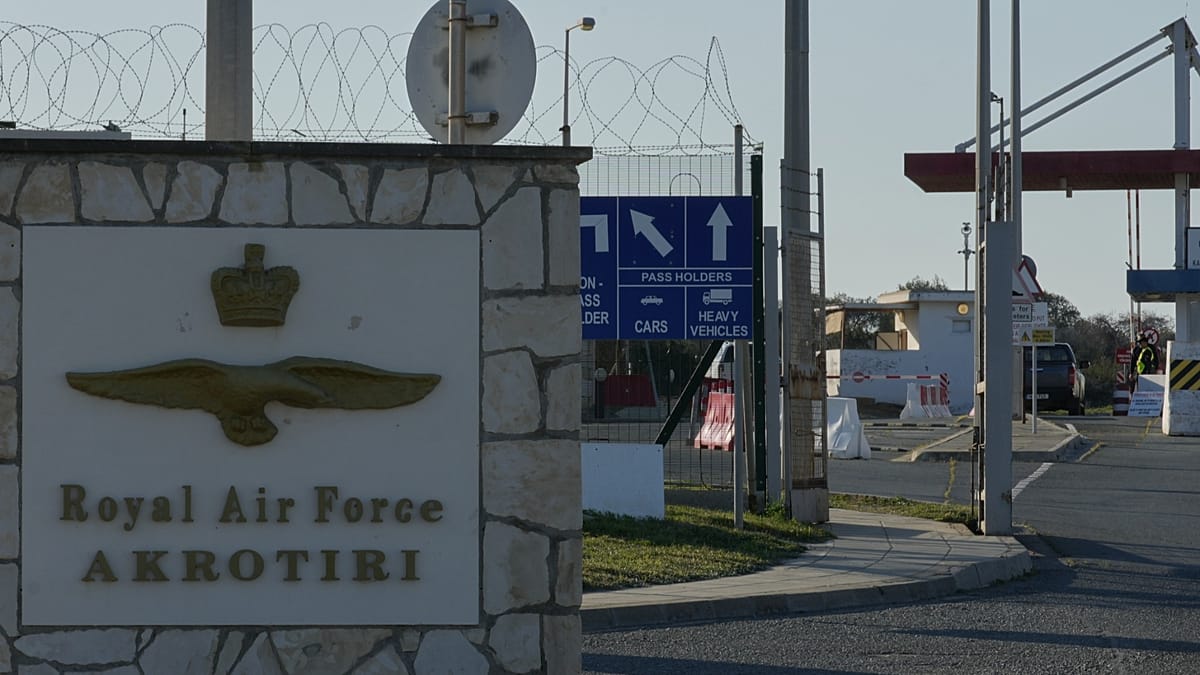
Drone activity targeting British military facilities in Cyprus has raised security concerns in recent days, but the incidents have so far not prompted formal consultations within either NATO or the European Union over collective defence measures.
ADVERTISEMENT

ADVERTISEMENT
Two drones targeting a British base in Akrotiri were intercepted on Monday after another attack on Sunday caused limited damage.
Britain is a member of NATO, but a source at the military alliance confirmed to Euronews on Tuesday that no dedicated discussion had been held among the 32 allies over the incident, which is so far considered to have been quite small.
NATO allies can trigger Article 4 to request consultations among all allies if they feel their territorial integrity, political independence or security is threatened. Poland is the most recent ally to have triggered the article following multiple airspace violations by Russia in September last year.
NATO chief Mark Rutte also stressed during a visit to North Macedonia on Tuesday that the military alliance is “not itself involved” in what’s happening in the Middle East, but that it will “defend every inch of NATO territory” if needed.
“Let’s be absolutely clear-eyed to what’s happening here. Iran is close to getting its hands on a nuclear capability and on a ballistic missile capability,” he said.
“I think we are all better off with him (Iranian Ayatollah Ali Khamenei, killed on Saturday by a strike) gone and with the nuclear and ballistic capability being beaten and degraded as it is as we speak.”
Rutte reiterated that the operation against Iran was carried out by the US and Israel, and while some allies are providing support, this is being done on a bilateral basis.
Cyprus, one of only four EU member states that is not in NATO, has been receiving help from other member states, with Greece and France both deploying capabilities to help defend the island.
Athens has already sent four F-16 fighter jets and two frigates to the island, while a Cypriot official confirmed to Euronews that Paris is supplying anti-missile and anti-drone systems, as well as a frigate.
Cyprus President Nikos Christodoulides confirmed he is also in contact with German Chancellor Friedrich Merz and Italian Premier Giorgia Meloni.
But this assistance is being lent on a bilateral basis, with “no specific discussion” held so far about the bloc’s mutual defence clause, a European Commission spokesperson confirmed on Tuesday.
“It seems to be very clear the Republic of Cyprus was not the target,” Paula Pinho told reporters. “Obviously, it causes anxiety in the people, that’s why we also wanted to express our support, that we stand collectively with the member state in the face of any threat.”
On the possible activation of Article 42.7 – the EU’s mutual defence clause – Pinho stressed that it “would be for the EU member state, which in this case is victim to a claimed armed attack, to exercise the legal and political assessment” before triggering it.