



On Friday, a drone crashed into the top floor of an apartment complex in Galați, a port city in eastern Romania near the Danube River and the Ukrainian border. Two civilians were injured by the collision of the unmanned aerial aircraft, with the roof of the apartment building set alight.
ADVERTISEMENT


ADVERTISEMENT
The country’s president Nicușor Dan firmly pointed the finger at Russian President Vladimir Putin. Romania’s Foreign Minister Oana Țoiu confirmed the drone was Russian and laden with explosives.
Kayoko Gotoh, co-director of the United Nations’ political and peace departments, said the incident crystallised repeated warnings from political leaders across Europe that Russia’s full-scale invasion of Ukraine is spilling beyond its borders, now with casualties.
A flurry of support for Bucharest poured in following the incident, including remarks of solidarity from North Atlantic Treaty Organisation (NATO) Secretary-General Mark Rutte and European Commission President Ursula von der Leyen, among others.
Amid this, former Russian President and current Deputy Chair of the Security Council of the Russian Federation, Dmitry Medvedev, issued his own stark warning. “Be vigilant and don’t be surprised by anything. The peaceful sleep is over,” a post on social media platform X reads.
Romania has been rattled by at least 28 drone incursions since Russia’s full-scale invasion of Ukraine in 2022, according to research by Washington-based think tank Institute for the Study of War. At least 15 occurred in 2026 alone.
Romania is not alone. Over the past year, incidents have been reported by Latvia, Lithuania, Estonia, Moldova, Finland, Denmark and Belgium, as well as countries in the Mediterranean, such as Bulgaria and Greece, involving unmanned aerial vehicles flying over cities, near ports and other pieces of key public infrastructure.
Some of these are Ukrainian aircraft suspected to be knocked off course unintentionally, or by Russian GPS jamming, aka spoofing. Many of them are Russian-owned and operated.
This raises the question: when did Europe become inundated with such intrusions? Euronews explains.
When did the drone incursions start?
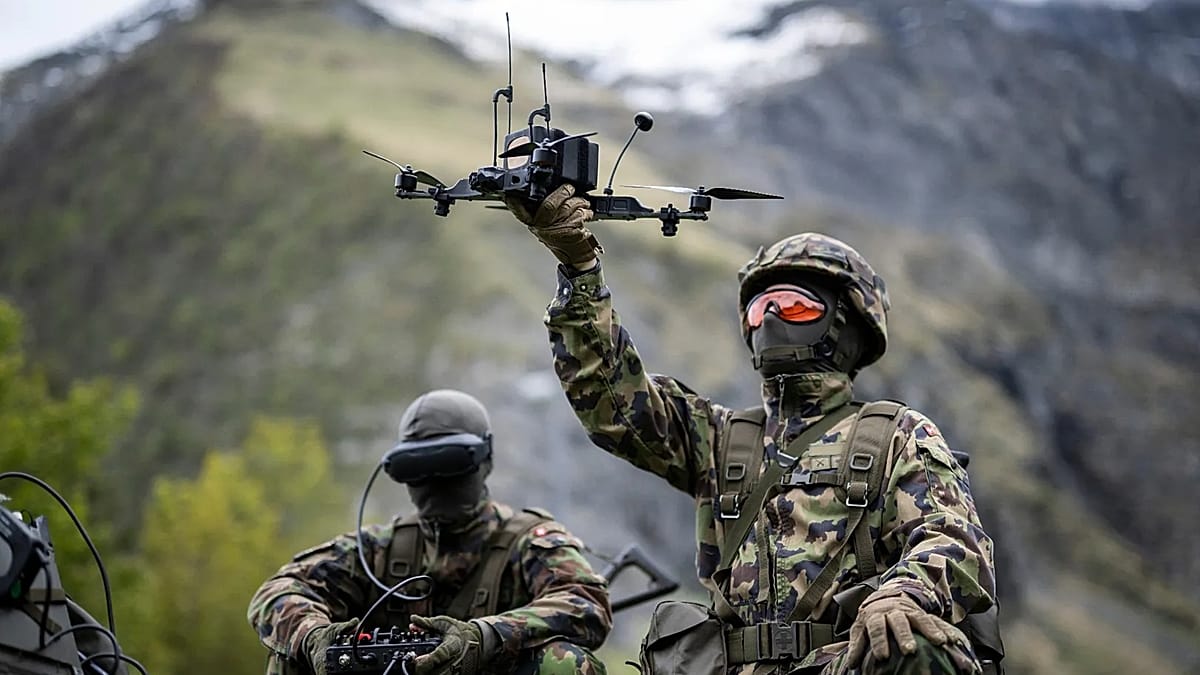
Before 2022, experts did not think much of the military application of small drones turning the tables on Russia in Ukraine’s favour. But one year into the war, according to a study by Dominika Kunertova for Zurich’s Centre of Security Studies, thousands of drones — spanning scouts, loitering grenades, drone bomblets and suicide drones — defied military and defence expectations.
“The war in Ukraine showed that small, lightweight drones can deliver tactical victories,” the study reads.
In the years since, Russia’s full-scale invasion of Ukraine has been described as a “drone war” fought predominantly in the skies, using cheap, disposable drones costing as little as €257 each.
The widespread use of drones, particularly at the tactical level, has indicated an evolution in the character of combat, according toformer US Department of Defence official Seth Cropsey in a brief published by Stanford University’s Hoover Institution.
One senior Ukrainian military figure stated that Kyiv deploys 9,000 unmanned aerial vehicles daily to fend off Russia’s advance, with Moscow responding in kind.
The first incursions into European skies of drones, both Russian and also Ukrainian, was thrown firmly into the spotlight in September 2025. At least 19 Russian Shahed drones entered Polish skies that month, with those posing a risk to the country’s security being neutralised, the country’s defence minister Władysław Kosiniak-Kamysz said at the time.
All three Polish regions impacted — Podlaskie, Mazowieckie and Lublin — are located on the country’s eastern border with Belarus and Ukraine. Polish President Donald Tusk blamed Russia for the incursions, writing on social media that the aircraft posed a “direct threat”.
Since then, various other countries have been plagued by drones, but this incident posed a major flashpoint for the bloc, exposing weaknesses in its air defence systems.
What was the response?
Poland invoked Article 4 of NATO that September, triggering urgent consultations among the 32 allies. NATO Secretary-General Mark Rutte created Operation Eastern Sentry to bolster NATO’s posture along the eastern flank and to monitor, intercept and shoot down drones.
Rutte noted that while the drone incursion into Poland symbolised the largest concentration of violations of NATO airspace, “what happened on Wednesday was not an isolated incident. Russia’s recklessness in the air along our eastern flank is increasing in frequency.”
To this day, the main objective of Eastern Sentry is to strengthen the alliance’s capabilities to intercept Russian drones. But according to security analyst Charlie Edwards of London-based think tank International Institute for Strategic Studies (IISS), the organisation faces a much bigger problem: how to do this in a cost-efficient manner.
“At scale, launching hundreds of inexpensive drones can quickly exhaust the Alliance’s finite and costly supply of interceptors, potentially leaving some sectors exposed while reloading,” he stated in a paper.
“Russia will continue to actively seek to exploit divisions as such opportunities arrive.”
NATO’s initial response to the drone incursions also drew criticism for its lack of unity. US President Donald Trump initially suggested the drone incursions into Poland were an “accident”.
Polish Foreign Minister Radosław Sikorski posted a rebuke on X, stating: “No, that wasn’t a mistake.” He reiterated that the EU, NATO and mostly Warsaw would “not be intimidated” by Moscow.
Trump subsequently posted an ambiguous message on his own social media platform Truth Social, writing: “What’s with Russia violating Poland’s airspace with drones? Here we go!”
The Polish incident prompted European Commission President Ursula von der Leyen to use a major speech, dubbed her State of the (European) Union address, to “heed the call” of certain European Union (EU) member states and build what was then dubbed a “drone wall”.
This plan was thwarted as additional drone incursions were reported across EU Member States beyond the eastern flank, casting doubt on the viability of an operation designed to focus on that area. Back then, the thrust of the initiative was to establish integrated counter-drone systems, spanning sensor networks, artificial intelligence-integrated capabilities, and other measures.
Since then, it has evolved into various other programs, such as the Drone and Counter-Drone Security Action Plan, the Eastern Flank Watch, EU-Ukraine Drone Alliance, among other initiatives. A key underpinning theme to all this work is to ensure Europe talks to Ukraine — the country that best understands how to deter Russian drone attacks — and implements learnings. Europe must also track, intercept and neutralise these threats, as part of the plans.
However, the EU executive’s overall response so far has been criticised by European countries, according to a leaked document seen by Euronews. The tension is distilled in a common defence quagmire. National governments want to work together, but do not want to divulge secrets or sensitive information that could undermine their sovereignty or national interest.
“Delegations broadly recognised the growing cross-sectoral security implications of drones and underlined the need for enhanced preparedness, resilience, detection and operational cooperation,” the document reads. However, fragmentation, scarce data, little coordination and issues surrounding the allocation of EU funds, remain.
What is the impact?
Ondrej Ditrych, a political analyst at the EU’s Institute for Security Studies (ISS), said Moscow aims to sow chaos and permeate anxiety throughout the EU through these incidents. Sometimes these incursions are accidental, he admits, but they are always exploited by Moscow.
“There is a component of mental or psychological warfare from Russia, of intentionally redirecting the Ukrainian drones, basically hijacking them, to spook the European population to sort of create a more immediate experience of the risk of war, and of course also undermining the support for Ukraine,” he said.
Ditrych said there is also a clear pattern of escalation of these hybrid threats in recent years, which spans a mosaic of disinformation, electoral interference, GPS jamming, arson nuclear intimidation and unidentified drones flying over or near airports and maritime infrastructure.
Another analyst, Ionela Ciolan, at the Wilfried Martens Centre for European Studies, echoed this view, stating in a paper that Russia is using a “boiling frog” strategy in the Baltic region to normalise the chaos while exploring NATO’s vulnerabilities, particularly in grey-zone warfare, including cable cuts and drone incursions.
The aim is to push the limit of what is tolerated. Ciolan argues that Moscow may do this in the future by carrying out “provocations” along Estonian and Latvian borders to see how the alliance reacts.
“The future security and stability of the Baltic region will be shaped by the outcome of Russia’s war against Ukraine, as well as by the evolving dynamics of the transatlantic partnership and US defence policy under the Trump administration,” she writes.
Carlo Masala, a professor of International Politics at the Bundeswehr University in Munich, wrote a book exploring not only what would happen if Russian President Vladimir Putin prevailed in his invasion of Ukraine — but what Russia would do next. He suggested, in his fictional exploration, that Estonia’s third-largest city, Narva, would be Russia’s European conquest made possible by divisions within NATO.
As demonstrated when dozens of drones flew into Polish territory, the immediate response to Russian aggression has not always been harmonious.
So, what happens next?
When the Lithuanian capital, Vilnius, was brought to a standstill last month after a drone was detected near the country’s border with Belarus, emergency text messages instructed citizens to immediately seek shelter with their families. The country’s president and prime minister were sent to underground bunkers, while the Baltic country’s airport was closed and roads vacant of traffic.
This was the first drone incursion that resulted in civilians seeking shelter in the EU.
Lithuanian President Gitanas Nausėda conceded on 26 May that the skies above the Baltic states “are not sufficiently secure”. The Estonian President, Alar Karis, said these airspace violations and other hybrid threats aim to intimidate Europe — but the response must be calm, coordinated and “firm”. Latvia’s President Edgars Rinkēvičs took a different tone, stating these hybrid attempts are clear: “Russia is failing” on the battlefield with Ukraine.
Europe is in the midst of thrashing-out its 21st package of sanctions against Russia for the country’s ongoing invasion of Ukraine, now grinding into its fifth year. Diplomatic sources have said that the recent drone incident in Romania has lit a fire under European leaders, forcing them to accelerate measures targeting Russia.
Romanian Foreign Minister Oana Țoiu told Euronews that she spoke with her EU equivalent, the EU’s foreign policy chief Kaja Kallas, about “accelerating the pace” for the measures due to the damage inflicted at Galați.
Former Romanian NATO official Mircea Geoanăechoed this, stating that the country was still in a state of “shock” but that there is significant work to be done to ward off drones in the future.
The Lithuanian Defence Minister Robertas Kaunas told Euronews that drones flying above European territory will no longer be a rarity, but a reality, with a “high possibility” of more unmanned aerial incidents materialising soon.