


This story about the Federal Reserve’s April interest rate decision is developing and will be updated with further details.
The Federal Reserve on Wednesday announced it will leave interest rates unchanged amid concerns about inflation rising further amid the war in Iran.
Fed policymakers voted to leave the benchmark federal funds rate unchanged at its current range of 3.5% to 3.75%. The move follows the central bank’s decision to hold rates steady in January and March after three successive 25-basis-point rate cuts in September, October and December to close out last year.
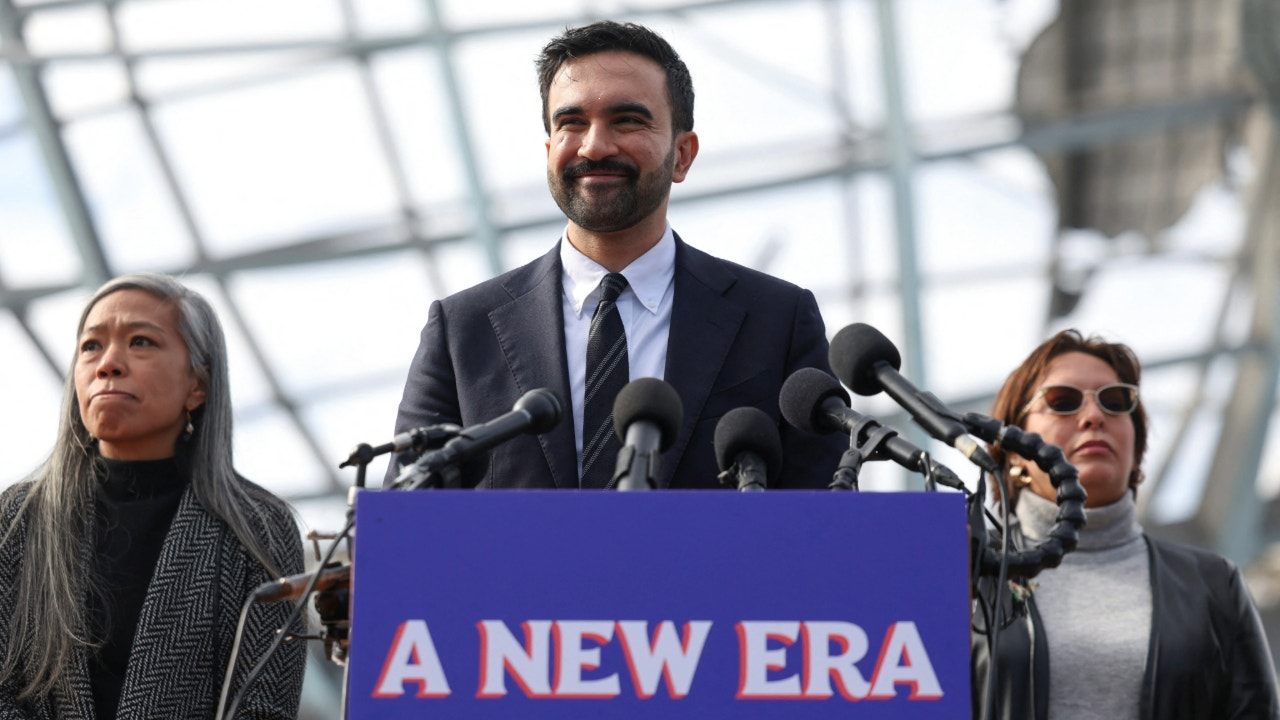
The Federal Open Market Committee (FOMC), the central bank’s panel responsible for monetary policy moves, voted 11-1 to leave interest rates unchanged. Fed Governor Stephen Miran dissented in favor of a 25-basis-point cut.
Three other FOMC members – Cleveland Fed President Beth Hammack, Minneapolis Fed President Neel Kashkari and Dallas Fed President Lorie Logan – dissented as they opposed the inclusion of language showing a bias toward easing interest rates. The four total dissents were the highest total for a FOMC meeting since 1992.
The FOMC meeting is expected to be the last under the leadership of Federal Reserve Chairman Jerome Powell, as his term as Fed chairman is due to expire on May 15. Powell said at his press conference that he intends to continue serve his term as a member of the Fed’s Board of Governors for a to be determined period of time over his concerns regarding the Trump administration’s investigations of the Fed.
The FOMC’s statement noted that the war in the Middle East is “contributing to a high level of uncertainty about the economic outlook,” and that the economy is expanding with low levels of job gains and inflation elevated due to the recent rise in global energy prices.
Powell opened his press conference by saying that policymakers are “squarely focused on achieving our dual mandate goals of maximum employment and stable prices for the benefit of the American people.”
He noted that the slowdown in job growth stems from a “decline in the growth of the labor force due to lower immigration and labor force participation,” and said that inflation has risen recently due in part to the “significant rise in global oil prices that has resulted from the conflict in the Middle East.”
What’s next for Jerome Powell?
Powell said that this would be his last press conference as chair and congratulated his expected successor, former Fed Governor Kevin Warsh, on his nomination advancing from the Senate Banking Committee earlier on Wednesday.
He said that he plans to continue serving as a member of the Fed’s Board of Governors following the conclusion of his term as chairman due to lingering concerns over the Trump administration’s legal actions against the Fed.
“I welcomed the announcement last Friday by the U.S. Attorney for the District of Columbia that she had closed the criminal investigation. She also noted, however, that she would not hesitate to restart the investigation. Over the weekend, the Department of Justice provided assurances that they will not reopen the investigation unless there’s a criminal referral from the Fed’s inspector general. And if they do appeal the recent court decision, they would not seek, as part of that appeal, to restart the investigation, or send new subpoenas,” Powell said.
He said that he’s encouraged by recent developments and his decisions on these matters “will continue to be guided entirely by what I believe is in the best interest of the institution and the people we serve.”
“My concern is really about the series of illegal attacks on the Fed which threaten our ability to conduct monetary policy without considering political factors. And I want to note here, this has nothing whatever to do with verbal criticism by elected officials. I’ve never suggested that such verbal criticism is a problem, and neither has anyone else here,” Powell explained.
“But these legal actions by the administration are unprecedented in our 113-year history and there are ongoing threats of additional such actions. So I worry that these attacks are battering the institution and putting at risk the thing that really matters to the public – which is the ability to conduct monetary policy without considering political factors,” he added.
“It is so important for economy, for the people that we serve, that they can depend, over time, on a central bank that operates that way free of political influence. It’s part of the absolute foundation of this amazing economy that we have, it’s just one of the many reasons why the U.S. economy is the envy of the world,” Powell said.
The outgoing Fed chair added that he previously planned to retire at the end of his chairmanship, but that he’s waiting for the “investigation to be well and truly over with finality and transparency, and I’m waiting for that, and I will leave when I think it’s appropriate to do so.”
Powell said that he plans to “keep a low profile as a governor. There’s only ever one chair of the Federal Reserve Board, when Kevin Warsh is confirmed and sworn in, he will be that chair once sworn in… his new colleagues will elect him to chair the FOMC as well.”