


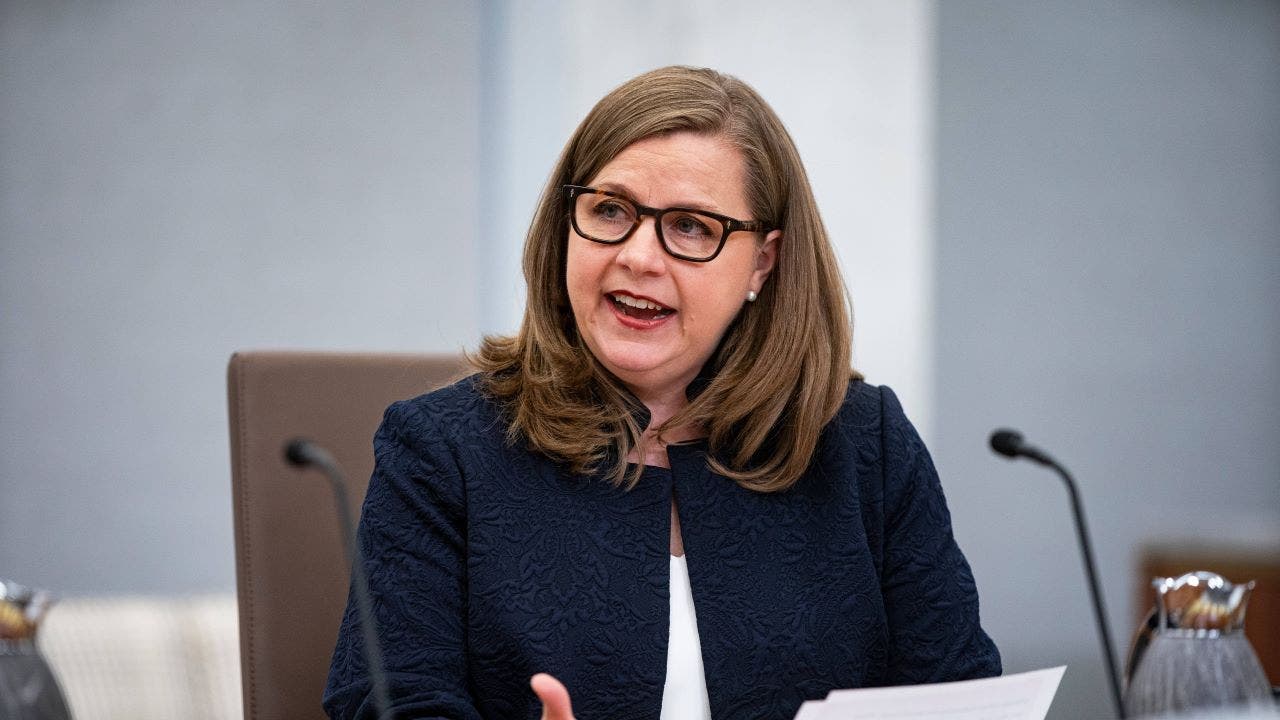
Federal Reserve Vice Chair for Supervision Michelle Bowman said on Friday that she’s penciled in multiple rate cuts before the end of the year.
“I’m still concerned about the job market,” Bowman, considered one of the more hawkish members of the Federal Open Market Committee, said during an interview on FOX Business Network’s “Mornings with Maria.” I want to see a little bit of recovery there. But, of course, I’ve written three cuts in for before the end of 2026 to hopefully support the labor market.”
Bowman also said she expects to continue to see strong economic growth this year.
FEDERAL RESERVE HOLDS INTEREST RATES STEADY
Her comments come after the FOMC on Wednesday voted 11-1 to leave the benchmark federal funds rate unchanged at a range of 3.5% to 3.75%. It marked the second straight meeting with rates being held steady after three successive 25-basis-point cuts in September, October and December to end last year.
Policymakers also released a summary of economic projections (SEP), which showed that the median projection for interest rates sees just one 25 basis point cut the rest of this year followed by a single cut of that size in 2027.
WILL THE FEDERAL RESERVE CUT INTEREST RATES IN 2026?
“In our SEP, FOMC participants wrote down their individual assessments of an appropriate path for the federal funds rate under what each participant judges to be the most likely scenario for the economy,” Federal Reserve Chair Jerome Powell said. “The median participant projects that the appropriate level of the federal funds rate will be 3.4% at the end of this year and 3.1% at the end of next year, unchanged from December.”
During the press conference following the Fed’s interest rate decision, Powell was asked what officials were seeing that led them to project a cut despite higher forecasts for both inflation and unchanged projections for the unemployment rate and economic growth.
FED’S POWELL SAYS IT’S ‘TOO SOON TO KNOW’ IRAN WAR’S IMPACT ON ECONOMY
“Essentially, the forecast is that we will be making some progress on inflation, not as much as we had hoped, but some progress on inflation,” Powell said. “It should come as we start to see in the middle of the year progress on tariffs going through once and then tariff inflation coming down. We should be seeing that.”
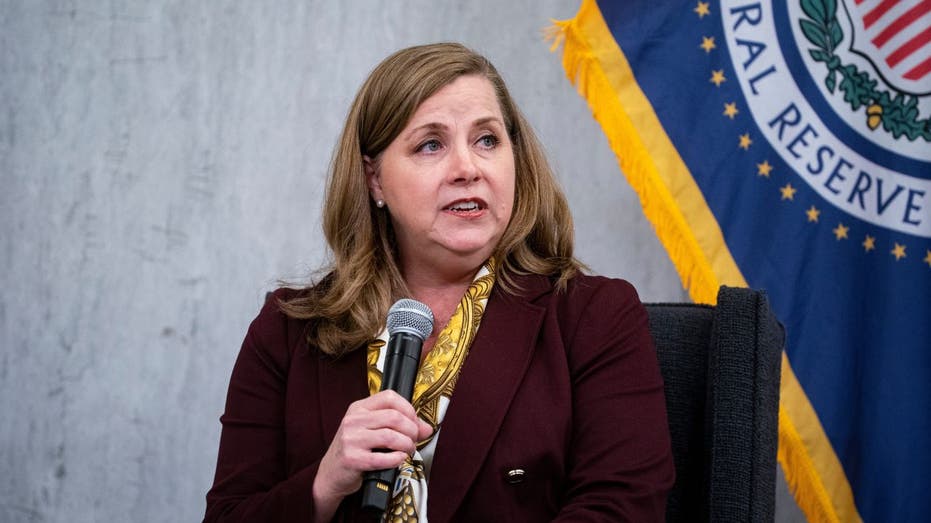
The latest rate decision comes amid a softening labor market and growing uncertainty over the war in Iran. Similar to Powell, Bowman said it’s too soon to know how the conflict in the Middle East will affect the U.S. economy.
CLICK HERE TO GET FOX BUSINESS ON THE GO
“I think it’s too early to tell what the longer-term imprint will be on U.S. economic activity and how we should think about that in terms of our longer-term economic forecast and how we should think about that in terms of our FOMC meetings and any rate changes that we might make as a result of economic evolution going forward.”