


Los Angeles officials have delayed implementation of a controversial plan to raise the minimum wage for hotel and airport workers to $30 an hour after the hospitality industry warned the mandate could result in layoffs, reduced hiring and increased automation.
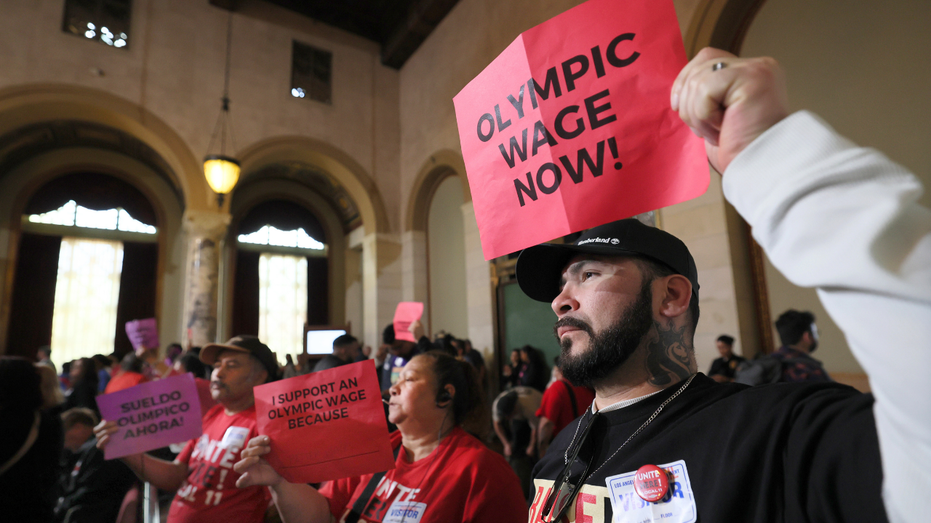
The measure, often referred to as the “Olympic Wage,” was originally designed to increase wages to $30 an hour by 2028 as Los Angeles prepares to host the Summer Olympics.
But city leaders recently voted to push back full implementation until 2030 amid concerns about rising labor costs as hotels prepare for a surge in visitors tied to the 2026 FIFA World Cup and the 2028 Olympics.
AOC-BACKED $25 MINIMUM WAGE COULD SQUEEZE SMALL BUSINESSES IN RED STATES
Rebekah Paxton, research director at the Employment Policies Institute, said city leaders began reconsidering the timeline after concerns emerged from the hospitality industry ahead of several major international events.
“There were concerns from the hotel community,” Paxton told Fox News Digital. “There was some data that came out that the hotels were struggling ahead of the Olympics, even as we’re approaching the World Cup this summer.”
The proposal also comes as New York City officials consider a separate plan to raise the city’s minimum wage to $30 an hour over several years, a concept aligned with broader progressive efforts to increase wage floors in high-cost areas.
AOC-BACKED $25 MINIMUM WAGE PLAN SOUNDS GREAT — BUT AT WHAT COST?


Paxton noted that hotel workers currently earn a minimum wage of roughly $22.50 an hour, meaning the proposal would raise pay by about one-third over just a few years. She said hotel operators warned the higher labor costs were already affecting hiring decisions as Los Angeles prepares for the World Cup and Olympics.
Citing a report from the Los Angeles hotel industry, Paxton said some hotels had reduced hiring and staffing because they could not absorb the anticipated labor costs.
City officials ultimately voted to delay the $30 wage requirement from 2028 to 2030, a move Paxton said gives hotels “a little bit of breathing room as we ramp up toward the Olympics.”
Still, she argued the delay does not resolve the industry’s underlying concerns.
“A $30 minimum wage is still a $30 minimum wage,” Paxton said. “A pause is certainly a step in the right direction, but it’s not going to solve the ultimate problem, which is a lot of folks saying that they can’t sustain that level of a wage increase.”
Paxton said supporters of the wage increase argue workers should receive higher pay, particularly as Los Angeles prepares to welcome millions of visitors for upcoming international sporting events.
“For proponents of this $30 minimum wage, this is sort of a junction where they can sort of make an emotional plea to the public,” Paxton said. “And of course, who doesn’t want to give workers more money?”
However, Paxton argued the higher wage requirement could further strain an industry that has already experienced hiring challenges.
“My team at EPI has done some work looking at the hotel industry since 2015,” she said. “And even before this went into place, hiring was stagnating. There were fewer jobs available for folks who wanted to be in the hospitality industry.”
“And so, by proposing this kind of super-sized hotel minimum wage on top of what already existed, you’re just going to exacerbate those negative economic impacts.”
The debate over the so-called Olympic Wage is expected to continue as Los Angeles prepares for a series of major international events while city leaders weigh competing priorities of worker pay, business costs and economic growth.

