

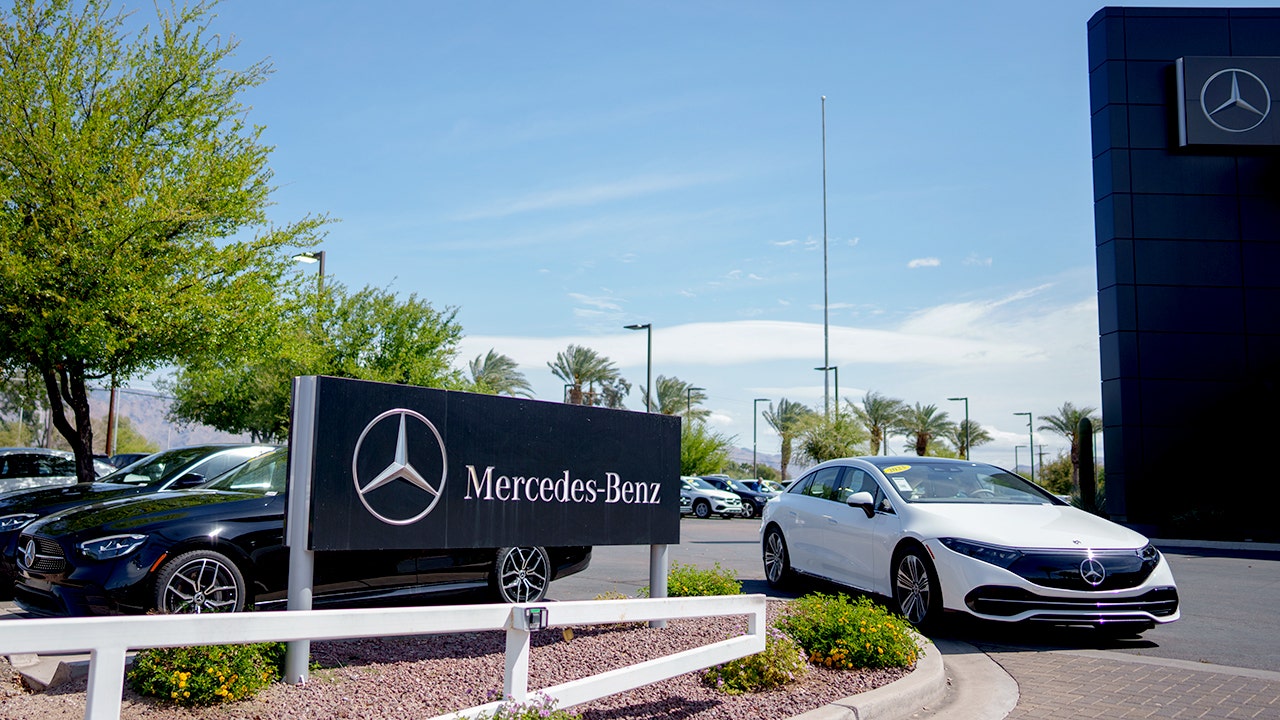
Mercedes-Benz faces a potential ban on selling connected vehicles in the U.S. under legislation targeting automakers with significant ownership ties to China.
The Senate Commerce Committee advanced a measure last week that would bar the sale of connected vehicles in the U.S. by companies with more than 15% ownership by Chinese entities, potentially affecting German automaker Mercedes-Benz, in which two Chinese investors hold stakes totaling nearly 20%.
Sens. Elissa Slotkin, D-Mich., and Bernie Moreno, R-Ohio, sponsored the bipartisan legislation, which would codify and expand restrictions established under the Biden administration, arguing that it “closes the door on Chinese-origin vehicles, software, and key components at every stage, from production, importation, to sale, so that data gathered on U.S. roads can’t be funneled back to the Chinese government.”
“Chinese cars are surveillance packages on wheels, with the ability to collect on American citizens and transmit that data back to Beijing,” Slotkin said in a statement.
FORD ENTERS COMPETITION TO DEVELOP NEW US ARMY TACTICAL TRUCK
Moreno said the measure aims to prevent “an absolute, total, and complete destruction of our industrial base.”
“China’s auto industry was not built to compete, it was built to destroy American manufacturing, gut the middle class, and undermine our national security,” he said.
But Sen. Ted Cruz, R-Texas, who chairs the Commerce Committee, warned that Mercedes-Benz could effectively be shut out of the U.S. market if the legislation becomes law without changes and said the bill needed changes.
Cruz accused General Motors of pushing for the measure to cut Mercedes-Benz out of the market and make its Cadillac brand more appealing.
“We would never consider” banning Mercedes-Benz sales in the U.S., he said.
GM contended that the legislation does not attempt to target an individual automaker, saying it “supports policies that protect and strengthen American manufacturing and the global competitiveness of U.S. automakers.”

“As we have said many times, we can compete with anyone in the world when we are given a level playing field,” GM said.
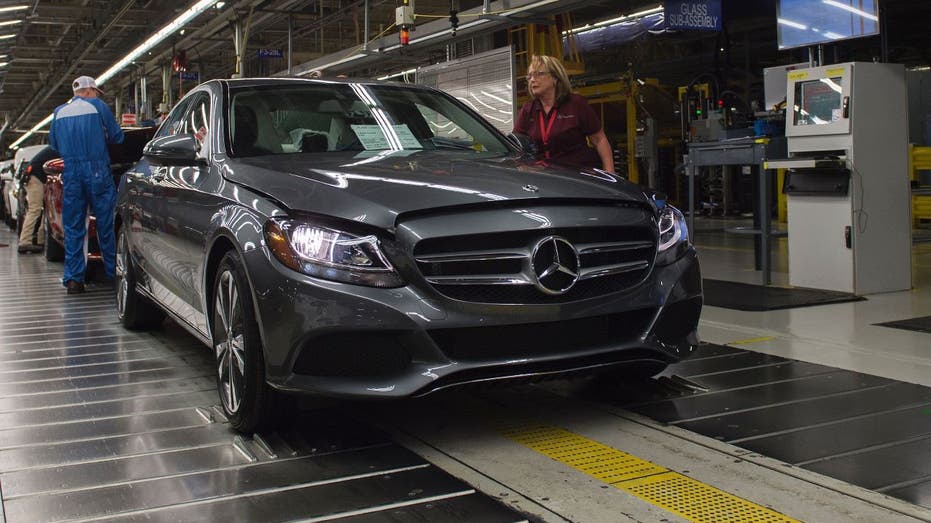
Mercedes-Benz highlighted its extensive U.S. operations while stressing that it “continues to support legislation designed to protect U.S. national security.”
“Mercedes-Benz also remains committed to ensuring that any legislation does not impact our operations. The company will continue to safeguard its employees, dealers, suppliers, and customers,” the automaker said.
The bill includes a process through which manufacturers could seek Commerce Department authorization for vehicles that otherwise would be prohibited.
Moreno said GM intends to move production of its Chinese-made Buick Envision to the U.S. for the 2028 model year and that Ford has agreed to transfer Chinese-made Lincolns to the U.S.
“I view that as a big victory,” Moreno said.
JAGUAR LAND ROVER RECALLS MORE THAN 15,000 VEHICLES OVER VISIBILITY-LIMITING DEFECT
CLICK HERE TO GET FOX BUSINESS ON THE GO
He also said Google’s self-driving vehicle company, Waymo, which had been in talks with Chinese automaker Geely about platforms coming from China, has committed to looking at a Detroit-based manufacturer for its future platforms.
Cruz said another bill provision backed by GM would require automakers to purchase more expensive batteries from GM, adding $5,000 to the vehicles’ cost.
This comes after the Trump administration last month banned Polestar from selling new connected vehicles in the U.S. starting in the 2027 model year due to the Sweden-based automaker being majority-owned by Geely.
Polestar’s sister brand and co-founder, Volvo Cars, said in May that it was given a green light to continue selling cars in the U.S.
The legislation must still pass the full Senate and House and be signed by the president before becoming law.
Reuters contributed to this report.

