

Good morning from Brussels.
ADVERTISEMENT


ADVERTISEMENT
Prime Minister Mette Frederiksen‘s Social Democrats suffered a setback in Tuesday’s snap elections, after failing to secure a majority despite clinching the most votes.
It’s the worst showing for the Social Democrats in a century despite finishing some way ahead of any other party. It means there are fraught coalition talks ahead, but Frederiksen is still likely to hold onto her premiership.
Frederiksen had called the snap vote in the hopes that her firm leadership in the face of US threats to forcibly seize Greenland earlier this year had galvanised her voter base and would cement her majority. Andreas Rogal has more.
Speaking to Europe Today earlier, former Danish minister Benny Engelbrecht, a Social Democrat, acknowledged his party “would have liked to see a better result.” Watch.
But we lead this morning with the latest on allegations that Hungary has been leaking sensitive EU information to the Kremlin, which is deepening a rift between Budapest and Warsaw.
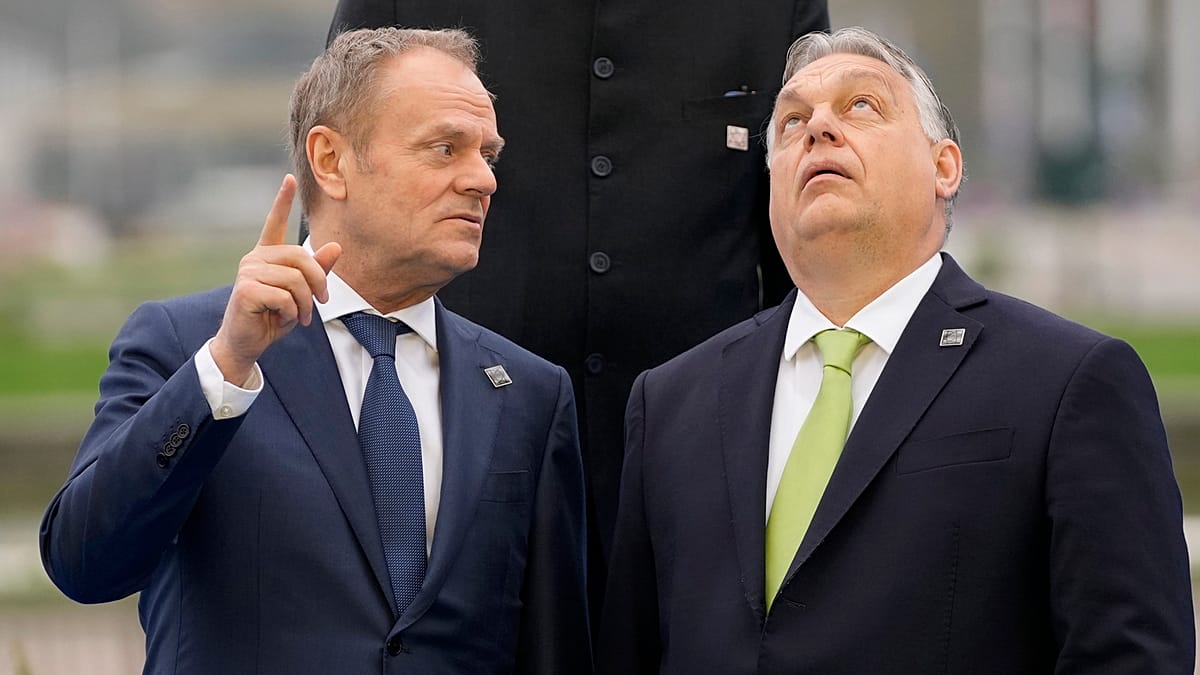
Poland’s Prime Minister Donald Tusk weighed in on the issue again yesterday, describing what he claimed to be Hungary’s apparent admission of the allegations as a “disgrace.”
“Orbán’s foreign minister confirmed that he systematically informed Moscow about what EU leaders were saying behind closed doors. What a disgrace,” Tusk, whose government is vocally critical of Hungarian premier Viktor Orbán, wrote on X.
It came after Orbán’s Foreign Minister Péter Szijjártó admitted regular contact with his Russian counterpart Sergei Lavrov “before and after” EU ministerial meetings in Brussels, but said this was part of normal diplomacy. He said he also remains in close touch with counterparts from other countries, including Turkey and Israel.
The Washington Post had earlier reported Szijjártó has been providing real-time briefings on EU talks to Lavrov by calling him during meeting breaks, a claim Szijjártó initially described as “fake news.”
Budapest maintains that the Washington Post’s reports are “lies” and “fake news.”
In comments shared with Euronews on Tuesday, the Hungarian Foreign Ministry said it considers it “completely normal” and “standard practice” to debrief others as decisions taken at the European level affect its relations with third countries, including Russia.
Still, Russia is not remotely considered as a partner in foreign policy in Brussels. The Russian Federation is heavily sanctioned by the EU for its invasion of Ukraine and most member states have cut ties with Moscow. EU member states did not consent to details of private meetings being shared and see Russia as a direct security threat.
In that sense, Hungary’s position is an anomaly outside of the European consensus.
The allegations come as a fierce campaign ahead of the Hungarian elections on 12 April is in full swing. Orbán is facing the first real challenge to his hold on power after 16 uninterrupted years in office, with opposition leader Péter Magyar still ahead in most polls.
The European Commission has called on Budapest to provide “clarifications” in response to the Washington Post’s reports. Yet EU officials acknowledge in private that foreign ministers are not bound by the same confidentiality rules as EU civil servants, as they are free to conduct their own foreign policy.
Oil prices slide after Trump claims talks with Tehran are progressing
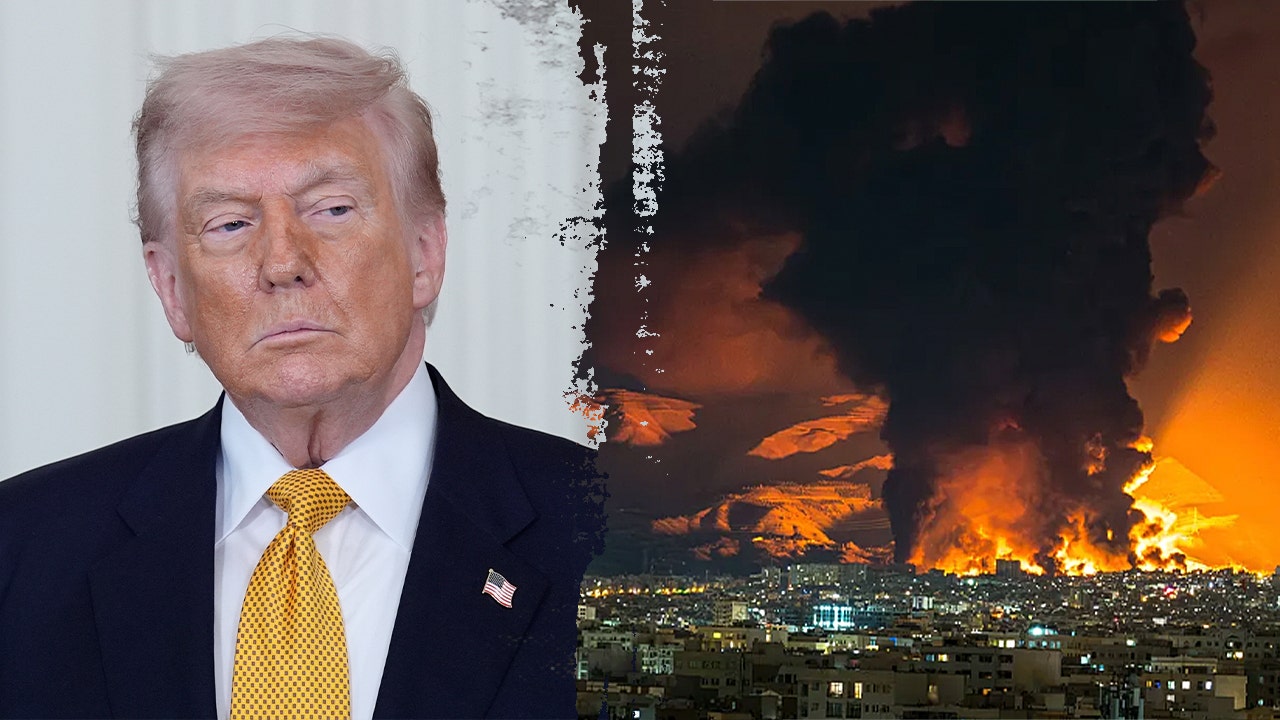
Oil prices slid again this morning as US President Donald Trump claimed talks with Iran on a settlement to end the war are ongoing.
Trump told reporters at the Oval Office last night that the US had “won this war”, and that Iran gave him a “gift” related to “oil and gas” involving the Strait of Hormuz, without giving further details.
Tehran has since announced that it will re-open the critical maritime waterway to “non-hostile vessels”, as the regime exerts its control on the Strait despite US claims of an imminent settlement.
Trump has also said envoys Steve Witkoff and Jared Kushner, Vice-President JD Vance and Secretary of State Marco Rubio would be involved in peace talks, with reports that a 15-point peace plan has been pitched by the US, with Pakistan acting as a mediator.
Islamabad has already emerged as the most likely venue for direct talks, with Egypt and Turkey also acting as a diplomatic bridge between both sides.
Yet Tehran continues to publicly deny that any talks are happening, with the Associated Press reporting this morning that Iranian military spokesperson Ebrahim Zolfaghari has mocked US diplomacy efforts, saying: “The one claiming to be a global superpower would have already gotten out of this mess if it could. Don’t dress up your defeat as an agreement. Your era of empty promises has come to an end.”
Meanwhile, there is mounting concern over the situation in Lebanon after Israel said it would take control of a buffer zone in the country’s south.
Speaking to Europe Today earlier, the UN’s High Commissioner for Refugees Barham Salih described the situation as “dire” and conditions for the more than one million people displaced as “harsh.”
“I hope this thing will be put behind us before long because we need peace. This conflict has already gone on for far too long,” Commissioner Salih told Europe Today. “Human lives are at stake. The impact on civilians across the region is phenomenal and profound.” Watch.
EU delays proposal to ban Russian oil amid Iran war, price spikes and Druzhba row
The European Commission has delayed the presentation of a highly anticipated proposal to permanently ban the imports of Russian oil, as the war in the Middle East continues to send shockwaves across energy markets, my colleague Jorge Liboreiro reports.
It also comes amid a tense standoff with Hungary and Slovakia, the only two member states that still buy Russian oil, over the Soviet-era Druzhba pipeline.
The legislation, which is part of the REPowerEU roadmap, was tentatively scheduled to be unveiled on 15 April, but the date has now been removed from the calendar.
“I do not have a new date to give,” Anna-Kaisa Itkonen, the Commission’s spokesperson for energy, said on Tuesday morning.
“What I can reassure you of is that we remain committed to making this proposal.”
The postponement is influenced by the US-Israeli strikes on Iran, which have upended energy markets and closed off the Strait of Hormuz, a vital passage that, until now, carried a fifth of global oil and LNG every day.
Jorge has the full story.
More from our newsrooms
EU-Australia trade deal draws ire of farmers and lawmakers. Copa-Cogeca, the EU’s influential farmers’ lobby, said in a statement on Tuesday that the EU’s concessions to Canberra in the newly signed trade deal with Australia are “unacceptable” as they fail to sufficiently protect European farmers. Peggy Corlin has thefull story.
Former Frontex director under investigation in France. France has opened an investigation into Fabrice Leggeri, a far-right MEP and former director of the EU border agency Frontex. Leggeri is suspected of complicity in crimes against humanity and torture, for having allegedly encouraged the interception of migrant boats by Libyan and Greek authorities, according to AFP. Leggeri and his lawyers were not aware of this decision and have no comment to make, the MEP’s office told Euronews’s Vincenzo Genovese.
Family denies Israel’s role in French journalist’s death. The father of Marine Vlahovic, a French journalist who was found dead on the roof of her Marseille apartment in November 2024, has rejected mounting social media speculation that his daughter was murdered by Israel. Noa Schumann and Estelle Nilsson-Julien have the full story.
We’re also keeping an eye on
- Spanish Prime Minister Pedro Sánchez to address the Spanish Congress of Deputies to outline the government’s position on the conflict in the Middle East
- European Commission to present a communication on integrated wildfire risk management and a new financial instrument to support the European defence industry
- EU lawmakers to decide which EU country will host the upcoming European Customs Authority
That’s it for today. Vincenzo Genovese, Maria Tadeo, Jorge Liboreiro and Sandor Zsiros contributed to this newsletter. Remember to sign up to receive Europe Today in your inbox every weekday morning at 08.30.