

Good morning from Brussels. This is Mared Gwyn with a packed newsletter to kick off your Wednesday.
ADVERTISEMENT


ADVERTISEMENT
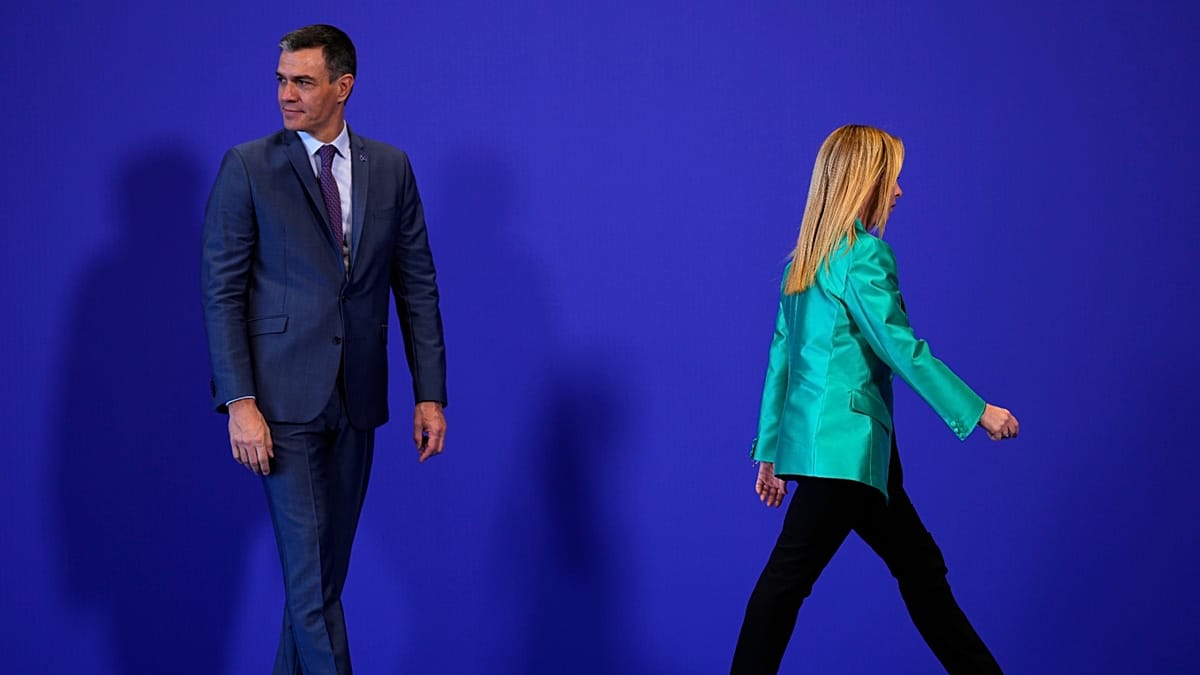
First, an exclusive: The European Commission is set to criticise the Italian government’s cuts to excise fuel duties in a report published later today, arguing that such untargeted measures are ineffective. This after Prime Minister Giorgia Meloni asked Brussels for even more fiscal flexibility to respond to the energy crisis stemming from the Iran war, as our political correspondent Luca Bertuzzi explains.
The Commission is also expected to castigate Rome for a lack of a robust industrial plan, in separate country-specific recommendations also expected to be published today, Luca reports with Eleonora Vasques.
Italy’s tax regime is expected to also receive criticism for being too heavily reliant on labour. The recommendations are also set to say that the country’s flat-tax regime for the self-employed makes the tax system “highly complex” as it “weakens progressivity and erodes the tax base, resulting in significant revenue loss”.
The quest for tech sovereignty: Also today, the European Commission is due to make its move on tech sovereignty with a sweeping package covering cloud services, AI technologies, advanced chips and open source.
In recent years, Brussels has grown wary of its technological dependency on foreign technology providers, be they American or Chinese. But critics point out that the EU might be doing too little too late to rejoin the international tech race.
What’s in the package? Luca Bertuzzi explains that the most controversial part is set to be the exclusion of foreign cloud services from public tender procedures in sensitive use cases. The contentious concept of cloud sovereignty will be sliced into four levels, with the stricter requirements expected for sectors like defence and healthcare.
Boosting chip demand in Europe will be another major part of the package, in a revamp of the Chips Act after the first edition failed to substantially relocate production from abroad.
Specific sectors like automotive are also expected to face supply chain diversification requirements following a series of chip shortages, as previously scooped by Euronews.
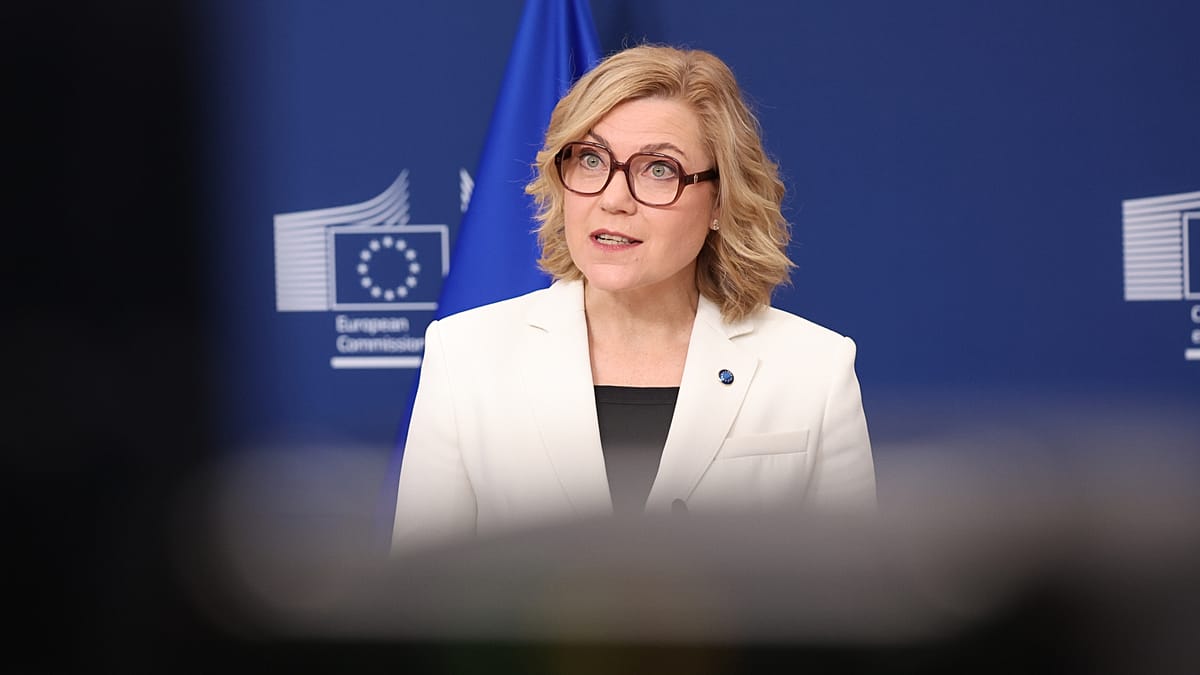
Finally, open source is seen by some as the “secret sauce” that could enable Europe’s fragmented tech scene to compete with the giants of Silicon Valley. The European Commissioner for Tech Sovereignty, Henna Virkkunen, is expected to unveil the plans later this morning.
Sanctions evasion: In an interview with our correspondent Angela Skujins, the EU’s sanctions envoy David O’Sullivan said the bloc must remain vigilant on sanctions evasion by Chinese firms and be prepared to take “unilateral action”.
His comments come after Beijing retaliated against EU sanctions on Chinese companies supplying dual-use technologies used by Russia on the battlefield by placing seven EU defence firms on its export control list.
“I think it is very important (…) that we continue to be able to send a strong message that we are vigilant about efforts to circumvent our sanctions and that where we see the evidence, we will take action,” O’Sullivan told Angela.
He added that the EU raises the issue “regularly at the highest level with the Chinese authorities”, but that China’s answer is that “they don’t feel they’re doing anything wrong”.
“So we still have to take unilateral action against Chinese companies and financial institutions,” he explained.
O’Sullivan also addressed efforts to ban maritime services for Russian oil tankers, a measure currently on hold pending G7 agreement and complicated by the US sanctions waiver on seaborne Russian oil amid the energy crisis triggered by the Iran war. While acknowledging there is “no appetite” for steps that could worsen the crisis, he argued EU sanctions on Russian energy have significantly reduced Moscow’s revenues. “This was one of our key objectives, and it is working,” he said. Watch.
Magyar teases imminent deal on Hungarian minority to lift veto on Kyiv’s EU accession
Prime Minister Péter Magyar has signalled an imminent deal with Kyiv on the rights of Hungarian minorities in Ukraine, raising prospects for an agreement that could finally unlock EU accession talks after months of political deadlock.
Speaking to reporters in Berlin following a bilateral meeting with German Chancellor Friedrich Merz, Magyar said he was “very optimistic” about resolving the long-standing issue of Hungarian minorities in Ukraine — a delicate political matter — and pointed to a resolution on a technical level “as soon as this week”.
“The negotiations are progressing encouragingly,” he said. “I am ready to meet with Ukraine’s president at the beginning of next week, if we manage to agree on these fundamental human rights.”
His comments come after five diplomats briefed on the matter told Euronews that conditions for a deal have gained momentum, potentially allowing Hungary to lift its veto on Ukraine’s accession talks by 16 June.
Maria Tadeo, Luca Bertuzzi and Sandor Zsiros havethe details.
More from our newsrooms
Why is the EU establishing return hubs for migrants — and why are they so controversial? Uganda and other African States have been floated in conversations among EU countries as potential sites to build return hubs. Our Vincenzo Genovesebreaks downwhat the deportation centres are and asks how soon they could become a reality.
Explained: How drone incursions in Europe went from rarity to reality. A drone strike in Romania has reignited fears that Russia’s war in Ukraine is spilling into Europe. As incursions multiply across NATO and EU member states, leaders are racing to strengthen defences against a growing threat that blends military pressure, disruption and psychological warfare. Angela Skujins explains.
Protests against luxury resort in Albania linked to Jared Kushner now in second day. Thousands of people took to the streets of Albania’s capital Tirana on Tuesday in the second day of protests against a luxury resort project linked to US President Donald Trump’s son-in-law, Jared Kushner, to be built on several hectares of the protected Vjosa-Narta coastal landscape in Zvërnec and on the uninhabited Adriatic island of Sazan. Anna Florihas more.
US and Iran exchange new strikes as ceasefire talks falter over Israel’s military actions in Lebanon. The US military said on Tuesday it launched strikes on an Iranian facility in response to Iranian strikes on Kuwait and Bahrain which failed to hit their targets. Reports suggest talks between both sides have stalled, although US President Donald Trump has claimed the talks were continuing. Jerry Fisayo-Bambi hasthe details.
We’re also keeping an eye on
- European Council President António Costa continues his tour of the Western Balkans in Pristina, Kosovo.
- Hungarian Prime Minister Péter Magyar meets French President Emmanuel Macron at the Élysée Palace in Paris.
- EU negotiators resume talks on new rules on air passenger rights at 13.00 Brussels time.
- European Commission Vice-President Roxana Mînzatu and European Commissioner for the Economy Valdis Dombrovskis give a press conference on the European Semester package.
- European Commission Vice-President Henna Virkkunen and European Commissioner for Energy and Housing Dan Jørgensen unveil the EU’s Tech Sovereignty Package.
- European Commissioner for Fisheries and Oceans Costas Kadis and European Commissioner for Startups, Research and Innovation Ekaterina Zaharieva present the OceanEye package.
That’s it for today. Luca Bertuzzi, Eleonora Vasques and Vincenzo Genovese contributed to this newsletter.