

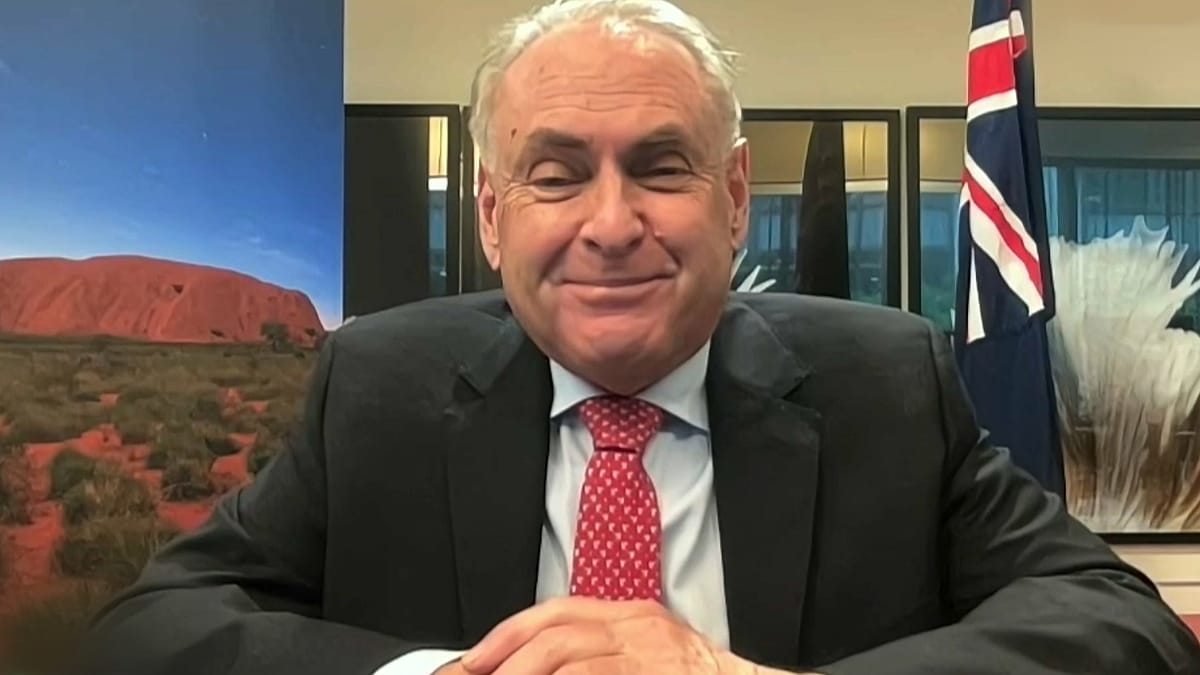
Australian Trade Minister Don Farrell told Euronews’s flagship morning programme Europe Today that his message for the Europeans when dealing with China over trade is simple: “patience”.
ADVERTISEMENT


ADVERTISEMENT
“Patience is a good first start with the Chinese,” he said. “One of the things that we’ve been very focused on is as a middle power in the region is ensuring that we project our policies of a peaceful region.”
“That’s been very good for Australia in recent months, particularly with the troubles around the rest of the world. We’ve been able to continue pretty much uninterrupted our trade relationships, and that’s the way we’d like to keep it.”
The comments come as the EU is in the throes of figuring out its trade position with both China and the US.
Last week European Commissioners gathered to discuss how to navigate the delicate EU-China relationship. Last year, according to the European Commission, the bloc registered a record-high €359.9 billion trade deficit with Beijing, with Brussels still pursuing efforts to reduce its dependence on China rather than sever economic ties altogether.
A readout following the meeting stating that the approach is to “de-risk, not decouple”, however the risk of a full-scale trade war has never felt as possible.
Canberra knows this all too well. Australia was embittered in a major trade spat with China, its largest trading partner, from 2020 to 2022.
Australia’s then-prime minister, Scott Morrison, had called for an international inquiry into the origins of the COVID-19 virus that triggered the pandemic. Beijing retaliated and the situation escalated, eventually resulting in China slapping bans and tariffs on Australian exports such as barley, wine, beef and lobsters, measures that affected AUD$19 billion (€11.7 billion) of goods.
But the next Australian government, led by current Prime Minister Anthony Albanese, aimed to change the tenor of the conversation, and by 2024 all Chinese import duties were lifted.
“We’d had a very rocky relationship with the previous government,” Farrell told Euronews. “We didn’t get it fixed overnight. But by the end of our last term in government, we had resolved all those trade impediments.”
According to Farrell, this resulted in Australia shoring-up free or lucrative trade deals with the UK, India, the UAE – and, after eight years of deadlock, the EU.
“The hardest of them all was a free trade agreement with the Europeans, but we signed that a few (months) ago in Sydney,” he said.
Much of the latest flurry of activity in Canberra and other capitals has been sparked by the actions of US President Donald Trump, who has upended the international order during his first months in office.
In January 2025, he announced eye-watering import levies on many trade partners, such as the EU and Australia. The threats were ratcheted up on Wednesday, with Trump declaring 10-12.5 percent tariffs on imports from 60 countries, including the EU and Australia.