


On Sunday, 12 April, Hungarian voters cast their ballots in the country’s parliamentary election, ending Prime Minister Viktor Orbán’s 16-year rule.
ADVERTISEMENT


ADVERTISEMENT
Tisza, the pro-European, conservative party led by Péter Magyar, secured a two-thirds majority in one of the most anticipated and closely watched elections of 2026.
The outgoing Prime Minister Viktor Orbán has, in fact, been a central actor in the European Union (EU), where he’s well known for his anti-EU rhetoric and his use of the veto mechanisms to block, among others, aid to Ukraine.
On the contrary, Prime Minister-designate Péter Magyar has taken a more positive stance on the EU and pledged to repair relations between Budapest and Brussels.
But will he be able to break with Orbán’s legacy?
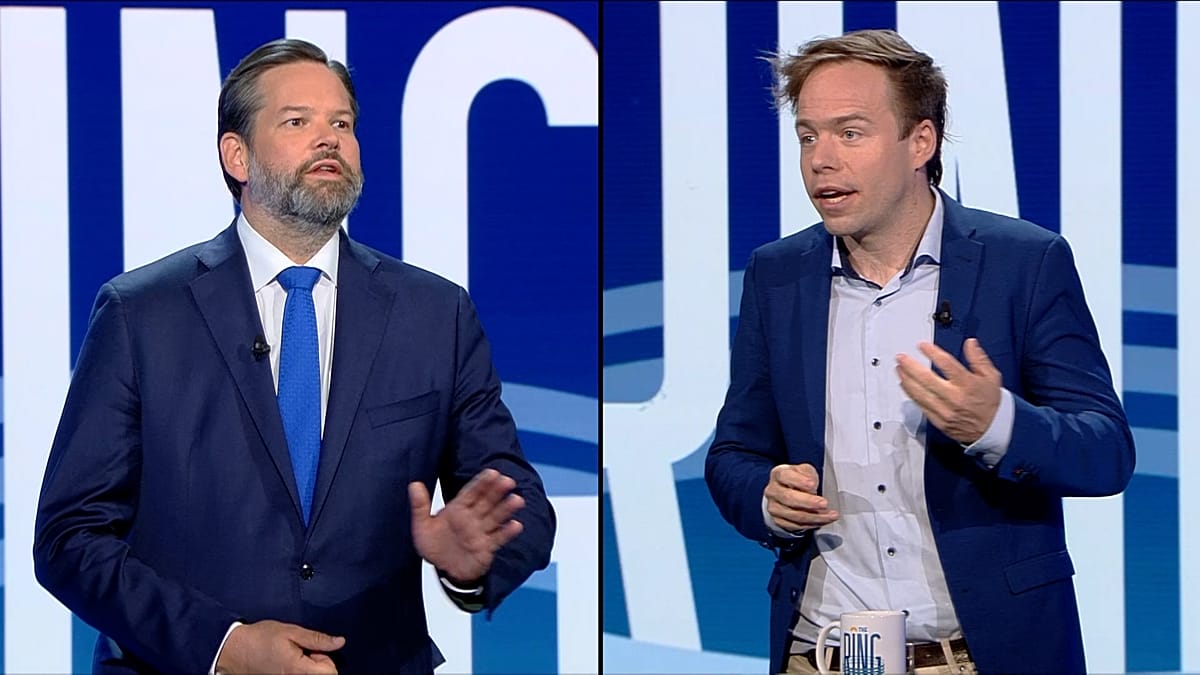
To answer these and more questions, Brussels, My Love? talked to former Belgian Prime Minister and former European Council President Charles Michel and Euronews’ EU reporter Sandor Zsiros.
What does Péter Magyar’s victory mean for the EU?
“That’s an important moment for the EU, but it’s also an important moment for the future of Hungary,” Charles Michel told Euronews, commenting on the outcome of the Hungarian election.
“It will allow the EU very rapidly, I hope, to be more ambitious in terms of European solidarity, in terms of European integration and in terms of support for Ukraine,” he added.
According to Michel, Magyar’s victory also indicates that political interference do not always succeed.
He stressed that the United States and, especially, Donald Trump’s administration have shown strong support for Viktor Orbán: “That’s not what we do when we are sincere allies,” he told Euronews. “I do not blame the United States, that’s the choice of the United States, but we [the EU] have to make our own choices”.
Will Magyar be able to open a new chapter for Hungary?
Péter Magyar has already taken some steps to change the political and institutional system that Orbán built in Budapest over the past 16 years; for instance, he has announced plans to suspend the signal of the national broadcaster.
In addition, since his party won two-thirds of the majority in the parliament, Magyar could potentially amend the constitution, as Orbán did during his term.
“There are fears,” Zsiros said. “He [Magyar] is coming from Orbán’s party. So ideologically, he’s very close, when you see the real right-wing conservative values that he has,” he continued.
But, according to Zsiros, if Magyar were to govern like Orbán it would be “political suicide. The big majority, 3.3 million voters, voted for a change. And in my view, he cannot backtrack on that”.
As for the Budapest-Brussels ties, Zsiros believes the relationship will improve. However, he does not think Magyar will be in favour of all European proposals.
“He [Magyar] said, for instance, that he doesn’t want to fast-track Ukraine’s accession, he doesn’t want to send Hungarian money to Ukraine, and he doesn’t want to approve the so-called migration pact,” he explained.
“I expect him to be constructive and at the same time a very hard negotiator when it comes to his interests,” Zsiros concluded.
Listen to the podcast in the player above or wherever you get your podcasts.
Additional sources • Georgios Leivaditis, sound editing and mixing.