

Some of the world’s greatest cities have been inhabited for thousands of years, building upon layers of history that mean you could find something from the Roman Empire next to a glass-clad skyscraper.
ADVERTISEMENT


ADVERTISEMENT
While these contrasts are charming for visitors, the streets of old don’t necessarily work with the demands of modern day life.
Enter: The purpose-built city.
Built from scratch, city designers can work in grid patterns to make sure residents have easy access to things like schools, supermarkets and health clinics, and they can also be built to accommodate the anticipated amounts of traffic.
Some countries have gone a step further by creating purpose-built capitals, with the latest being Equatorial Guinea, which declared Ciudad de la Paz its new capital in January this year.
Here are some other purpose-built capitals, from some very famous examples to some lesser-known cities that might just come up at a pub quiz…
Brasília, Brazil
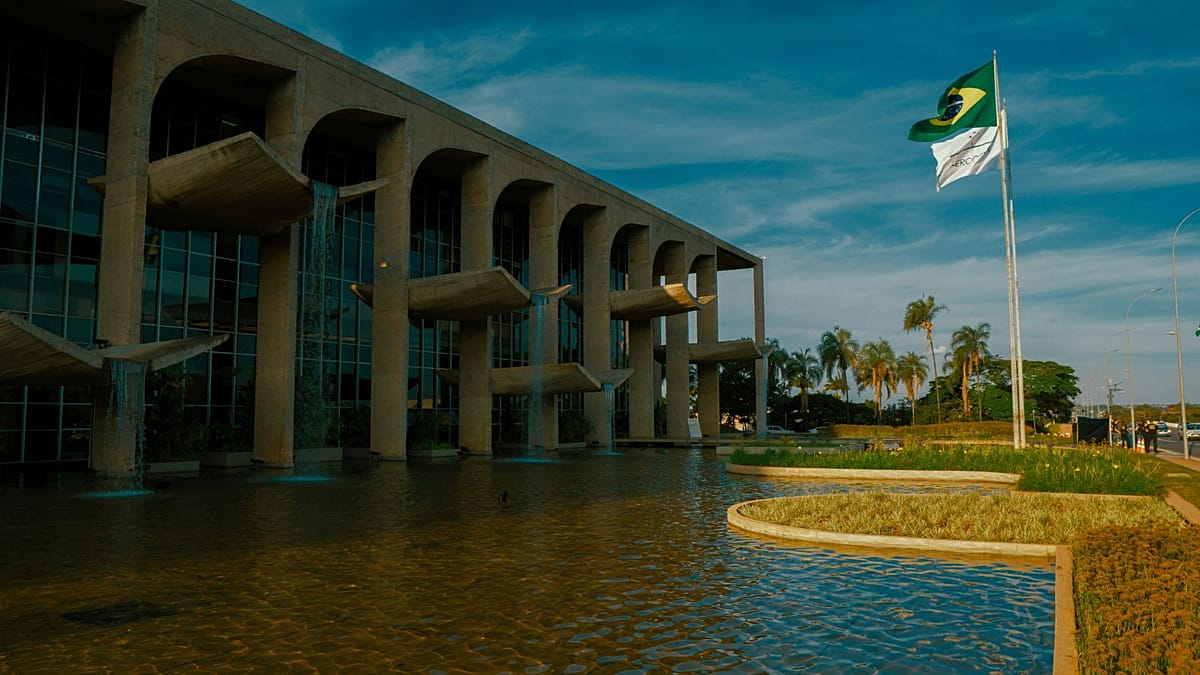
Arguably the best known planned capital in the world, Brasília became Brazil’s capital in 1960.
Its location was chosen as the president wanted the capital to be more centrally located, with Rio de Janeiro, the previous capital, being on the southeastern coast. Today, it is the country’s third most populous city.
A must-visit for architecture lovers, Brasília is known for its modernist design, with highlights including the Metropolitan Cathedral and the National Congress of Brazil.
The city was even given UNESCO World Heritage Site status in 1987, with the organisation describing it as a “landmark in the history of town planning”.
Canberra, Australia
The lands in and around what is now known as Canberra have been inhabited for thousands of years, with the Ngunnawal people recognised as the area’s traditional custodians.
British colonisers began settling in the area in the late 1820s, with Canberra eventually being chosen to be the federation’s capital in the early 20th century as a compromise between Melbourne and Sydney.
The Department of Home Affairs held a competition for the design of the new capital, with construction beginning in 1912.
Today, around half a million people call Canberra home – just a tenth of Australia’s most populous city, Melbourne.
While small, the city is known for its museums and art galleries, its vineyards, and its foodie scene, which is centred around the suburb of Braddon.
Wellington, New Zealand
In its short history as a part of the British Empire, New Zealand moved its capital from Old Russell (now known as Okiato) to Auckland before finally settling upon Wellington.
The area was originally discovered by Māori explorer Kupe in the 10th century, and the area was inhabited by numerous groups including the Te Ātiawa and Taranaki at the time European settlement began here.
Wellington was chosen as the capital due to its location near the Cook Strait, which separates the north and south islands.
While the capital wasn’t built from nothing, its current layout was designed as a series of interconnected grids by Captain William Mein Smith in 1840.
Auckland remains the country’s most populous city, with 1.5 million inhabitants, while nearly 210,000 people live in Wellington.
Aside from being the actual capital, Wellington is known as the country’s cultural capital thanks to its many museums, as well as being home to the New Zealand Symphony Orchestra and the Royal New Zealand Ballet.
Islamabad, Pakistan
Built in the 1960s, Islamabad (which means “city of Islam”) became Pakistan’s capital in 1967.
The location was chosen over the previous capital, Karachi, as it was closer to the army headquarters in Rawalpindi.
Today, more than 1.1 million people call the city home, making it the country’s tenth-most populous city.
Top attractions include the Pakistan Monument, Faisal Mosque and Rawal Lake.
Naypyidaw, Myanmar
Among the newest capital cities in the world, construction on Naypyidaw began in 2002, with the city taking over the reins from Yangon in 2005.
Located around 320 km north of Yangon, Naypyidaw, which means “abode of kings”, was built to withstand an invasion and is where much of the country’s military and administrative headquarters can be found.
The city is huge but has a very small population, leading to scenes of wide roads with barely any vehicles on them. It was heavily damaged in the 2025 earthquake and many of the buildings are yet to be rebuilt.
Māravijaya Buddha, the world’s largest marble Buddha statue, is now one of the main attractions, having opened in 2023.
The UK’s Foreign, Commonwealth and Development Office advises against all travel to much of Myanmar, although both Naypyidaw and Yangon are not included in this warning.
Belmopan, Belize
Belize’s capital was moved inland after a hurricane in 1961 destroyed more than three-quarters of Belize City’s buildings. Building works began in 1967, and it became the official capital in 1970.
The name brings together the name of the country’s longest river, Belize, and Mopan, which is the name for another river in the nearby area.
Around 20,000 people call Belmopan home, compared to around 64,000 people living in Belize City.
Paying a visit to the nearby St. Herman’s Blue Hole National Park is among the top things to do here, and you can also go hiking in Guanacaste National Park.
Ciudad de la Paz, Equatorial Guinea
The newest new capital on this list, Ciudad de la Paz, replaced Malabo as the capital of Equatorial Guinea on 2 January.
First established in 2015, the location for the “city of peace” was chosen because of its accessibility and milder climate.
While the city was built to accommodate a population of around 200,000 people, right now it’s more like a ghost town.