

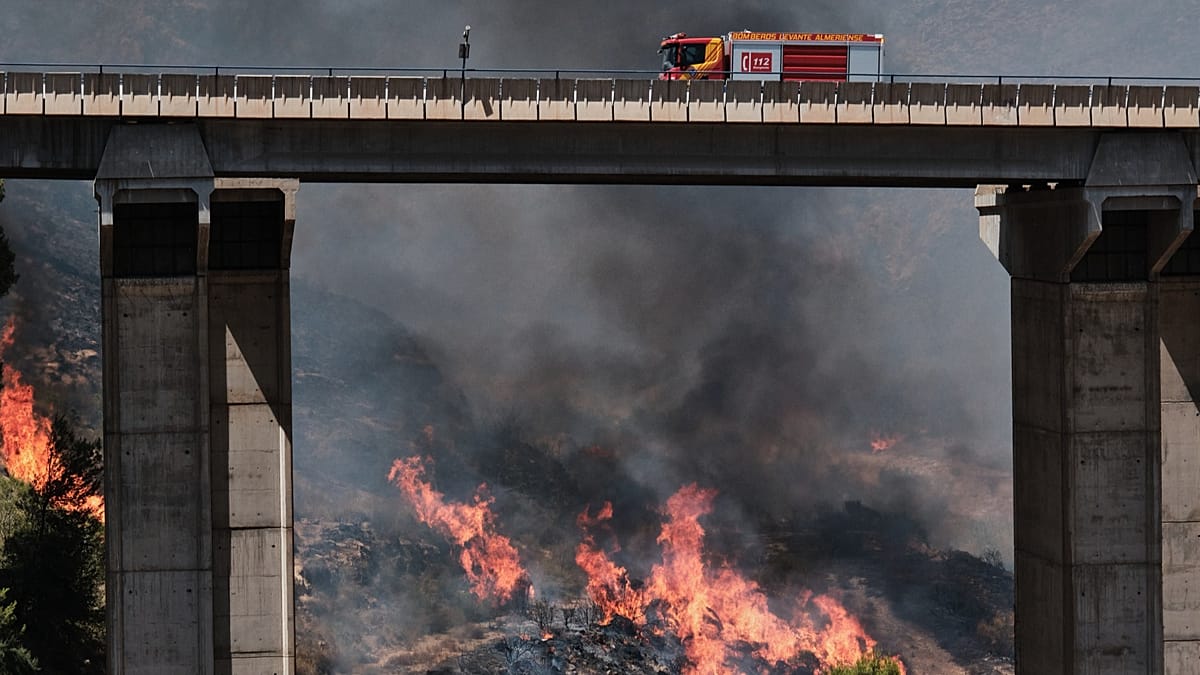
Spanish Prime Minister Pedro Sánchez on Monday urged Spain to strengthen its prevention measures after one of the country’s deadliest wildfires in recent history killed 13 people and razed a huge area.
ADVERTISEMENT


ADVERTISEMENT
The Los Gallardos fire, which has been stabilised after four days of intense work, has so far left a provisional toll of 13 people dead, 23 unaccounted for, 10 reports of missing persons and almost 7,000 hectares burnt.
“We must not only react when these fires happen, we must prevent” as climate change makes civil protection emergencies “increasingly frequent,” Sánchez said.
The Prime Minister visited the southern municipality of Turre to meet the emergency services as they work to extinguish the fire. He cited a better protection of municipalities and training courses for young people on how to react.
The leader of Andalusia’s regional government, Juanma Moreno, agreed that “we also need the public as a whole to adopt that awareness and self-protection, which is fundamental.”
Citizens can respond more quickly to the sighting of smoke, the “suspicious attitudes” of possible arsonists and the warnings of the authorities, Moreno said.
The inferno spread at up to 100 metres per minute at its peak last week, trapping victims in their vehicles or on foot as they tried to flee.
According to authorities, some victims may not have heeded evacuation warnings in time.
More than 200 ground personnel, several fire engines, helicopters, water-bombing planes and UME units have taken part in the firefighting effort.
In recent hours, efforts have focused on cooling the hot spots and continuing the search for those missing.
Climate chaos
The authorities have cautioned that the number of missing people remains uncertain until autopsies and the identification of bodies are completed.
Officials coordinating the identification work said on Sunday that 10 formal reports of people missing had been submitted.
British, Belgian and French authorities were helping to provide genetic profiles from relatives.
Calmer winds and cooler temperatures allowed hundreds of firefighters to tame the blaze over the weekend.
The authorities suspect the wildfire began when a power line broke, setting fire to vegetation that had been parched after hot weather that pushed temperatures above 40C.
Scientists say climate change caused by humans burning fossil fuels is making extreme weather events such as heatwaves, which contribute to wildfires, more likely and more intense.
“Here climate change is having a very big impact, and we are in a state of climate chaos with situations that are practically unheard of, exceptional and increasingly explosive,” said Moreno.
Deadly wildfires devoured almost 400,000 hectares (4,000 square kilometres) of land in Spain last year, the highest figure recorded for the country by the European Forest Fire Information System.

