

Yields on U.S. Treasurys hovered near multi-year highs on Wednesday, as the global bond market experienced a sell-off amid concerns over energy prices keeping inflation elevated as well as government debt burdens.
The yield on the benchmark 10-year Treasury note was around 4.8% in the early afternoon on Wednesday, slightly lower than the intraday high of 4.818% – which was the highest level since November 2023.
Sovereign debt yields were elevated in other notable developed countries, with Japan’s 10-year yield above 3% for the first time in 30 years, German 10-year Bund yields at their highest level since 2011, and Britain’s equivalent yield at its highest since 2008. Bond yields rise as prices fall, and vice versa.
Bond yields have been under pressure since the Iran war began earlier this year due to the disruption of oil supplies causing gas prices to rise, putting inflationary pressure on consumers. Concerns about government debt have also contributed to the rise in yields.
WARSH SAYS FED’S MAIN FOCUS SHOULD BE ON PRICES WITH CENTRAL BANK’S RATE POLICY IN FOCUS
Angelo Kourkafas, senior global strategist for investment strategy at Edward Jones, said in a statement, “Rising government bond yields have been the primary challenge for markets amid solid economic growth and strong corporate earnings, as higher rates continue to put pressure on equity valuations.”
“We believe several factors have contributed to the rise in yields, including uncertainty surrounding the Fed’s policy path and increased bond issuance from both public and private borrowers,” Kourkafas added. “More recently, however, investor concerns have shifted toward the potential inflationary impact of higher energy prices.”
Government bond yields are also facing pressure from increased issuance of corporate debt, as tech giants and firms in other sectors use debt to help finance the buildout of artificial intelligence (AI) infrastructure, such as data centers.
Naka Matsuzawa, chief macro strategist at Nomura Securities, said the AI hyperscalers’ willingness to pay reasonably high rates was pulling up yields broadly, with the focus now on whether economic growth can rise along with them to help economies cope with higher borrowing costs.
WHAT WARSH’S JACKSON HOLE SPEECH SIGNALS ABOUT WHERE INTEREST RATES ARE HEADED

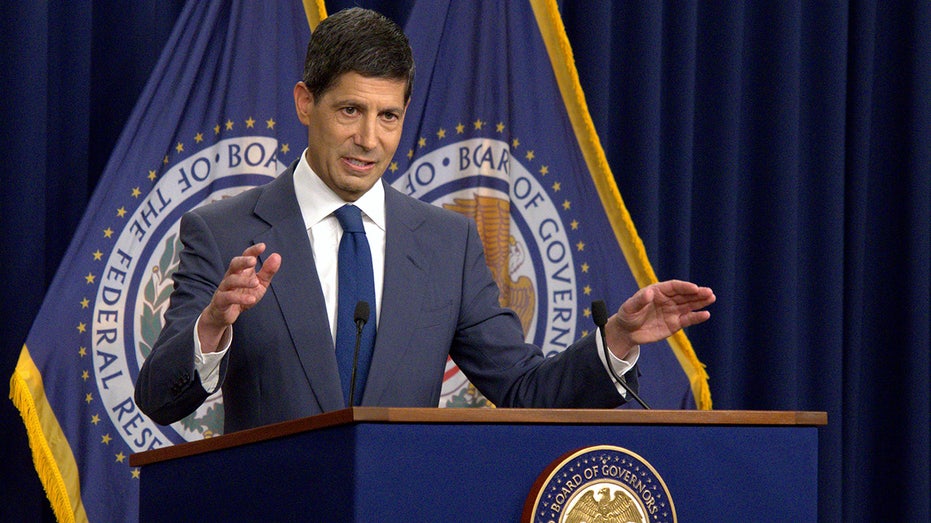
State Street’s head of macro strategy, Michael Metcalfe, said rising energy prices are causing traders to bet on interest rate hikes by the Federal Reserve to tamp down inflation.
Metcalfe added that the “narrative is also getting wrapped up with longer-term concerns about the fiscal path,” and said the bond market sell-off was “orderly.”
The Fed is set to hold its next monetary policy meeting in two weeks on Sept. 15-16, with markets seeing a 64.2% probability that policymakers will hike the benchmark federal funds rate by 25 basis points from the current target range of 3.5% to 3.75%, according to the CME FedWatch tool.
Those odds shifted dramatically over the last week, when the tool showed a 63.4% chance of rates remaining at their current level following the Fed’s meeting this month.
FED’S FAVORED INFLATION GAUGE ROSE MORE THAN EXPECTED IN JULY
Fed Chair Kevin Warsh’s keynote address at the annual Jackson Hole Symposium emphasized that the central bank is aware that inflation remains above its 2% target, with the most recent reading of the Fed’s preferred measure – the PCE index – showing prices 3.7% higher than a year ago.
Warsh said policymakers’ focus should be on the price stability side of the Fed’s dual mandate given “concerning” inflation data and jobs data reflective of a labor market that is “broadly consistent with full employment.”
Policymakers will get fresh data on both the labor market and inflation ahead of the meeting later this month, with the August jobs report due out this Friday and last month’s CPI inflation report set to be released next Friday.
Reuters contributed to this report.

