

Florida voters will weigh in on a ballot measure that could ease property tax burdens and mark a major shift in how local government is financed in the Sunshine State.
The Florida Legislature referred a proposed constitutional amendment to voters that’s known as Amendment 3, the Homestead Tax Exemptions, Property Assessments and Spending Restrictions Amendment.
The measure appears on the ballots voters Floridians cast leading into Election Day on Tuesday, and would require 60% support from voters to be approved.
THE FLORIDA ‘BLUEPRINT’: SEN ASHLEY MOODY REVEALS HOW THE STATE BUILT A $1.8T ECONOMIC FORTRESS
Advocates of the measure include a number of Republican lawmakers in the state who argue that it would provide needed tax relief to Florida residents, while detractors say it would hurt the ability of local governments to provide public services funded through property taxes.
What would the measure do?
Amendment 3 would increase the homestead exemption for non-school property taxes to $150,000 in 2027 and $250,000 in 2028, after which time the exemption threshold would undergo inflation adjustments. It would also lower the annual cap on assessment increases on non-homestead properties from 10% to 5%.
The measure would also create new provisions governing when new Florida residents qualify for the increased homestead exemption, which they would be eligible for after five years of residency with the current exemption of up to $50,000 available in the interim.

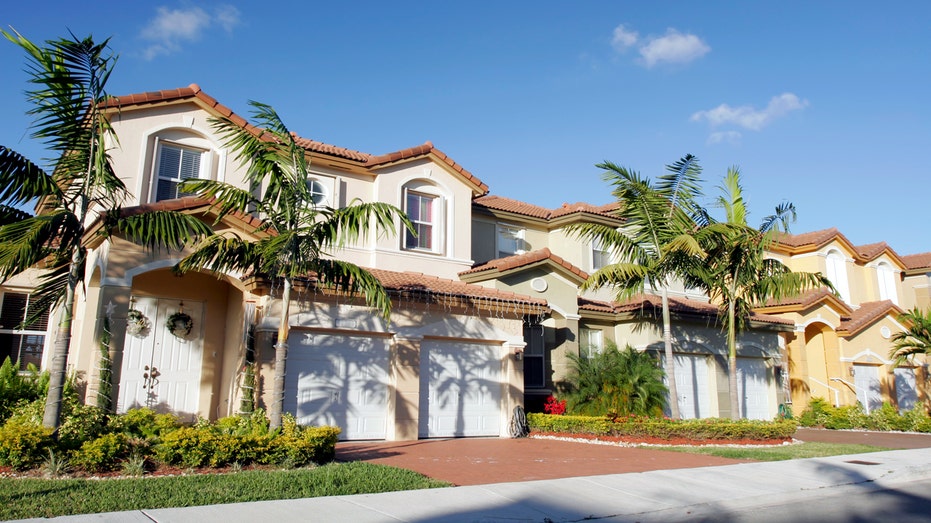
It would also establish constitutional guidelines for how county and municipal governments may use property tax revenue, confining such expenditures to public safety, infrastructure, natural resource projects, flood control, local bonds and existing debt payments, employee retirement benefits and the operations of local government.
‘MORE POWER, MORE MONEY’: INSIDE THE ECONOMIC CLASH OVER FLORIDA’S FREE-MARKET BOOM
If enacted, the measure would take effect on Jan. 1, 2027, and people who move to Florida after Dec. 31, 2026, would receive a smaller initial exemption under the law.
How would it impact tax revenue?
An analysis by the Tax Foundation found that if Amendment 3 is approved, it would cost local governments about $4.9 billion in foregone property tax revenue in the first year with the $150,000 exemption in place; with that cost rising to $8.7 billion in the second year once the $250,000 exemption takes effect.
Annual impacts would rise to $11.8 billion starting with tax year 2031, though the Tax Foundation cautioned that the “full fiscal impact remains uncertain and could easily exceed current estimates.”
What proponents and critics are saying
Florida Republican Gov. Ron DeSantis has advocated for Amendment 3, which is backed by many GOP leaders in the state and the state party. DeSantis noted at a roundtable in support of the measure that in the past seven years, “property tax revenues across Florida’s 67 counties have increased nearly 100%.”

“Local governments are taking in almost twice as much money – far more than inflation and population has increased. The State of Florida has reduced its budget FOUR YEARS in a row. Local governments can surely do the same,” DeSantis said, adding that the measure provides property tax relief for Floridians and could eliminate them outright for homesteaded Floridians.
The Florida Democratic Party’s state executive committee formally opposes Amendment 3, citing concerns about the impact on local government services. Florida State Democratic Party Chair Nikki Fried said the measure “would hurt our local communities and cut local services while giving huge tax breaks to billionaires and corporations.”
“This is a scam that would either raise other taxes on working families or rob their communities of essential services like public hospitals, EMTs, fire rescue, disaster preparedness, road maintenance, children services, libraries and parks,” Fried said, calling the measure “just plain bad for Florida.”
CLICK HERE TO DOWNLOAD THE FOX NEWS APP
The nonpartisan Tax Foundation was critical of the design of Amendment 3, saying that it “is not simply a tax cut” and “represents a fundamental restructuring of local government finance.”

The group said that if the measure is enacted and property tax burdens eased on homestead properties, the cost of funding local government services would remain and that “burdens would shift to businesses, renters, new homebuyers, and other property owners through higher taxes, fees, and housing costs.”
“Property tax reform should focus on achieving the best of affordability, predictability, and local fiscal stability. Amendment 3 fails to achieve that balance,” the Tax Foundation added.

