
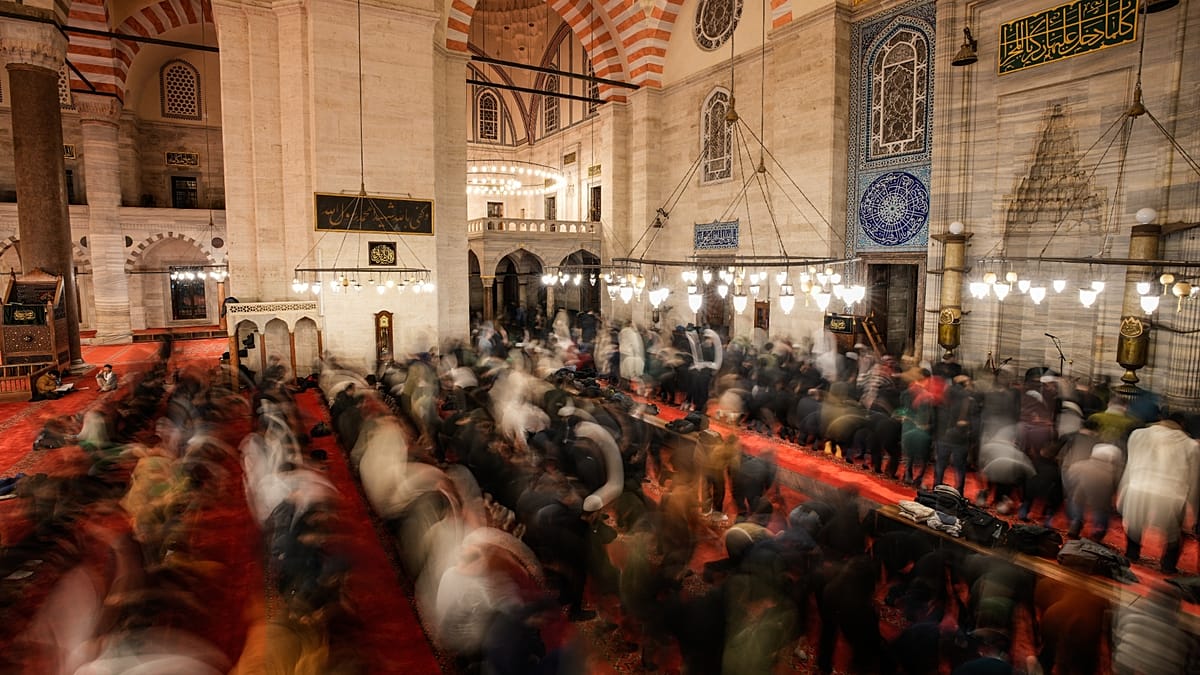
Ramadan sees Muslims around the world fast from dawn until sunset.
ADVERTISEMENT

ADVERTISEMENT
While it’s true that some cities across the Islamic world slow down during the day, and there are rules and sensitivities to be aware of, there’s no reason to be put off travelling at this time.
In fact, visiting a destination during Ramadan is a great way to learn more about the local culture, and you’ll be able to feel the festive atmosphere of the month once night falls.
When is Ramadan?
Ramadan is the ninth month of the Islamic calendar, and is believed to be the month when the Quran, Islam’s holy book, was revealed to the Prophet Muhammad.
With a lunar calendar of 12 months lasting either 29 or 30 days, the dates of Ramadan move by around 10 days each year.
The exact dates of Ramadan are not known until the crescent moon is sighted, and individual countries may decide on different Ramadan dates, although many follow the moon sighting committee in Saudi Arabia.
This year, Ramadan began on 18 or 19 February, with the end date falling between 19 and 21 March.
In 2027, Ramadan should begin around 8 February, and in 2028, the month should begin around 28 January.
Can I eat and drink in public during the day in Ramadan?
Rules around eating and drinking as a non-Muslim vary from country to country.
For example, in Qatar many restaurants will be closed during the day, and those that do open will keep their eating areas blocked from sight. All bars close during the month, and you won’t be able to buy alcohol from the store. You could also be fined for eating, drinking or smoking in public.
As another example, Bosnia and Herzegovina, where the population is around 51% Muslim, has no rules in place around eating and drinking in public during the day, but you may find that some restaurants will only open after sunset.
What to wear during Ramadan
Again, the rules around what to wear depending on which country you visit.
Many Muslim countries expect a certain level of modesty – generally clothes that cover the shoulders and knees – year round, and you can expect the same during Ramadan. If you are visiting a country where that isn’t the case, you can dress as you would normally, although you may want to dress more conservatively depending on where you are.
Will I be able to book tours and other activities during Ramadan?
We sound like a broken record here, but it depends. Attractions like museums, art galleries and heritage sites may adjust their opening hours to accommodate staff who are fasting, so you may have to plan your visit for later in the day. Similarly, tours and other activities will still be offered, but with adjusted timings.
One thing to be aware of is that the Friday prayer is the most important of the week, so many businesses may stay closed until the early afternoon.
Many mosques are open to non-worshippers, but the opening hours for visitors who are not praying will likely change. The rules around modesty, i.e. covering your hair and covering as much skin as possible with loose clothing, will not change.
How to experience Ramadan like a local
Cities come alive at night during Ramadan, and you’ll often see restaurants and coffee shops staying open until the early hours.
Iftar, the meal enjoyed after breaking the fast, can be a grand affair, with many restaurants offering sumptuous buffets of traditional dishes. What you eat will depend on the country you visit, but typically the fast is broken with dates as they are a quick way to boost your energy.
Many countries continue the iftar cannon tradition, with a shot to mark the end of the day’s fast. In others, there are Ramadan drummers who wake people up before dawn for suhoor, the meal before the fast begins.
In some countries, including Iraq, Bahrain, Kuwait, Qatar and Saudi Arabia, Garangao is celebrated in the middle of the month. Traditionally, the night would see children going door-to-door singing for sweets and nuts, although today the festivities can be held in malls or outdoor markets.
Speaking of, pop-up markets or bazaars are also common, offering everything from dates, abayas and kaftans to gifts for Eid al-Fitr, the festival to celebrate the end of Ramadan.
While there’s no requirement for non-Muslims to fast, many people do choose to join in during the month, even if only for a day.
Where to celebrate Ramadan in Europe
There are several countries in Europe where Islam is the main religion among most of the population, including Turkey, Bosnia and Herzegovina, Kosovo and Albania.
Both Bosnia and Herzegovina and Kosovo have Ramadan cannon traditions, while certain cities in Turkey are known for their drummers waking people up for suhoor.
Much like how many places now celebrate the Lunar New Year or Diwali, Ramadan events are becoming increasingly common in major cities across the continent.
For example, London now has Ramadan lights along Coventry Street throughout the month, and there are open iftar events at iconic venues such as The National Gallery, 22 Bishopsgate and Trafalgar Square, while Berlin will host a halal food festival on 6-7 March 2026, complete with food stalls, a mocktail bar and a souq.