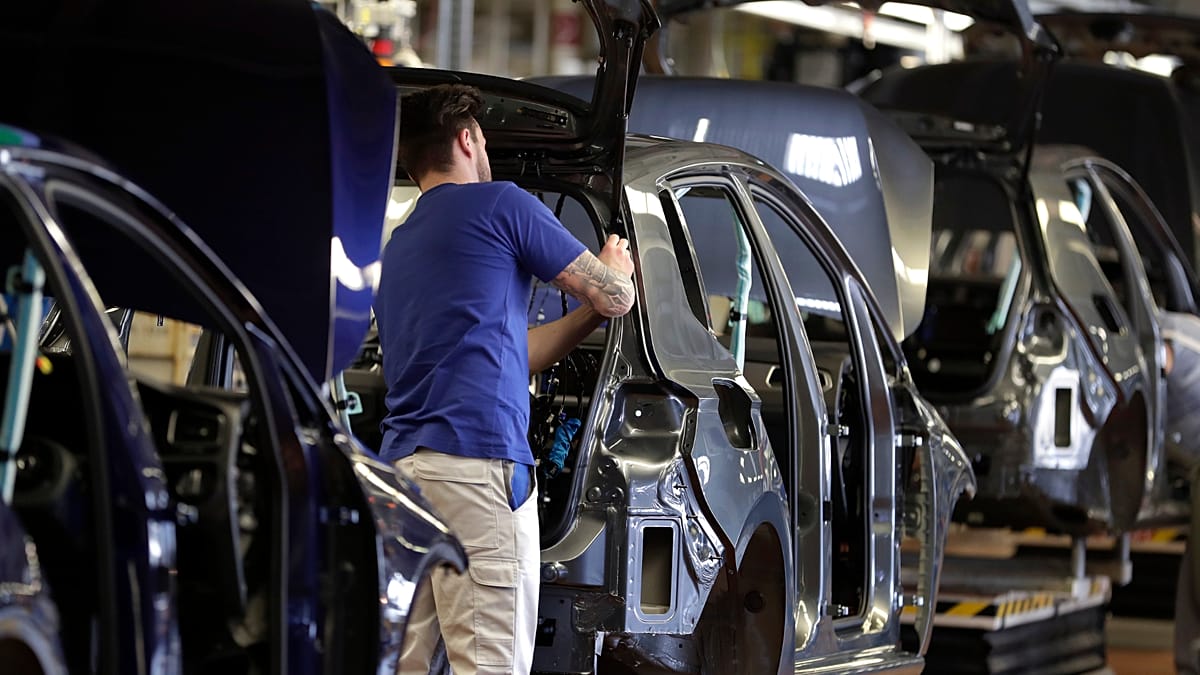



Migrants from outside the EU who are living and working in the bloc appear to have a harder time finding stable, long-term employment compared to the native EU population.
ADVERTISEMENT


ADVERTISEMENT
The latest Eurostat figures show that non-EU citizens aged 20 to 64 living in one of the 27 member states had the highest prevalence of temporary contracts and part-time employment over the past decade, while nationals had the lowest.
Experts put this down to a number of factors, including linguistic hurdles, cultural differences and administrative burdens.
“Many non-EU citizens face additional barriers in accessing stable, permanent jobs, including language barriers, non-recognition of qualifications, more limited professional networks, discrimination, and immigration-related restrictions,” Joanna Hofman, director of research and evaluation employment, welfare and skills at market research company Ipsos, told Europe in Motion.
“As a result, they are more likely to enter the labour market through more precarious forms of employment,” she said.
Others may deliberately choose less permanent work due to their own personal preferences.
“Some migrants take seasonal or short-term work and may actively seek temporary or part-time employment because they intend to return to their home country or because this arrangement better suits their circumstances,” Hofman said. “However, I would expect structural labour market barriers to explain most of the difference.”
Nevertheless, the share of non-EU nationals taking temporary or part-time work has decreased in recent years, reaching its lowest level in 2025.
Between 2015 and 2025, non-EU employees living and working in the bloc’s 27 member states on temporary contracts registered the highest shares in Cyprus, the Netherlands and Poland, all exceeding 40%, according to Eurostat.
Furthermore, female employees had a higher share of temporary contracts than males across all citizenship groups, with the highest discrepancies seen in Italy, Spain, and Portugal.
For Hofman, there are likely to be several contributing factors for the gender imbalance.
“Caring responsibilities are an important one, as women are still more likely to balance paid work with childcare or other caring duties, which can increase the likelihood of taking temporary or more flexible jobs,” she said. “Women are also overrepresented in sectors such as health, social care, education and hospitality, where temporary contracts are relatively common.”
In 2025, non-EU citizens were most likely to take part-time employment, at around 22%, while this figure fell to around 17% for nationals of the country in question.
Part-time employees of other EU countries stood between the two groups, at 20%.
The largest disparity for part-time work between nationals, EU citizens working in other EU countries, and non-EU citizens was observed in the Netherlands, followed by Finland and France.
In addition, women again had considerably higher shares of part-time employment than men across all citizenship categories.
On the other hand, self-employment in 2025 was highest among EU citizens living in their home countries, at 13.5%.
This was followed by EU citizens living in other EU countries, at 10.9%, and non-EU citizens, at 10.1%.
Some of the reasons why nationals are more likely to have this type of work are familiarity with legal, tax and regulatory systems, as well as access to finance, professional networks and information, according to experts.
“Nationals are generally more likely to possess these resources and have fewer administrative barriers,” Hofman explained. “Non-EU nationals may also face additional legal or visa-related constraints, making self-employment less accessible.”
Nationals recorded particularly high shares in Greece and Italy, while citizens of other EU countries showed the highest shares in Croatia and Portugal.
In the EU, the share of self-employed was consistently higher for males across all citizenship groups.