

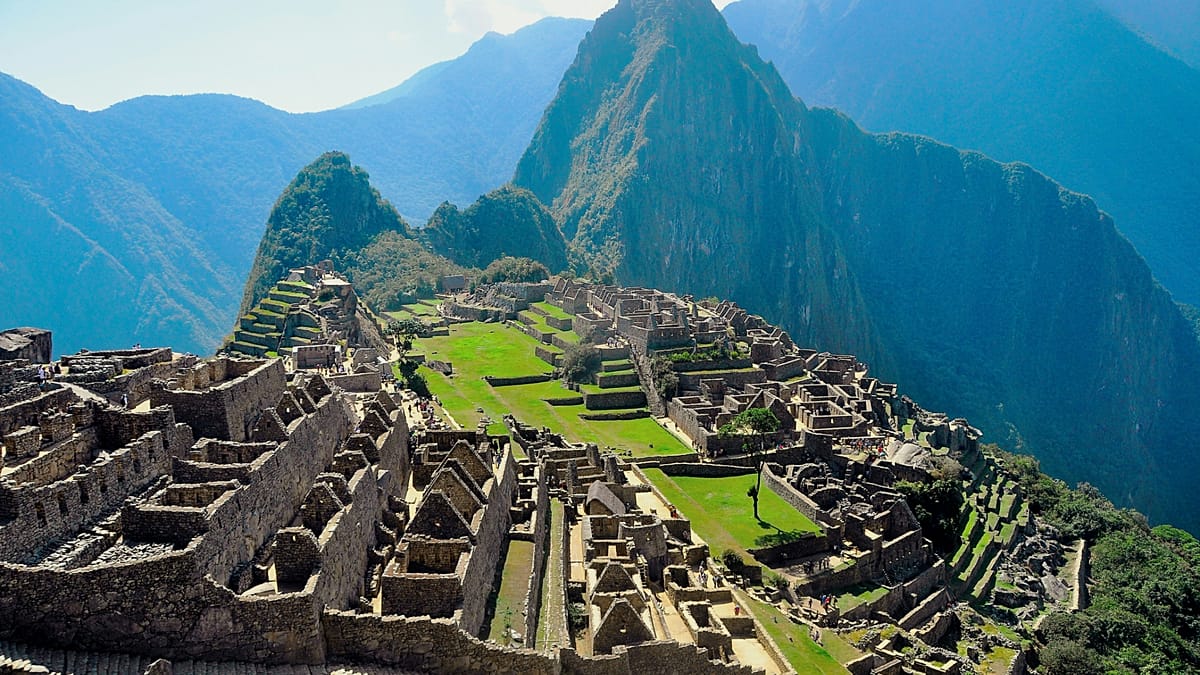
Machu Picchu is Peru’s biggest tourist attraction; it received over 1.5 million visitors in 2024.
That number is set to soar as early as next year when a new airport will make reaching the ancient Incan citadel much easier.
While it’s welcome news for visitors – the site is notoriously hard to reach – residents in the area and archaeologists have long been protesting the construction.
The long journey to Machu Picchu
Currently, travellers seeking to gaze on the remains of 15th-century Machu Picchu have a lengthy journey to undertake.
Most fly into Lima airport, in Peru’s capital, and then take a domestic flight to Cusco. It then requires a train or bus to Aguas Calientes (Machu Picchu Town), followed by a 25-minute bus ride or hike up to the citadel.
Alternatively, there’s a four-day trek through the Andes.
The drawn-out arrival is part of the experience for some travellers, given the fact that the citadel was intentionally built hidden at high altitude in an Amazonian cloud forest.
But for many, a trip that long simply isn’t practical.
A new airport planned for Machu Picchu
A new airport that would slash transit times to Machu Picchu has long been in the pipeline.
After decades of delays, funding deficits and corruption scandals, things might finally be accelerating.
Chinchero International Airport will be located on the outskirts of Chinchero, a historic Andean city, allowing travellers to avoid stops in Lima and Cusco.
It would mean saving hours of travel.
The construction site has seen little activity so far, but authorities have now announced that the airport will be completed in late 2027.
New airport threatens Incan heritage
The new airport is designed to accommodate as many as eight million travellers annually and could bring 200 per cent more visitors to the area, according to the BBC.
Proponents hail the economic boost this will bring to an underdeveloped region, from construction jobs to tourist accommodation and services.
But Indigenous communities, archaeologists and conservationists have spoken out from the beginning about the cultural and environmental risks.
Machu Picchu has already brought in daily capacity limits managed by a strict booking system because of overcrowding.
More visitors will put immense strain on the fragile ruins, archaeologists warn. Critics say planes would pass low over nearby Ollantaytambo and its archaeological park, with potentially irreversible damage to the Inca remains.
Opponents of the airport are also underlining the danger posed to the surrounding Sacred Valley.
The landscape that was once the heartland of the world’s biggest empire in the 15th century is peppered with Incan roads, structures, irrigation networks and a salt mine, many still in use.
The land required to be cleared for construction directly threatens this heritage.
“This is a built landscape; there are terraces and routes which were designed by the Incas,” Natalia Majluf, a Peruvian art historian at Cambridge University, told the Guardian in 2019. “Putting an airport here would destroy it.”
New airport will exacerbate water shortages
Agricultural traditions and the natural landscape are also at risk, conservationists say.
Since the new airport was announced, corn-growing families around Chinchero have been selling off farmland, the BBC reports.
Flight and vehicle traffic to the airport will drastically change the character of the area, while hotels and lodges will replace agricultural heritage in the vicinity.
There are fears that the construction will exacerbate water shortages by depleting the watershed of Lake Piuray, which Cusco city depends on for almost half its water supply.
Waste management systems are also already strained and recycling infrastructure is nonexistent.
Opponents of the airport now have to hope that, as has been going on for decades, construction will continue to face setbacks.