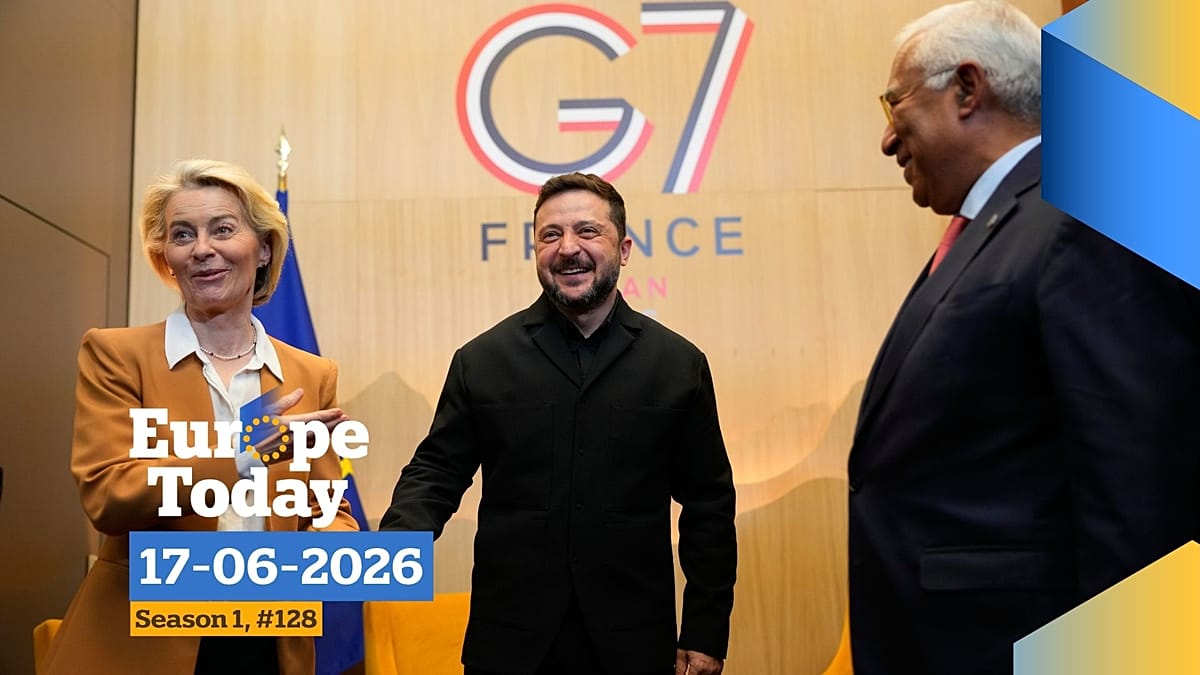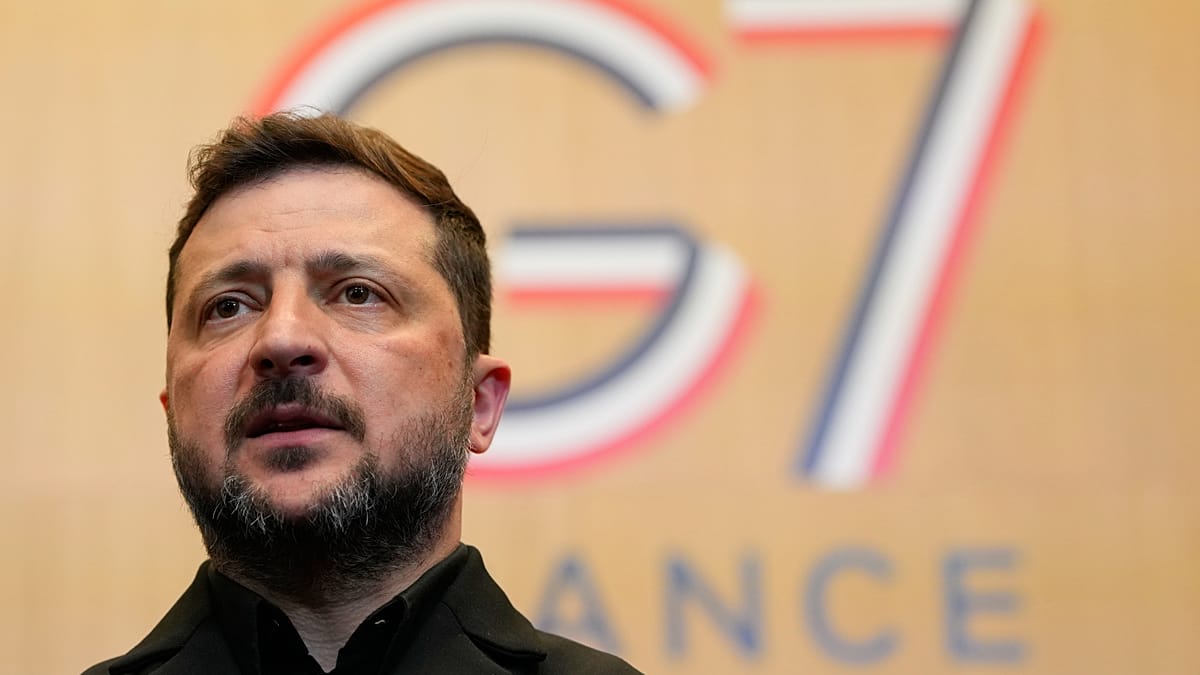


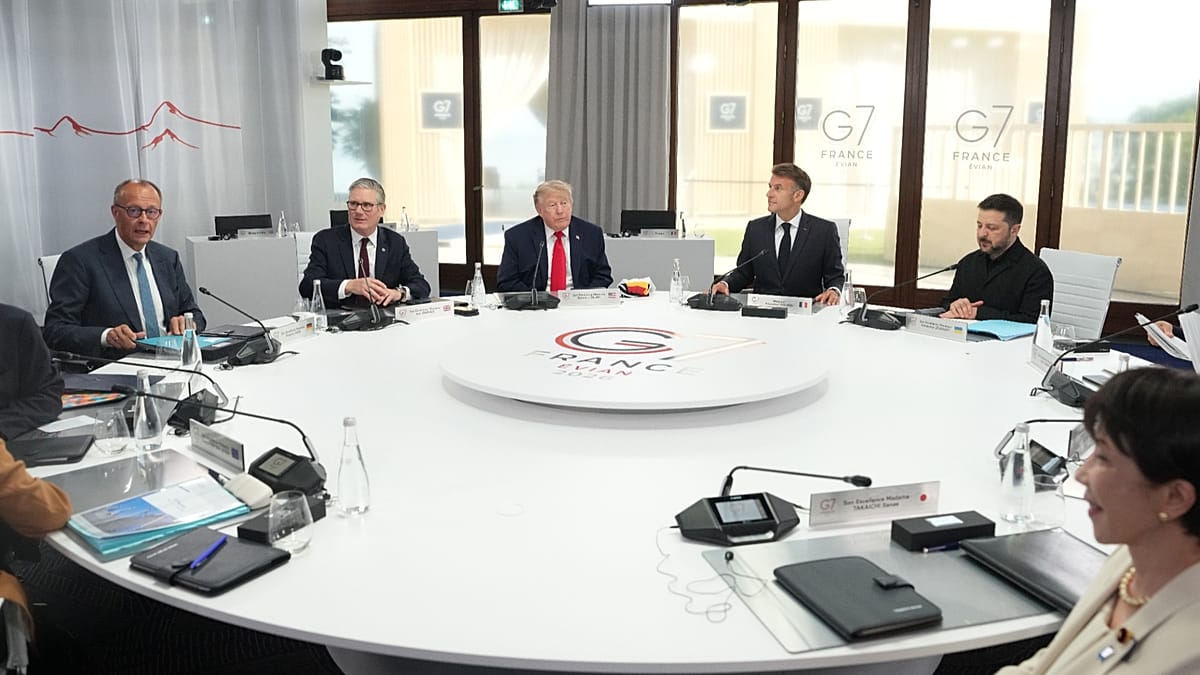
Ukraine has secured significant new pledges of support from world leaders at the G7 summit in France, bolstering its defences and diplomatic leverage against Russia after months of fractious transatlantic debate.
ADVERTISEMENT


ADVERTISEMENT
Volodymyr Zelenskyy arrives in Brussels for the EU summit from Evian-les-Bains armed with commitments to strengthen Ukraine’s air defences and intensify pressure on Moscow in an effort to push the Kremlin into direct talks with Kyiv.
“The G7 Summit in France delivered important results for Ukraine. Most importantly, we agreed on additional strengthening of Ukraine’s air defence,” Zelenskyy said on X.
“Our partners will ensure support for our defence and energy resilience,” he said, adding they will also impose new sanctions and pressure on Russia.
More air defence
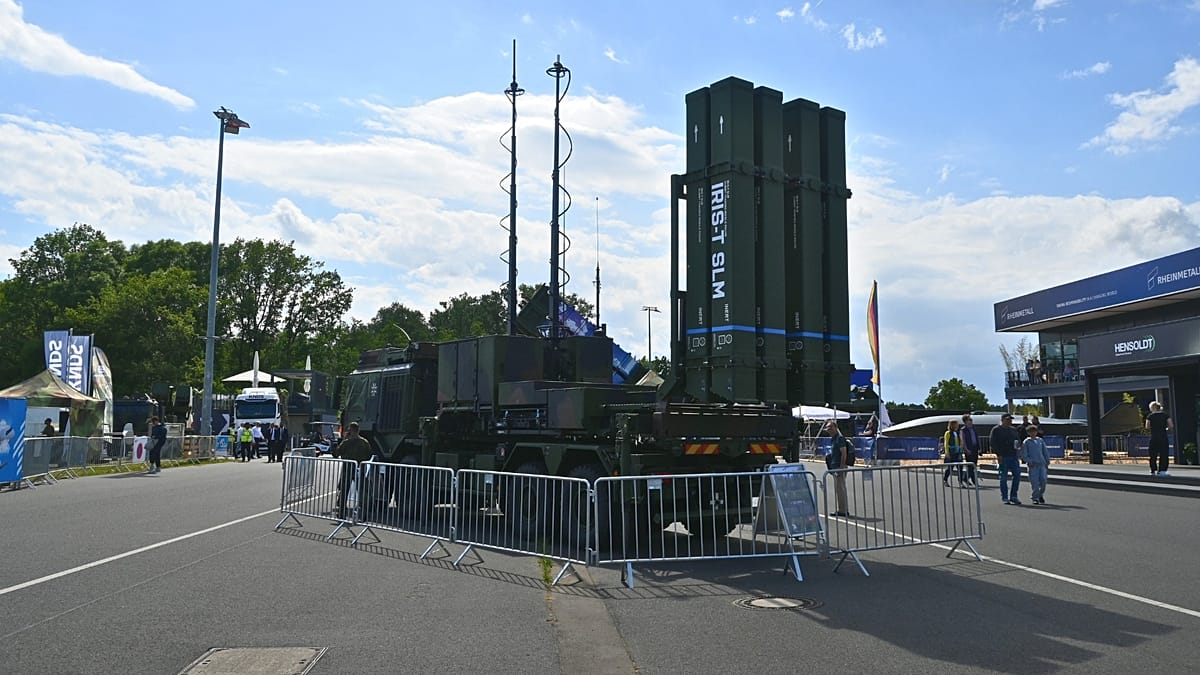
G7 leaders adopted a joint statement committing to increased deliveries of weapons, including air defence systems and long-range capabilities.
Perhaps more significant is that, for the first time, Ukraine may have an opportunity to produce anti-ballistic interceptor missiles domestically.
In their joint statement, G7 leaders said they are “ready to consider” extending military production licenses to Ukraine.
“We commend Ukraine for its resilience and progress on the battlefield in recent months and emphasise there is now a new momentum. To support and accelerate this new momentum, we agree to increase the delivery of air defence capacities, additional systems and interceptors, and long-range capabilities,” the statement said.
“We are also ready to consider extending to Ukraine the benefit of licenses to allow for an increase in Ukraine’s military production.”
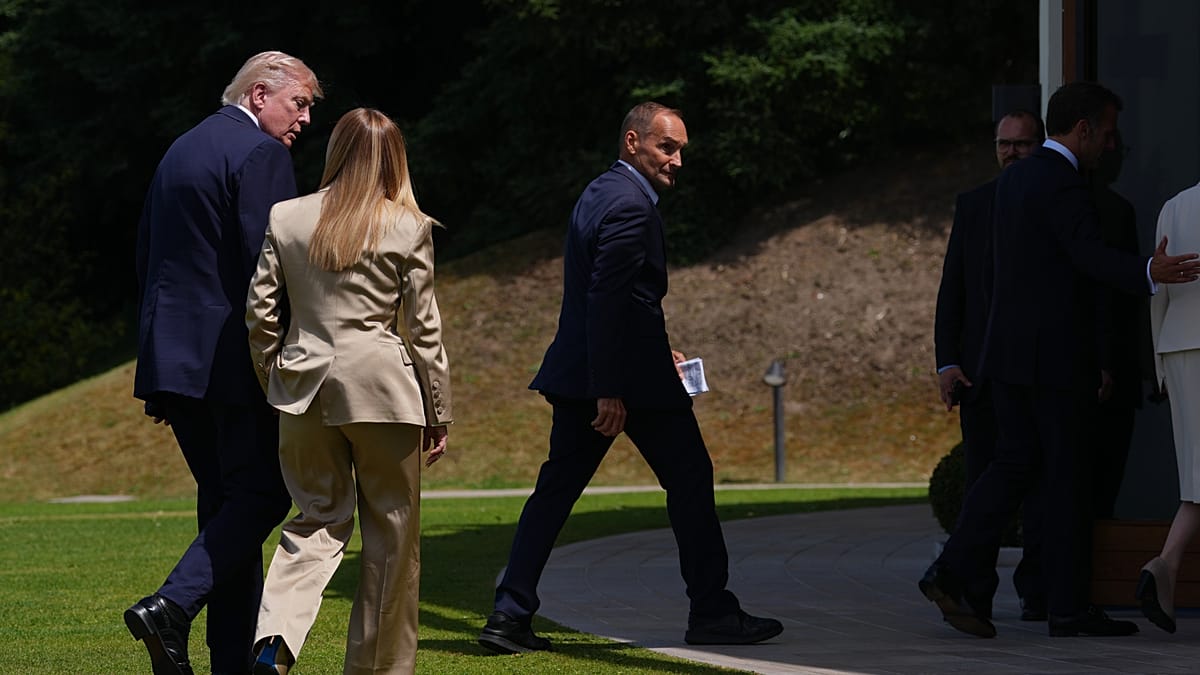
Kyiv wants to build interceptors for Patriot anti-ballistic missile systems in Ukraine, and Zelenskyy confirmed on Tuesday that he had once again raised the issue with US President Donald Trump at the G7 summit.
The Patriot air defence system remains the only surface-to-air missile system in Ukraine’s arsenal capable of countering Moscow’s ballistic missile threat.
Produced in the US by Raytheon and Lockheed Martin, Patriot missile systems have become a cornerstone of air defence for many US allies, particularly in the Gulf region, as well as for Ukraine.
But the US-Israel war with Iran has depleted almost a third of global Patriot interceptor stockpiles. According to some estimates, Gulf states have collectively fired more than 1,100 interceptors in recent months.
Lockheed Martin produces around 600 interceptors per year, and Zelenskyy says that monthly production is 60-65 missiles at best. Kyiv says Russia has the capacity to produce double that amount, around 120 ballistic missiles every month, along with other missile varieties.
Moscow has been exploiting Ukraine’s shortage of interceptors in its recent attacks, launching over 30 ballistic missiles per night against Ukrainian cities.
“Russia should make a deal”
Since Donald Trump’s return to the White House, Zelenskyy has devoted considerable time and effort to convincing the US president that the main obstacle to a peace deal – or even a ceasefire – is not Kyiv but Moscow.
For a time, however, Washington appeared to put more pressure on Ukraine than on Russia, urging Kyiv to accept what was widely seen as an unfavourable compromise.
At the G7 meeting on Tuesday, Trump said that “Russia should make a deal”, potentially signalling a shift in Washington’s approach.
“They just keep going, fighting, losing soldiers. They lose so many soldiers. This is…not since World War Two is anything like this,” the US president said on Tuesday.
However, even if Trump agrees to pressure Russia’s Vladimir Putin into direct talks with Kyiv, the Kremlin continues to reject the idea.
As for Zelenskyy, he has hailed the growing consensus amongst the G7 leaders – including the US president – that Putin is deliberately prolonging the conflict.
“Everyone sees that there is no desire on Russia’s part to end this – that it is playing games, that it is Putin who does not want to end it. But he must be forced to do so,” Zelenskyy said.