
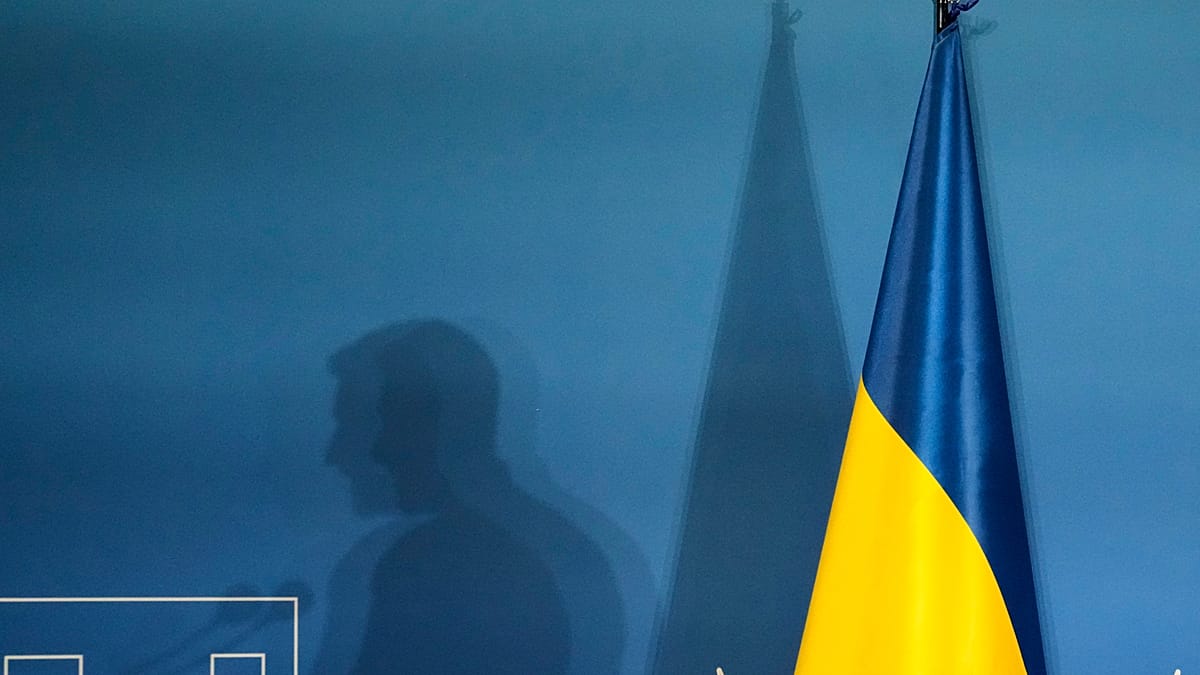
What began as spontaneous anger over Mykhailo Fedorov’s dismissal has swelled into public outrage over Volodymyr Zelenskyy’s management of the military, with protesters demanding radical changes at the top command**.**
ADVERTISEMENT

ADVERTISEMENT
Zelenskyy is now scrambling to contain a bitter stand-off between the reform‑minded, tech-saavy former defence boss, widely supported by the military and civil society, and the army chief at the heart of Ukraine’s war effort.
Reshuffle gone wrong
On Sunday 12 July Zelenskyy announced a sweeping cabinet reshuffle. With nationwide elections suspended under martial law amid Moscow’s full‑scale war, a cabinet revamp is his only viable instrument for political renewal.
Rumours of a possible resignation of the prime minister had been circulating for weeks, but Euronews sources initially expected the shake‑up to take place in late August or early autumn. And yet, five days before the first anniversary of Yulia Svyrydenko’s government, she was dismissed from the job.
The removal of Svyrydenko and swift appointment of Sergii Koretskyi as Ukraine’s new prime minister barely registered in the public debate, but there was uproar around the defence portfolio.
On Thursday lawmakers approved almost an entirely new wartime cabinet and Koretskyi’s nomination – a move largely seen as logical given his track record as chief executive of state energy giant Naftogaz and his crisis‑management roles at Ukrnafta and Ukrtatnafta.
Inside parliament, Koretskyi vowed to focus on defence, economic stability and EU integration.
Outside, thousands of demonstrators made it clear that the real battle who controls the armed forces – and how – had only just started.
Defence ministry scandal
If the changes at the top of government fits a familiar pattern of Zelenskyy seeking technocratic managers to shore up the wartime economy, the turmoil at the defence ministry has opened a far more volatile front.
Protests in Kyiv and other cities have rolled into a second day with no sign of stopping, as crowds demand a deeper overhaul of the top military command and protested the ousting of the young defence minister.
Mykhailo Fedorov, praised as the face of a new generation of tech‑driven reformers, went all‑in at a bombshell press conference on Thursday after his dismissal, accusing commander‑in‑chief Oleksandr Syrskyi of obstructing military reform, fuelling divisions and “splitting the country”.
He told reporters that Zelenskyy had chosen to keep Syrskyi over him.
On Friday, presidential adviser Dmytro Lytvyn praised Fedorov’s performance.
“It was a really great press conference, and if government officials communicated openly and clearly at this level more often, it would make things a lot easier for all of us here,” he told reporters in the WhatsApp chat.
But Lytvyn still did not explain why Fedorov was dismissed, referring instead to “a lot of sensitive issues”.
“Once all the changes have been implemented, we’ll explain in more detail,” he told journalists.
No comment from the presidential office
Ever since rumours of the reshuffle began to circulate, a WhatsApp group with the president’s office lit up, but dozens of questions from Ukrainian and international media went unanswered as the changes were pushed through.
Even the news of Fedorov’s dismissal came from the minister himself, not Zelenskyy, the man responsible for the move.
On Thursday evening, Ukraine’s president announced the appointment of the head of Ukraine’s Security Service (SBU), Yevhenii Khmara, as acting minister of defence.
Speaking to journalists in the presidential WhatsApp chat on Friday, adviser Lytvyn sought to justify Khmara’s appointmen and the chaotic roll out.
“What’s driving things at the moment is long‑ and mid‑range strikes,” he said, adding that “Khmara is really brilliant at this.”
He did not respond to follow‑up questions on why Fedorov was dismissed from his role as one of the architects of Ukraine’s successful strike campaign.
What now?
The last‑minute choice of an acting defence minister from the security services further reinforced a perception that Zelenskyy might be insulating himself and his team from scrutiny rather than confronting frustrations about strategy, mobilisation and conditions at the front.
In trying to assert control over the defence establishment, Zelenskyy has boxed himself into a political crisis.
He almost certainly did not anticipate the scale of the backlash over Fedorov’s removal and now finds his options narrowed.
Reinstating Fedorov would be read as a personal climbdown and risks deepening the rift with Syrskyi, the top army boss, but pressing ahead with a new acting minister while protests mount could cement a narrative of a president deaf and blind to wartime public opinion.
Demonstrators’ demands have already moved beyond the fate of one popular minister to calls for a “total overhaul” of the top military command.
Lessons of last summer protests
For many, the scenes outside the presidential office this week evoke memories of last summer’s protests.
In July 2025, Zelenskyy’s attempt to bring the National Anti‑Corruption Bureau of Ukraine (NABU) and the Specialised Anti‑Corruption Prosecutor’s Office (SAPO) under tighter control triggered the largest street protests since the full‑scale invasion, as activists, corruption watchdogs and ordinary citizens rallied against a law they said would damage the agencies’ independence.
Back then, the EU issued an unusually sharp rebuke, warning of “a serious step back” for Ukraine’s accession prospects, while NABU and SAPO themselves publicly sounded the alarm.
Under mounting pressure from civil society and European partners, Zelenskyy was forced into a U‑turn, submitting new legislation described as restoring “full‑fledged guarantees of the independence of anti‑corruption agencies”, which parliament then passed to reinstate their autonomy.
Drawing on hard‑won experience from Maidan and decades of protest politics, Ukraine’s seasoned civil society knows that sustained, organised pressure — especially when backed by international allies — can force the president to rethink even the most contentious decisions.
As it stands, they have very little incentive to disperse before their demands around Ukraine’s military and political leadership are answered.
