


Since the fateful events of February 2022, the European Union has embarked on an unparalleled political project to cripple Russia’s ability to wage war on Ukraine, hoping the persistent pressure would eventually force the aggressor to concede defeat.
ADVERTISEMENT

ADVERTISEMENT
After 20 rounds of economic sanctions, carefully designed to inflict the maximum pain, the ultimate goal remains stubbornly elusive. Moscow continues its brutal bombardment and refuses to make one single concession at the negotiating table.
And yet, there is a sense of vindication.
In the past few months, growing signs of strain in the Russian economy have begun to tarnish the image of invincibility that the Kremlin projects in defiance of the West.
Russia’s economy shrank 0.3% between January and March, according to the Ministry of Economic Development, marking the first contraction since early 2023. During the same period, public deficit ballooned to $60 billion (€51 billion), exceeding the full-year target. Inflation is stuck at almost 6% under an exorbitant 14.5% interest rate. The stock market has lost ground since March, despite an upward swing worldwide. And the Central Bank has raised the alarm about stifling labour shortages.
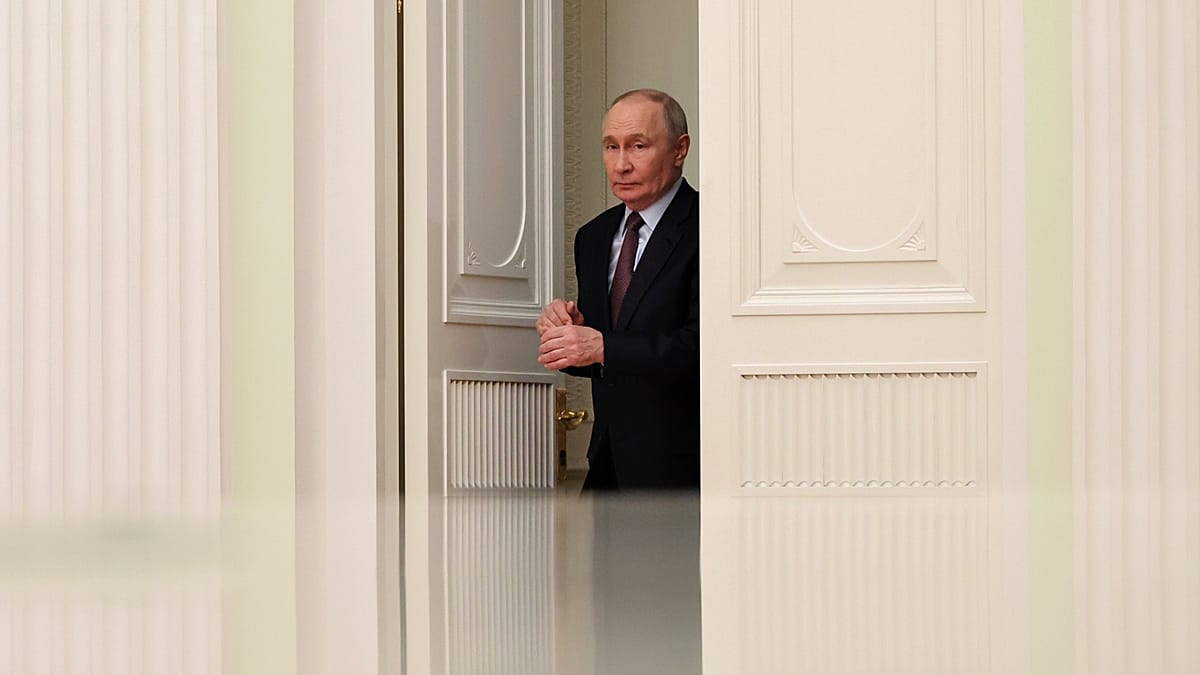
Even President Vladimir Putin, who stands to lose the most from the cracks, has admitted that things are not looking up as they should. Last month, he asked his team to explain “why the trajectory of macroeconomic indicators is currently falling short of expectations” and “provide additional measures aimed at restoring growth”.
Europeans have taken notice.
“Yes, the sanctions have a biting effect on the Russian economy,” Ursula von der Leyen, the president of the European Commission, said in a recent speech.
“The consequences of Russia’s war of choice are being paid for out of people’s pockets.”
France’s Foreign Minister Jean-Noël Barrot said “Russia’s economy is sinking into crisis” and urged the Kremlin to “open its eyes to its failure”, and Sweden’s Finance Minister Elisabeth Svantesson concluded “we are right” and “sanctions work”.
The EU is now seeking to convince other G7 allies, in particular the United States, to impose a coordinated ban on maritime services for Russian oil tankers designed to increase transportation costs and erode much-needed profits.
The measure is currently on hold due to the energy disruption triggered by the closure of the Strait of Hormuz, which handed Moscow a windfall revenue of $19 billion (€16 billion) from oil sales in March, a notable gain from $9.7 billion (€8.2 billion) in February.
Brussels wants to reverse the trend and return to the steady decline in the global price of Urals crude observed in the months before Hormuz shut down. Officials hope the full ban, coupled with the crackdown on “shadow fleet” vessels and Ukraine’s long-range strikes on Russia’s oil-export facilities, will rapidly tighten the screws.
“What we see now is two things playing together: you see that Russia needs to spend a lot of money to keep its war effort going, and you see that sanctions bite and have an effect. The pain is felt more acutely,” said a senior EU diplomat.
“Do you see any willingness on the Russian side to engage in serious negotiations? I don’t. So what we need to do is to increase the pressure further and further.”
Mounting woes
Declaring the victory of sanctions is a slippery slope, as there are virtually as many arguments to sustain the claim as to tear it apart.
The pressure campaign launched by the EU and Western allies has turned Russia into the most sanctioned country in the world. As a result, Russia has become a pariah in financial markets, with about $300 billion (€260 billion) in reserves firmly immobilised and dozens of banks expelled from mainstream payment systems.
This has forced Moscow to rely on the Chinese yuan to buttress its reserves and on cryptocurrency platforms to bypass restrictions. The liquid assets of the National Welfare Fund, backed by hydrocarbon earnings, have largely dried up to cover previous deficits.
Meanwhile, the countless export-import bans have deprived Russia of sophisticated items and know-how that local producers cannot fully replace, degrading the country’s capacity to innovate and generate prosperity. Conversely, Russian firms can no longer count on affluent European clients and trade instead with lower-income markets.
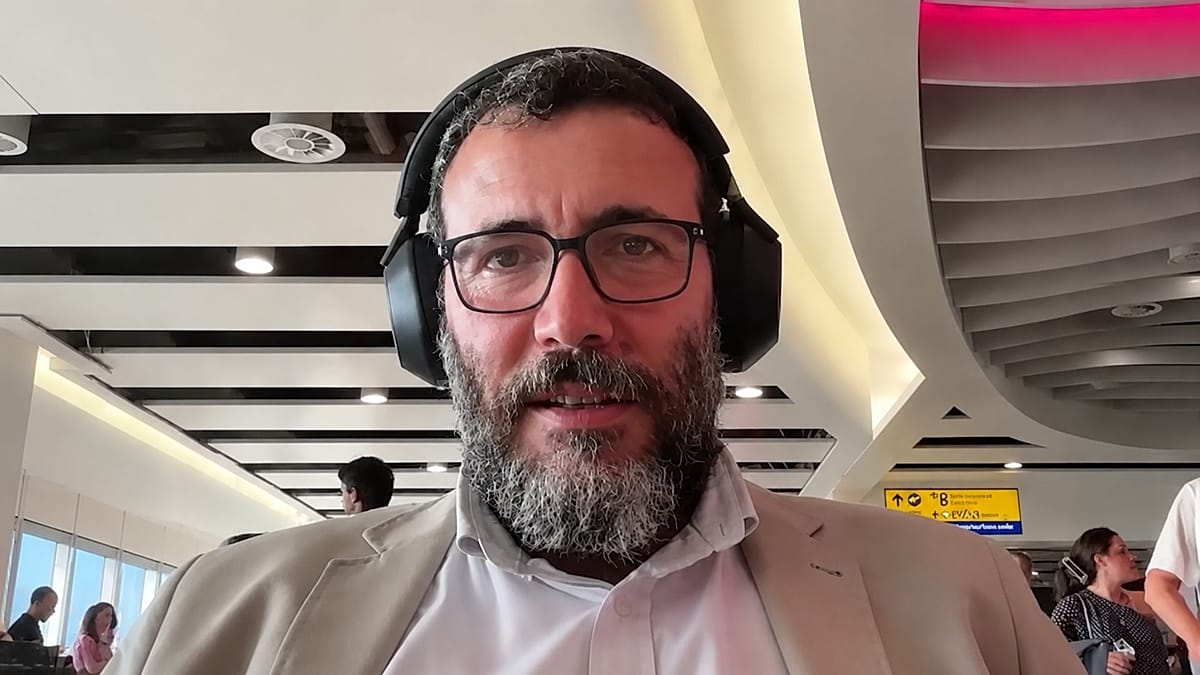
The grinding effect of sanctions has transformed Russia “in multiple ways”, says Laura Solanko, a senior advisor at the Bank of Finland, even if it is not “very feasible” to separate the strain from the sanctions and the strain from the war policy.
“Access to global financial markets is practically closed, meaning all funding, both for the government and for the private sector, has to be found from domestic sources. Invoicing currencies of foreign trade have changed, the banking sector has de-dollarised both assets and liabilities, and access to many high-tech goods and supplies is restricted,” Solanko told Euronews.
“These are all additional costs for business.”
And the picture might be gloomier: Western intelligence services suspectthat Moscow is manipulating official data to conceal the extent of its economic hardships. The Central Bank governor, Elvira Nabiullina, has publicly called for honesty in the reporting.
A costly war
The Russian economy is today less dynamic, less attractive and less wealthy than it was before the start of the full-scale invasion of Ukraine.
But that does not mean that it is anywhere close to collapsing. In fact, Russia has managed to avoid three of the worst-case scenarios that European officials thought the sanctions would spark: a prolonged recession, a calamitous default on sovereign debt and a popular revolt triggered by poorer living standards.
The reason for this survival lies in the high-intensity, high-priced war economy that the Kremlin has implemented with an iron fist.
In 2021, the year before the invasion, Russia’s military expenditure was worth $65 billion, or 3.6% of GDP. Last year, that same spending reached $190 billion, or 7.5% of GDP.
The mighty injection of public money has re-designed entire industries, supply chains and jobs, and spilt over into other sectors of the economy. With troops mired in a brutal war of attrition in Ukraine, Russian factories are tasked with pumping weapons and ammunition day and night, creating a relentless demand for resources, energy and manpower that feeds into a never-ending cycle of production and consumption.
The Kremlin entered the war with a low debt-to-GDP ratio, a policy that Putin famously installed after his unexpected rise to power in 1999. This means that the federal budget has enough fiscal space to weather a ballooning deficit and maintain its gargantuan military spending in the short term. Putin’s framing of the war in existential terms helps justify controversial cuts to welfare programmes and widespread censorship.
As things stand, the International Monetary Fund (IMF) estimates the Russian economy will grow 1.1% in 2026, on par with the 1% posted in 2025. The rate is modest but actually higher than projections for the three largest EU economies – Germany (0.8%), France (0.9%) and Italy (0.5%) – further testament of enduring resilience.
Although artificial and extremely costly, Russia’s war economy has proven to be a powerful driver to sustain economic activity and an effective shield to partially offset the chokepoints applied by EU sanctions. Those sanctions have been adopted incrementally, giving the Kremlin time to adapt and develop ways to circumvent the restrictions.
“Sanctioned economies tend to last a long time. They just don’t do very well, but they don’t tend to collapse,” says Timothy Ash, an associate fellow at Chatham House.
“Putin knew the war was going to happen, so Russians built a lot of buffers and reduced their dependencies. They were in a very strong position when the war began.”
Still, the signs of strain are now unmistakable, Ash notes. Although the closure of the Strait of Hormuz has granted a momentary reprieve, there is a “real danger” to the Russian economy once the waterway reopens and oil prices go down. The buffers built at the start of the war have been worn down after four years, increasing exposure.
“You have a two-speed economy: everything related to the military-industrial complex is doing well, and the other sectors are doing less well. Overall, if you look at the performance, Russia is close to recession, despite higher energy prices,” he says.
“If I were in the Kremlin, I would be more worried now than I was six months ago.”