
Human rights campaigners, protesters and Italian politicians expressed outrage after a man died while under police restraint as he pleaded for help in Bologna.
ADVERTISEMENT

ADVERTISEMENT
Abderrahim Fakir, a 42-year-old from Morocco who moved to Italy when he was five, died on Sunday while being forcibly held down by two police officers, according to a video shared widely on Italian media.
In the video, Fakir,who reportedly suffered from heart issues and asthma, repeatedly calls out “aiuto, aiuto, basta” (“help, help, that’s enough”) as the officers sit on him and ambulance workers look on.
After he stops moving, the police bind his ankles together.
Only after a moment or two do they and the ambulance workers check his vital signs, the video shows.
Called to the scene by local residents concerned by Fakir’s erratic behaviour, the police officers had told the ambulance personnel that he was “having a psychiatric episode”, according to media reports.
The incident has been likened to George Floyd’s murder in the United States six years ago, and also prompted comparisons with tactics used by the US’s Immigration and Customs Enforcement (ICE) under President Donald Trump.
Political division over officers’ conduct
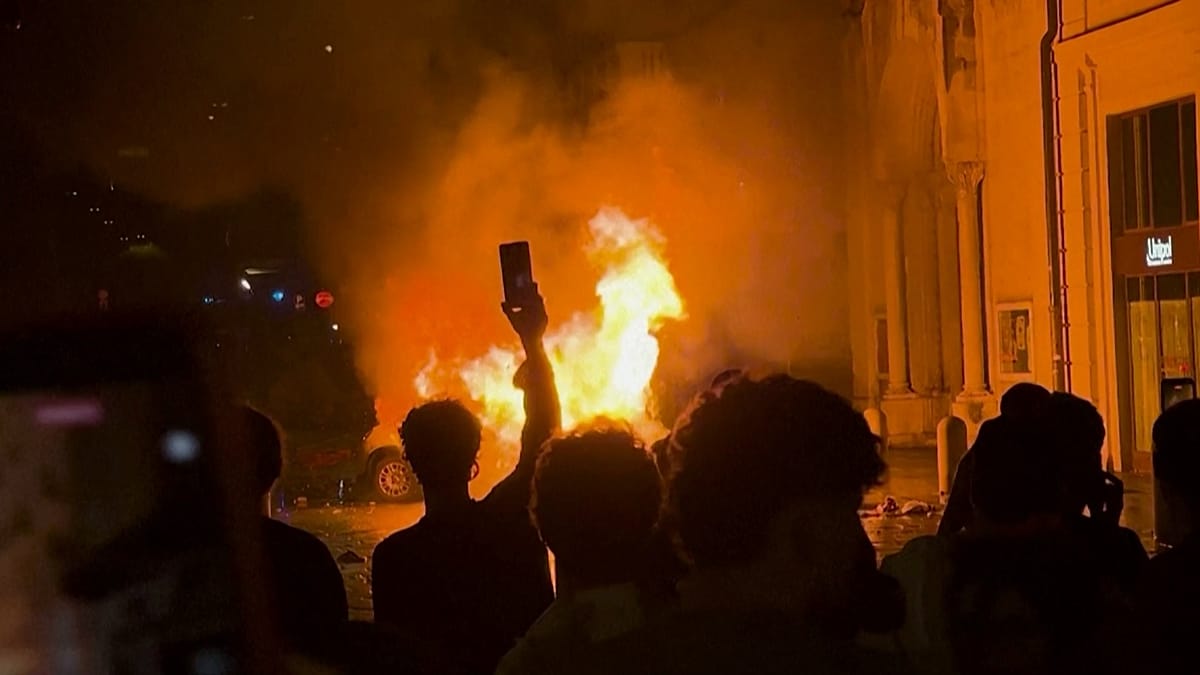
The incident triggered a protest in Bologna on Monday in which participants called for “justice and truth for Fakir”.
Opposition parties also denounced the police officers’ conduct. Senator Ilaria Cucchi, whose brother died in custody in 2009, said she was sickened by the “solidarity and thanks” expressed to police after such an “inhumane act”.
Cucchi, a member of the opposition Greens and Left alliance (AVS) party, slammed far-right Meloni and her coalition government, saying their “policies seeped in hatred and racism” have fostered a climate of violence.
Francesco Boccia, head of the centre-left Democratic Party (PD) in the Senate, told the Repubblica daily that “if the right wants to import the ICE model, this is the wrong country for it. We have democratic antibodies”.
Meanwhile, Italy’s far-right Deputy Prime Minister Matteo Salvini defended the police, while Galeazzo Bignami, head of Prime Minister Giorgia Meloni’s Brothers of Italy party in parliament’s lower house, praised the officers’ “professional conduct”.
Interior Minister Matteo Piantedosi told state television network Rai1: “Whoever makes insulting remarks against the police shows they have no trust in our law enforcement nor in our justice system (and) should look into what happened.”
Prosecutors in Bologna have opened a probe and have requested the officers’ body cam footage.
What is the ‘legal shield’ and why nobody has been named as a suspect in the Fakir case
Pending the results of the autopsy and the examination of witness statements and footage by the judiciary, a so-called “legal shield” has been activated for six people: the two officers and the four medical workers involved. This was confirmed by Justice Minister Carlo Nordio.
In an interview with Corriere della Sera, Nordio rejected the idea that there is any ICE‑style model in Italy, saying: “The expression “legal shield” suggests an immunity that does not exist. What is avoided is the automatic entry in the register of suspects, which has become a kind of conviction in advance. It is now up to the judiciary to assess whether grounds of justification do or do not exist.”
The legal shield applies to cases where conduct potentially amounting to a criminal offence may have been committed in the presence of a ground of justification, such as self‑defence or the fulfilment of a duty. There is therefore no formal investigation with individuals entered in the register of suspects, but a preliminary verification phase.
Information obtained so far shows that the officers used pepper spray to neutralise Fakir before pinning him to the ground, but the man had wounds to his head and face. How he sustained them has not yet been determined.
The autopsy will be crucial in establishing how the 42‑year‑old died: prosecutor Domenico Ambrosino and chief prosecutor Paolo Guido are working to appoint a committee of specialists. The suspected offence is manslaughter.
