
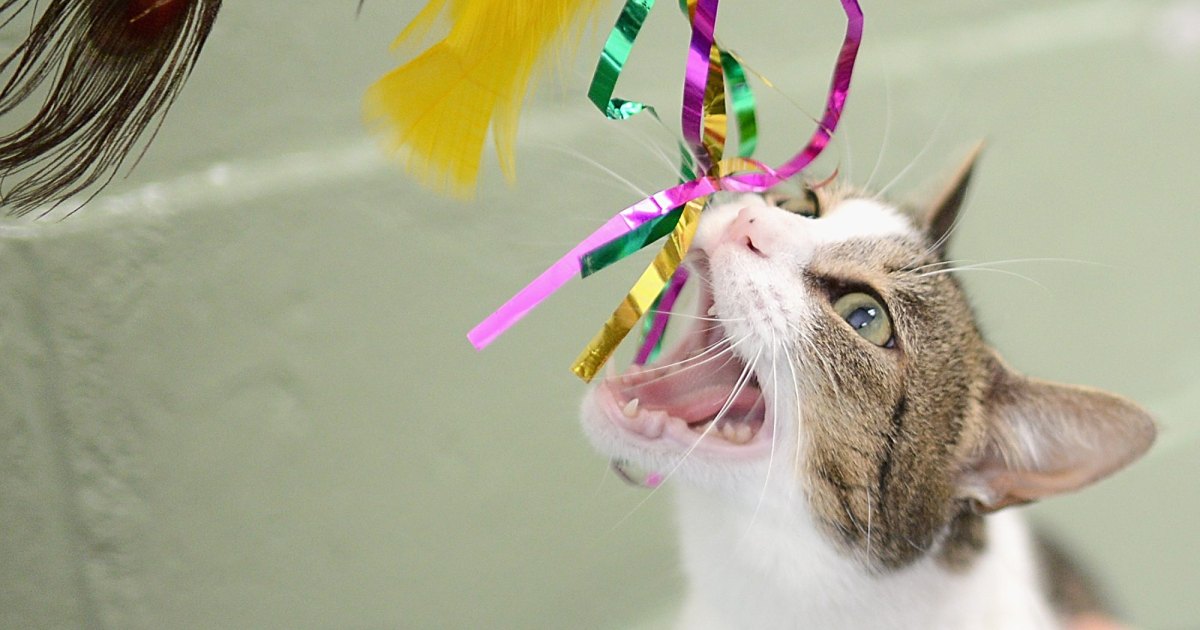
Cats gnawing on cords, blankets, toxic houseplants and hair ties send owners scrambling for solutions and for good reason. Cat chewing can be harmless curiosity, or it can land a cat in emergency surgery. Choosing the right chew toys for cats, understanding what drives the behavior and knowing when to call a vet can make the difference between a quirky habit and a serious health problem.
According to PetMD, chewing itself is not necessarily unhealthy the danger comes when it leads to illness, unwanted behaviors or swallowed objects. Here’s what every cat owner should know.
Why Do Cats Chew on Plastic, Cords and Other Odd Objects?
Cats chew for a wide range of reasons, and identifying the cause is the first step toward stopping it. Kittens often gnaw on household items to soothe teething discomfort or explore their surroundings through play. Older cats may chew out of boredom, stress or because certain textures like plastic bags with lingering food residue are simply irresistible.
In some cases, chewing points to something more serious, including dental pain, digestive problems, anemia or nutritional deficiencies. Common triggers include:
- Curiosity and play, especially in kittens acting out hunting instincts
- Teething, when adult teeth are emerging
- Boredom from a lack of enrichment, exercise or social interaction
- Sensory appeal of plastic, cardboard, fabric and cords
- Pain or illness, including dental disease and metabolic conditions
- Genetic or breed-linked compulsions
Plastic tends to be a particular favorite because of its smell, crinkly sound and food residue. That makes grocery bags, packaging and wrappers some of the most commonly targeted and most dangerous items in the house.
How to Stop Cats From Chewing Cords and Dangerous Items
The first line of defense is prevention. “Rigorously preventing access to the items in question is the first line of defense,” Stephen Quandt, a certified cat behaviorist in New York City, told Woman’s World. That means covering electrical cords, storing string and hair ties in closed containers, removing toxic plants and blocking access to spots your cat keeps returning to.
Dangerous items to keep out of reach include
- Electrical cords and phone chargers
- String, yarn, ribbon, thread and dental floss
- Hair ties, rubber bands and elastic
- Plastic bags, foam and packaging
- Medication containers and household chemicals
- Small fabric pieces or stuffing
- Sharp or brittle objects
Punishment does not work and often backfires. Yelling, spraying water or startling a cat does not address the underlying cause and can increase anxiety. Instead, calmly interrupt the behavior and redirect the cat to something appropriate a durable chew toy, a food puzzle, a treat ball, a cardboard scratcher or supervised cat grass.
Enrichment matters too. One study published in the journal Behavioural Processes found that a majority of cats prefer human social interaction over food, toys and scent. Short, frequent play sessions ideally ending with a treat to mimic a successful hunt often reduce destructive chewing more than any single toy ever will.
Pica in Cats: When Cat Chewing Becomes a Medical Concern
There’s an important distinction between chewing and pica. Chewing means the cat bites or gnaws without necessarily swallowing. Pica is the persistent consumption of nonfood items and it can be genuinely dangerous. Wool sucking sits somewhere in between, where cats knead and suck on soft fabric without always ingesting it.
“I’ve seen cats require emergency procedures after swallowing things like hair bands, ribbon, string, and even chunks of rubber matting,” veterinarian Emma Chandley wrote in an article published on PetsRadar.
Fabric obsessions are surprisingly common. “Fabric-eating seems to start around puberty, most often with wool, and may move on to other fabrics and materials as well Cotton, nylon and other synthetics, wood, plastic, rubber, almost anything,” says Diane Frank, D.V.M., a resident in animal behavior at Cornell University.
“I’ve had reports of cats chewing on the sofa. Most of the time, the material will go through the cat without too many problems, but occasionally cats require surgery to remove these foreign materials,” Frank added.
Why Do Cats Suck on Blankets and Other Soft Fabrics?
Blanket sucking, wool nibbling and fabric kneading are among the most misunderstood cat behaviors. Many cats do it as a self-soothing habit, possibly tied to an early or lingering nursing drive. It often begins in kittens who were weaned too early and can persist well into adulthood. For some cats, it’s harmless. For others, it escalates into swallowing pieces of fabric which is where the trouble starts.
Cat stress and anxiety can intensify the habit. Household changes, new pets, moves or inconsistent routines can all trigger or worsen fabric sucking. If your cat only does it occasionally and never swallows material, monitoring may be enough. If the behavior is frequent, escalating or involves ingestion, it’s time to talk to a vet.
Signs it’s time to schedule an exam:
- The chewing is new, frequent or escalating
- An adult or senior cat suddenly develops the behavior
- The cat has bad breath, drooling or difficulty eating
- The cat repeatedly swallows nonfood items
- Enrichment and environmental changes have not helped
Obsessive Compulsive Cats and Cat Behavior Around Houseplants
Some cats develop compulsive tendencies, and repeated chewing or swallowing of nonfood materials can be one of the signs. Genetics, breed and early life experiences all play a role. Obsessive compulsive cats may need a structured behavior plan from a veterinary behaviorist or qualified applied animal behaviorist and in some cases, medication.
Houseplants are a frequent target, and many common ones are toxic. Cat owners should avoid true lilies, daylilies, sago palm, oleander, azaleas, rhododendrons, poinsettia, autumn crocus, cyclamen, kalanchoe, daffodils, tulips, hyacinths, dieffenbachia, philodendron and pothos.
Lilies are particularly dangerous. “All parts of the lily plant are toxic. The leaves, the stems, the flowers, the pollen and even the water in the vases that lilies are in. All parts are potentially toxic and cause severe liver damage in cats,” Stephen Hooser, a veterinary toxicologist at the Animal Disease Diagnostic Laboratory at Purdue University, told Campus Insights Media.
Safer alternatives include parlor palm, bamboo palm, areca palm, calathea, prayer plant, peperomia, spider plant, Boston fern, African violet, Phalaenopsis orchid, Christmas cactus and haworthia.

Your pet’s food and water setup doesn’t have to be an eyesore. A built-in pet feeding station gives your animals a dedicated place to eat that’s organized, easy to maintain and designed to match the rest of your home. You’ve probably already seen them. On a 2023 episode of Celebrity IOU, the Property Brothers installed […]
Cat grass grown from wheat, barley, oats or rye is one of the most popular safe options. “Cat grass is safer than outdoor grass which may have been chemically treated with pesticides,” Carlo Siracusa, animal behaviorist of University of Pennsylvania School of Veterinary Medicine, told PetMD. “It also gives your cat a healthy alternative to nibbling on houseplants and flowers, many of which are toxic to cats.”


When to Seek Urgent Veterinary Care
Some symptoms cannot wait. Seek urgent care if your cat has repeated vomiting or unproductive retching, loss of appetite, abdominal pain or swelling, constipation or straining, severe lethargy, trouble breathing, burns around the mouth, or known ingestion of string, a cord, a toxic plant or another hazardous object.
Swallowed string and cord are particularly dangerous because they can cause intestinal obstruction requiring emergency surgery. When in doubt, call your vet.
The video “Poison warning: Keep cats away from lilies,” featuring Stephen Hooser, a veterinary toxicologist at the Animal Disease Diagnostic Laboratory at Purdue University, was first published on Campus Insights Media.
