


Late NHL star Claude Lemieux’s family confirmed that they will donate his brain for research into the neurodegenerative disease chronic traumatic encephalopathy (CTE)
“Claude was a beloved son, husband, father, grandfather, brother, friend and teammate. To the hockey world, he was one of the game’s most unforgettable competitors: a four-time Stanley Cup champion, a Conn Smythe Trophy winner, and one of the great playoff performers of all time,” his family said in a statement on Saturday, May 30. “To his family, he was more than a hero: he was loyal, loving, funny, protective, and generous. He was stubborn, and he was completely devoted to the people he loved. He was adored by his family in turn.”
Their statement continued, “Claude was a passionate man. He brought that passion to the rink, to his work, to his friendships, and most of all to his family. He was fierce on the ice because he cared so deeply about winning, about his teammates, and about never giving less than everything he had. Away from the game, he was tender, loyal and full of life. He made us laugh, he showed up for us, and he loved his children and grandchildren with his whole heart.”
Claude’s death was confirmed to Us Weekly by the Palm Beach County Medical Examiner’s Office on Thursday, May 28. Lemieux died by suicide at age 60 and his body was found by one of his sons at a Florida warehouse.
His death stunned the sports world as Lemieux appeared as a torchbearer at the NHL’s Eastern Conference Finals between the Montreal Canadiens and Carolina Hurricanes in Montreal on Monday, May 25.
As part of Saturday’s statement, the Lemieux family announced that they would donate his brain to the UNITE Brain Bank at the Boston University CTE Center for research into “the long-term effects of repetitive head impacts and traumatic brain injury.”
(Per Mayo Clinic, CTE is a brain disease that is linked to repeated head injuries, which can cause “the death of nerve cells in the brain.” The clinic notes that CTE is “rare and not well understood” but it is frequently associated with athletes or combat veterans.)
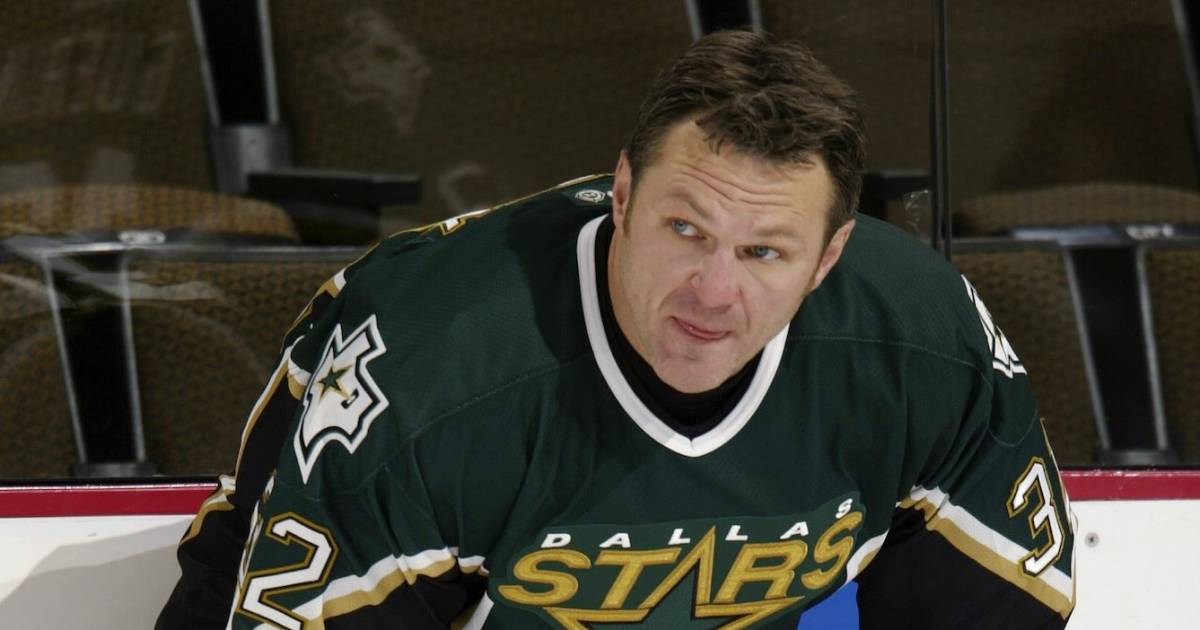
Claude Lemieux in April 2002. Jeff Vinnick/Getty Images/NHLI
“Claude dedicated his post-play career to helping the next generation,” his family said on Saturday. “By allowing his name to be connected to this research, we hope his life can contribute to greater understanding, more honest conversations, and better protection for athletes and families in the years ahead.”
The Lemieuxs said they consider their donation to the Boston University CTE Center to be “a gift to science, to athletes and to future generations of families seeking answers.” Their statement also addressed speculation about the “circumstances of Claude’s death.”
“Suicide is complex, and the family asks media and the public to discuss this loss with care, compassion and respect for those who lost him,” they asked.
The family confirmed that details about a memorial service will be released “at a later date.”

The NHL world was rocked by the sudden death of hockey legend Claude Lemieux by apparent suicide at age 60. “The National Hockey League mourns the passing of Claude Lemieux, a four-time Stanley Cup champion and one of the greatest big-game Players in hockey history,” NHL commissioner Gary Bettman said in a statement on Thursday, […]
Saturday’s statement was released first by Brendan Lemieux, who was previously the first member of the family to break their silence about Claude’s death. (Claude and his wife, Deborah, shared four children: sons Christopher, Michael and Brendan as well as daughter Claudia.)


“I love you dad!” Brendan, 30, wrote via Instagram on Thursday. “My son’s favorite person is going to watch from above for a while. We will see you ♥️.”
His sister, Claudia, shared her own emotional memorial post that same day, writing via Instagram, “No words to express the level of devastation we feel. I love you forever daddy. Forever your only girl 💔”
If you or someone you know is struggling or in crisis, help is available. Call or text 988 or chat at 988lifeline.org.