


Published on
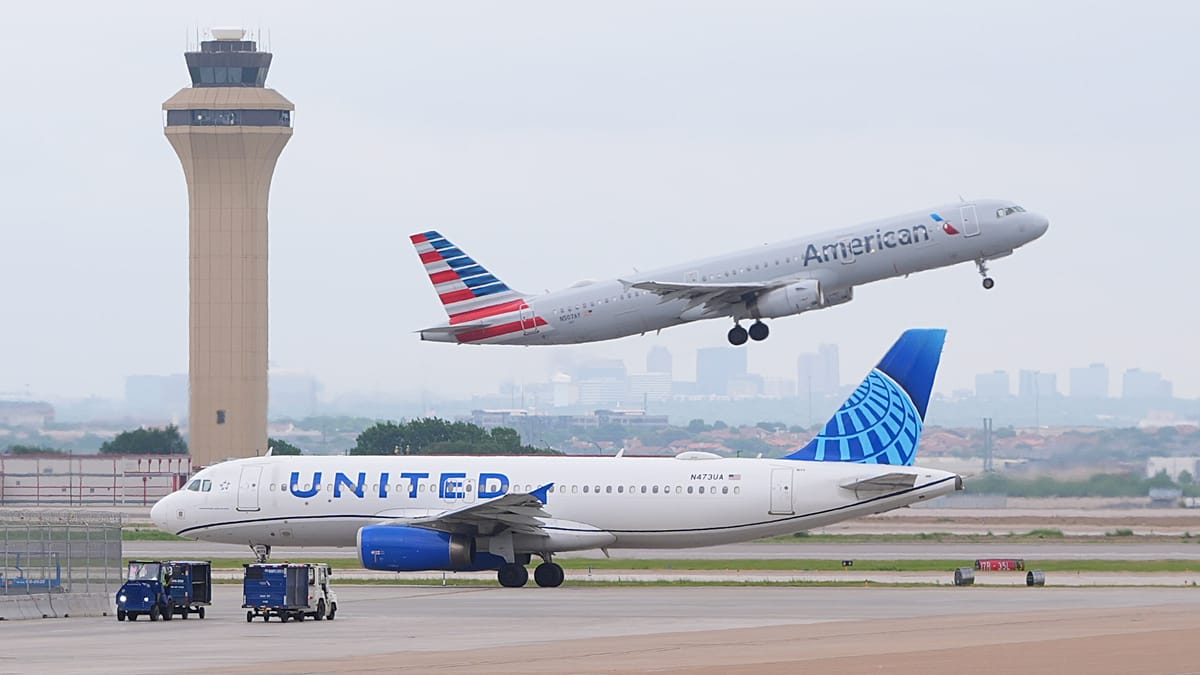
An aviation industry alliance has urged the European Commission President Ursula von der Leyen to back down from plans to expand the European Union’s carbon market to international flights, citing likely trade disruptions.
ADVERTISEMENT

ADVERTISEMENT
In an open letter made public on Friday, European aviation leaders argue that a revision of the bloc’s Emissions Trading System (ETS) is slated for mid-July could trigger an aggressive trade war and cripple continental airlines.
The plea is signed by top executives from Airlines for Europe, the Airports Council International Europe, the Aerospace, Security and Defence Industries Association of Europe, CANSO Europe and the European Regions Airline Association.
At stake is a long-standing “stop the clock” mechanism, which has exempted extra-European flights from paying carbon costs linked to their emissions for over a decade and is legally set to expire at the end of 2026.
Although the ETS technically targets all domestic and international flights, the “stop the clock” rule means airlines do not have to surrender carbon certificates for long-haul flights entering or leaving the European Economic Area (EEA).
The exemption was designed to give the International Civil Aviation Organization, a United Nations agency, breathing room to roll out its own global market mechanism, which is considered less ambitious than the ETS – and if the exemption is allowed to lapse, the EU’s carbon system will automatically expand to cover long-haul flights.
The open letter’s signatories describe this as unilateral regulatory overreach, and warn that it could spark severe global retaliation. They point to the chaos of 2012, when a similar expansion attempt provoked a fierce international backlash.
During that dispute, the US Congress legally banned American carriers from participating, while other international powers threatened to freeze billions of euros in European aerospace contracts.
“In the current geopolitical context, extending the EU ETS beyond intra-EEA flights will likely provoke an even stronger international backlash than in 2012,” the coalition writes.
EU costs versus global costs
Flights departing the EU for destinations outside the EEA are mostly exempt from the EU ETS. Instead, they fall under the United Nations’ carbon offsetting rules, the Carbon Offsetting and Reduction Scheme for International Aviation (CORSIA).
According to the campaign group Transport & Environment, 68 percent of emissions from European departing flights in 2025 went unpriced, which they see as a “consequence of the carbon market’s scope limitation to intra-European routes, leaving the most polluting long-haul routes entirely exempt.”
But the airline alliance argues that targeting long-haul flights unilaterally will simply divert traffic to non-European hub airports, delivering absolutely “no net climate benefit” while punishing homegrown carriers.
“The appropriate solution is a strengthened CORSIA as the single global carbon pricing framework for international aviation,” the signatories wrote.
According to the global campaign group Aviation Benefits Beyond Borders, CORSIA covers approximately 60 percent of total international aviation carbon dioxide emissions.
If CORSIA fails to align with the Paris Agreement goals or covers less than 70 percent of global aviation emissions, the EU ETS will likely be expanded to include flights departing from the EEA as of January 2027.
The European Commission is due to file a report on the environmental integrity of the CORSIA framework to the European Parliament and the Council by 1 July 2026.
A Commission spokesperson told Euronews that the EU executive hasn’t yet submitted it.