




Published on •Updated
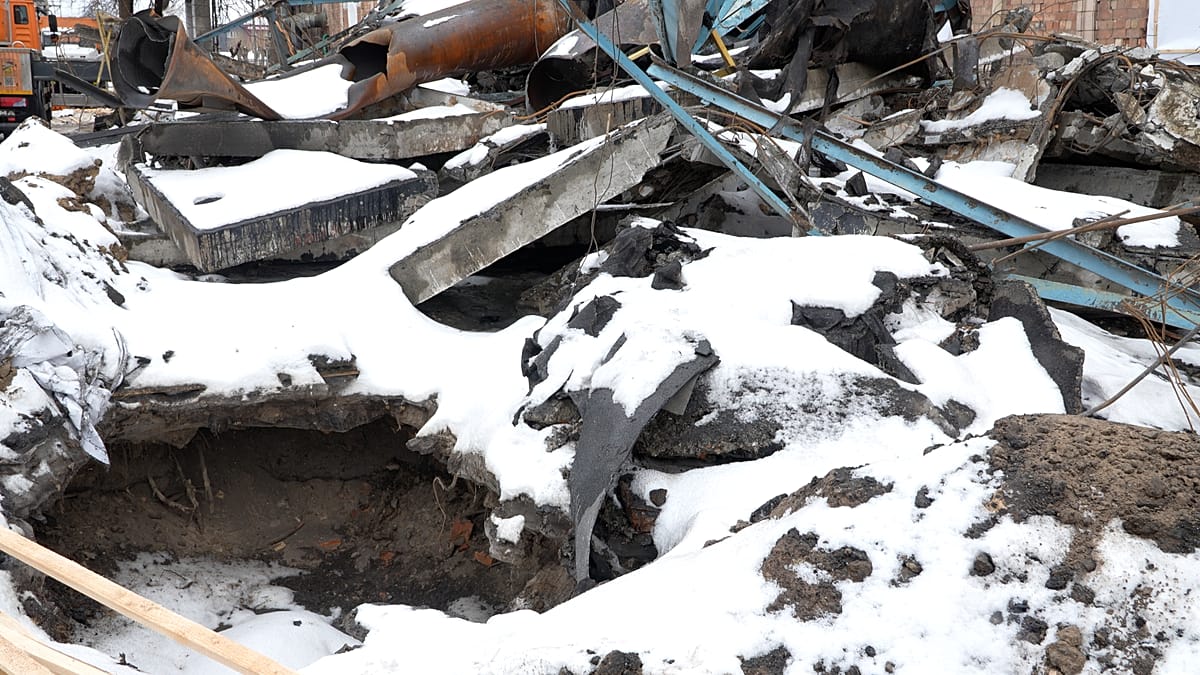
Relentless Russian attacks on Ukrainian energy infrastructure – a hallmark of the full-scale invasion of Ukraine – have left more than a million citizens without electricity, water and heating as temperatures plunge as low as -23°C.
ADVERTISEMENT


ADVERTISEMENT
The EU has sent Ukraine nearly 10,000 generators since the invasion was launched in 2022, and EU Commissioner for Crisis Management Hadja Lahbib visited Ukraine with 1,000 more as Russia steps up its attacks.
“Things are as bad as ever,” Kyiv mayor Vitali Klitschko told Euronews at a warehouse containing 500 of the newly arrived generators.
The warehouse’s location is classified. Anyone entering is told to turn off their phones so as not to be detected for fear of a targeted Russian attack.
“We had eight ballistic missile attempts today”, Klitschko said. “This winter is one of the most difficult winters in the last four years, for many reasons: first, we have massive attacks from Russian operation kamikaze drones, then ballistic missile cruise missiles attack our critical infrastructure. And people have no heat or electricity.”
The latest attacks come after a so-called “energy truce” between Ukraine and Russia was negotiated by the US. Ukrainian President Volodymyr Zelenskyy said that this winter, Russia has used a record number of ballistic missiles in its targeting of his country’s energy system.
Surgery by torchlight
Amid the carnage wreaked by Russia, its attacks on hospitals – which amount to a grave breach of international humanitarian law – are particularly stark, and Ukrainian officials tell Euronews that power outages caused by Russian strikes have forced medics to conduct surgery by torchlight.
Commissioner Lahbib visited some of those recently injured by attacks on the city, as well as frontline soldiers who were medically evacuated from the frontline.
“It’s very difficult to speak after what we just saw”, said Lahbib as she emerged from the Kyiv hospital’s intensive care unit. “It’s innocent people just living their everyday life; we just met a woman who has been targeted in her apartment. A drone entered in through her windows”, she said.
Labhib described meeting “wounded soldiers” and a “patient in very severe conditions because of this war”.
In a few days, Ukraine will mark a grim milestone: the fourth anniversary of a devastating invasion that at the current rate could see 2 million people killed.
According to the Centre for Strategic and International Studies, Russia has suffered more military casualties than Ukraine, with 1.2 million killed, wounded and missing and as many as 325,000 killed since February 2022.
However, civilian casualties among Ukrainians are also escalating. Civilian casualties in 2025 increased by 26% compared with 2024.
According to the Action on Armed Violence NGO, the average number of civilians killed or injured per incident in Ukraine rose 33% year-on-year in 2025, and in total 2,248 civilians were reported killed and 12,493 injured by explosive violence in Ukraine last year.
The level of damage and violence perpetrated by Russia suggests that Putin is in no way serious about ending the assault on Ukraine, despite several fruitless months of US-led talks.
Zelenskyy told the Munich Security Conference that Putin is a “slave to war”, adding that Russia’s attacks had damaged every power plant in the country.
Klitschko said Ukraine needed to be admitted to the EU as soon as possible.
“Our main goal to be the part of European family, not a part of the Russian Empire,” he told Euronews in Kyiv.
The EU is discussing a potential “fast track” approach to Ukrainian membership which would secure access to the EU on an incremental basis. The trade-off would be that Kyiv wouldn’t immediately enjoy the same voting rights as fully fledged members, but would have additional protections and potentially access to some EU funding.
Asked whether this was something the European Commission was actively exploring, Lahbib told Euronews in Kyiv: “This is something we have to consider because we need to move. Ukraine is part of the EU family, and they are already candidates.”
Video editor • Georgios Leivaditis


