
FIRST ON FOX: A new policy report warns that the AI data center boom could drive up the cost of laptops, smartphones, cars and other everyday products as chipmakers shift scarce memory-chip capacity toward more profitable AI applications.
The report, published by the Abundance Institute and first viewed by Fox News Digital, says manufacturers are shifting capacity toward high-bandwidth memory, or HBM, for AI data centers, constraining the supply of conventional DRAM used in consumer devices.
To address the growing affordability concern, the report argues that Washington should avoid new tariffs and other trade restrictions that could further tighten supplies.
“You see consumer goods prices, consumer prices going up for average everyday technology because of this pull into the highest quality, highest capacity chipsets that are available, that are needed for the frontier models in AI,” former Rep. Patrick McHenry, R-N.C., told Fox News Digital, reacting to the new report.
“That has really tightened up the whole set of production from getting sand out of the ground and turning it into chips. Lower value to higher value, the cutting edge versus the second, third generation of chips. And all of this is really complicated, complicates things for consumers in a way that they cannot directly see, but they’re certainly being affected by it,” he said.
TRUMP SAYS ANY GOVERNOR OR MAYOR SHOULD WANT TO WELCOME AN AI DATA CENTER
The report says the current memory-chip shortage differs from the COVID-era semiconductor crunch because it is driven largely by AI data centers’ growing demand, even as supply bottlenecks persist. But it warns consumers may face similar effects: higher prices, fewer available products and delays in replacing or upgrading phones, computers and other electronics.
“Demand is surging, and supply bottlenecks persist. However, this time, demand is driven by the rapid growth of data centers,” the paper read. “Hyperscale data center companies are buying unprecedented quantities of the world’s most advanced memory chips. American consumers will face the same consequences: higher prices, longer wait times for products, and supply shortages that may persist for years. The memory chip imbalance is quickly becoming yet another affordability concern for households and policymakers alike.”

McHenry noted that tight supplies of memory chips — parts used in many everyday electronics — are helping push up consumer costs. He argued that less-advanced chips used in household products should be treated differently from the most sophisticated chips, which he said raise greater national-security concerns.
He also argued that efforts to de-risk supply chains from China are contributing to higher costs in the short term.
“When you change supply chains, it will have an impact for a period of time. And consumers will pay the price for moving supply chains out of existing production capacity into new production capacity. We’re experiencing that right now. Every large international corporation is de-risking from China,” McHenry said. “And so we can call that ‘reshoring’ here into the United States, ‘friendshoring’ for allies across the globe. You see that connected with the president’s trade agenda as well. But for a period of time during that reallocation of those resources, you’re going to see supply costs go up and supply being constrained as you’re rebuilding these supply chains.”
“But consumers are going to pay the price for that in the short term. And that’s what we’re trying to remedy through better policy to get those supply chains up and running faster so you have less consumer impact and better choices for consumers,” he added.
TRUMP WARNS AI RACE IS ‘BIGGEST THING’ IN HUNDREDS OF YEARS
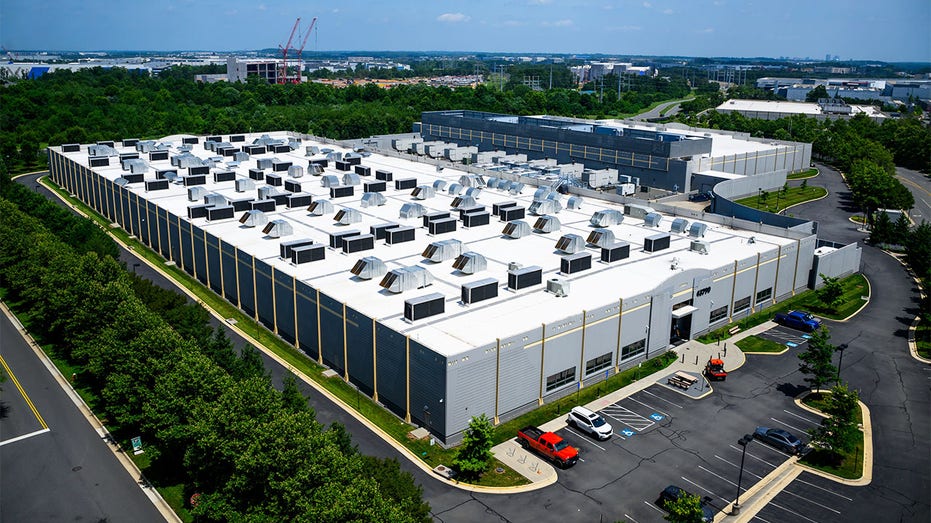
McHenry argued that the most advanced chips used to develop “frontier models” — AI systems with the most advanced capabilities — should be protected from China and produced through U.S. and allied supply chains. He said the resulting short-term price increases are a worthwhile tradeoff for national security.
“We’re over the hump, I believe, on these costs being borne by the American people,” McHenry said. “I think we’re actually more five to eight years into bearing that burden, and I think the next five years are going to be far better for the American consumer because of the policies that this administration has gotten right on energy, on production of chips here in the United States and having an important distinction between high-value chipsets, low-value chip sets, high-value technology, low-value technology and what that means for the American consumer and for national security. They’ve really balanced that in a very smart way.”
McHenry explained lawmakers must balance national-security priorities with keeping consumer costs down by distinguishing cutting-edge chips from lower-end technologies used in everyday products.
“We want to make sure we have this full stack of production and capacity here in the United States. The Trump administration has prioritized that. That is a welcome and good thing. And over time, we’re going to see the benefits. The consumer is going to see the benefits, and then you have to have the distinction between those important matters and then all the stuff that should be freely tradeable around the globe,” McHenry said. “And it’s those lower-value things like memory chips that will have a major impact on consumers and the way that the American people live. We wanna be sensitive to that and we wanna be smart as American policymakers on that.”
The Abundance Institute report called on the Federal Trade Commission (FTC) to study how major chipmakers allocate manufacturing capacity between conventional DRAM chips used in everyday electronics and high-bandwidth memory, or HBM, used in AI data centers.
“The study could confirm that each firm is independently responding to price signals,” the policy report reads.
McHenry argued that policymakers should distinguish between cutting-edge chips with national-security implications and lower-value chips used in consumer products.
Fox News Digital contacted the FTC for comment.
