
NEWYou can now listen to Fox News articles!
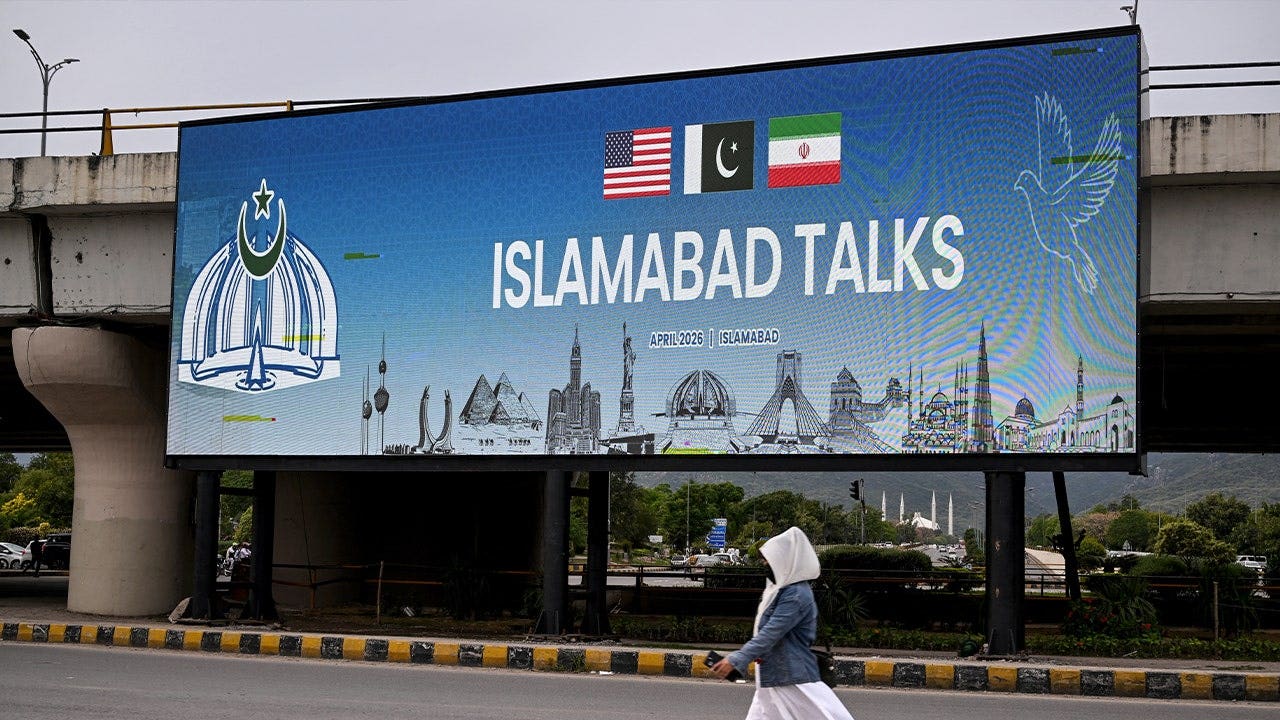
The United States began enforcing a naval blockade targeting Iranian maritime traffic Monday, sharply escalating tensions in the Gulf just hours after high-level talks in Pakistan between Washington and Tehran collapsed without a deal.
The move, announced by President Donald Trump, came after negotiations in Islamabad ended without a breakthrough, despite what participants described as rare direct engagement between the two sides.
But Lt. Gen. (ret.) Mohammed Saeed, former chief of general staff of the Pakistan Army, said in an exclusive interview with Fox News Digital that the talks came far closer to success than their outcome suggests — and argued that diplomacy is still within reach.
“Both sides are saying they were very close … even inches away from a solution,” he said based on his own knowledge and reports. Saeed retired in 2023 but remained part of the core team handling operational planning, internal security coordination, and sensitive periods of political tension.
JD VANCE RETURNS TO WASHINGTON AFTER 16 HOURS OF IRAN PEACE TALKS COLLAPSE IN PAKISTAN
“They talked to each other in a very friendly manner. There was, from both sides, an expression of accommodation and understanding from each other. So, what you can briefly say is that the engagement has sufficient potential to resume.”
Speaking at the White House Monday, Trump defended the blockade, saying, “Right now, there’s no fighting. Right now, we have a blockade … Iran is doing absolutely no business, and we’re going to keep it that way very easily.”
He added that Iran’s military capabilities had been significantly degraded, saying its “Navy has gone, their air force is gone, their anti-aircraft is gone, their radar is gone and their leaders are gone.”
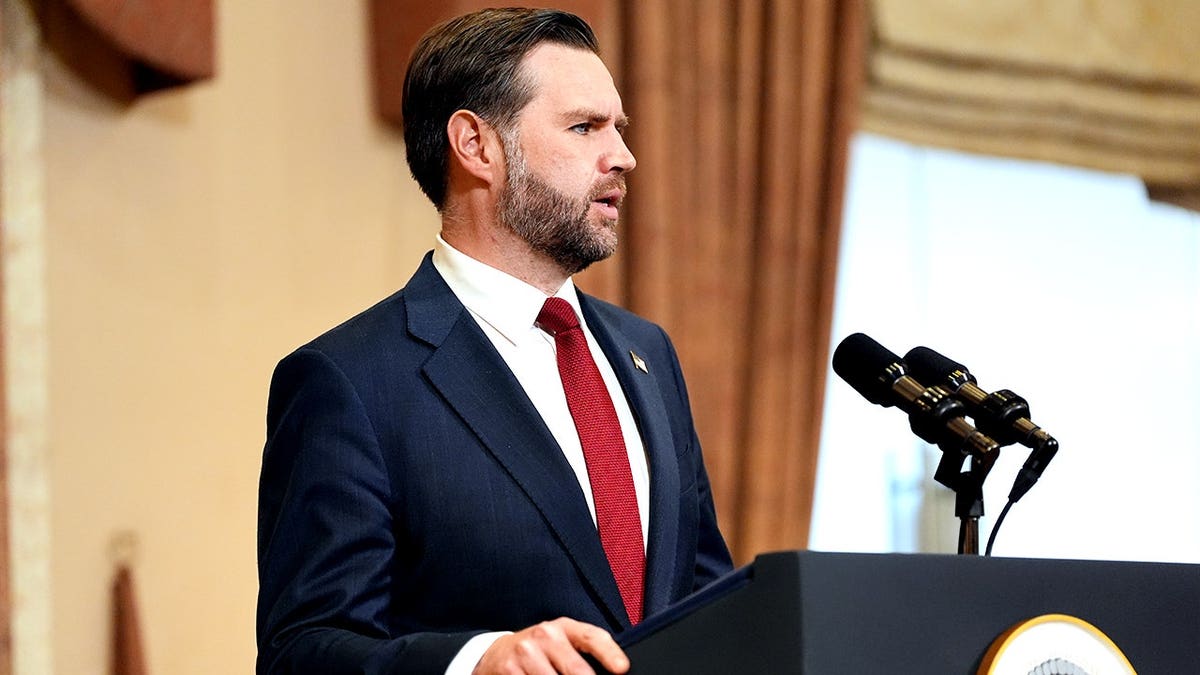
Vice President JD Vance, who led the U.S. delegation, pressed Iran to accept a strict “zero enrichment” policy and remove its stockpile of highly enriched uranium.
“The simple fact is that we need to see an affirmative commitment that they will not seek a nuclear weapon, and they will not seek the tools that would enable them to quickly achieve a nuclear weapon,” Vance said at a press conference in Islamabad.
Iranian leaders rejected those demands, insisting that any agreement must include the immediate release of billions of dollars in frozen assets.
Now, with the blockade in place, Saeed suggested the move may be designed less as a military endgame and more as leverage.
“This blockade could be … a maneuver to build further pressure on Iran to negotiate,” he said.
TRUMP WARNS CHINA OF ‘STAGGERING’ 50% TARIFF IF CAUGHT SUPPLYING MILITARY AID TO IRAN
The escalation has raised concerns globally, particularly for countries dependent on Gulf energy flows, including Pakistan.
“Everyone in the world must be worried about what kind of economic negative spin-offs such a blockade would have,” Saeed said.
Saeed, who until recently sat at the center of Pakistan’s military leadership, framed the Islamabad talks as a critical reopening of dialogue after decades of hostility.
“It is the first time in 47 years … that there was engagement at the highest level,” he said, calling it “a great moment for diplomacy” and a demonstration of Pakistan’s ability to maintain credibility with both Washington and Tehran.
He pointed in particular to Pakistan’s army chief, Asim Munir, a figure who has drawn unusual attention in Washington.
Trump has publicly praised Munir, at one point calling him his “favorite field marshal,” elevating his profile as a key intermediary in regional diplomacy.
Munir, who rose through Pakistan’s intelligence ranks before becoming army chief, previously served as director general of military intelligence and later led the Inter-Services Intelligence (ISI). His career has been defined by deep involvement in regional security and intelligence coordination, including longstanding engagement with Iran.
‘GATE OF TEARS’ AT RISK: IRAN THREATENS MAJOR NEW GLOBAL CHOKEPOINT IF US MOVES ON HORMUZ
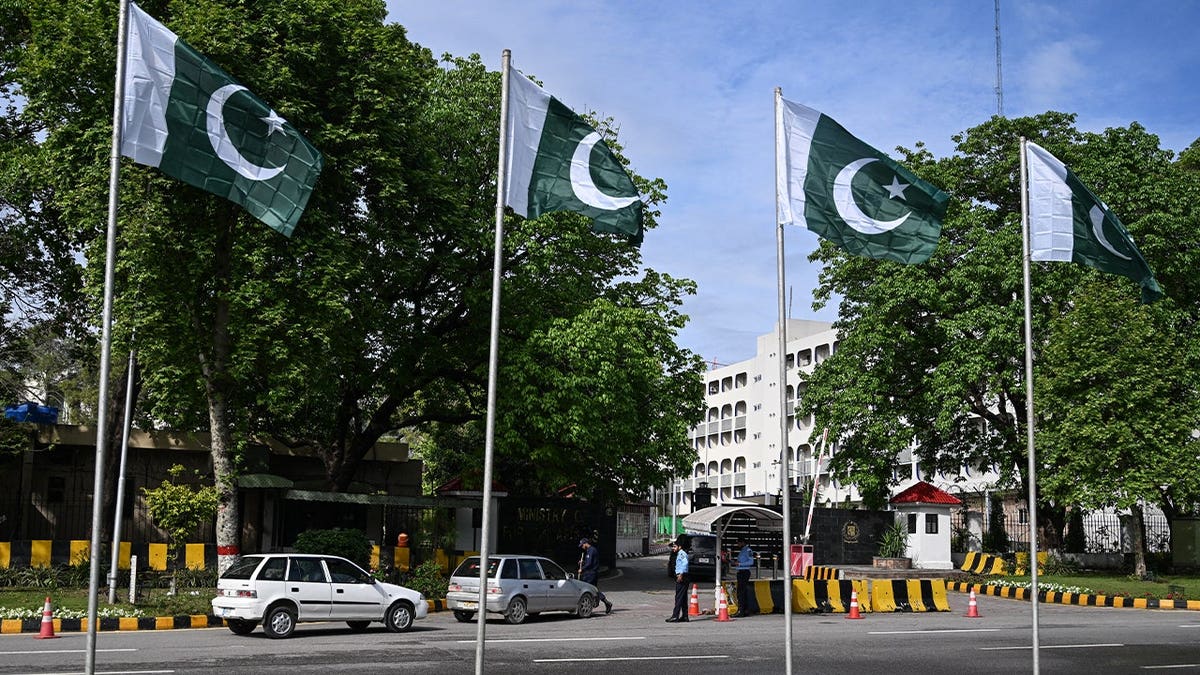
Those ties could prove critical in the current crisis, according to Saeed.
“What people do not know is that when he was director general of military intelligence … he was interacting with Iranians at multiple levels continuously,” Saeed said, describing years of direct engagement with Iran’s military, intelligence and political leadership, including former Islamic Revolutionary Guard Corps commander Qassem Soleimani, who was killed in a U.S. strike during Trump’s first term.
“He has had interaction with them for a long time … visiting Iran frequently and interacting on multiple issues,” Saeed said, adding that many current Iranian officials would already be familiar with Munir from earlier roles.
That continuity, he argued, gives Pakistan a rare advantage at a moment when formal diplomatic channels are strained.
“What one can say is that he continues to be one figure internationally who has a personal interaction … in the intelligence community in Iran in the military hierarchy and also on the side of the political leadership,” Saeed said.
“So that’s a huge advantage he has on the other side.”
TRUMP VOICES FRUSTRATION WITH NATO, SAYS IRANIAN NAVY ‘DESTROYED’ AS US PREPS FOR BLOCKADE

For Pakistan, that personal access — combined with its simultaneous relationship with Washington — has become central to its effort to position itself as a credible intermediary, even as the region edges closer to confrontation.
At the same time, Pakistan’s role as a mediator has drawn scrutiny, particularly given its longstanding position on Israel and recent inflammatory remarks by senior officials.
When asked whether Pakistan can be seen as a neutral broker while not recognizing Israel — an actor directly involved in strikes on Iran — Saeed downplayed the issue, saying Israel was not part of the diplomatic track.
“Pakistan’s position with regard to relations with Israel has been consistent since our independence,” he said, adding that Islamabad’s mediation efforts were focused solely on Washington and Tehran.
“Neither of their representatives was on the table … Pakistan was mediating between the U.S. and Iran,” he said.
Despite the current escalation, Saeed maintained that diplomatic channels remain open.
CLICK HERE TO DOWNLOAD THE FOX NEWS APP

“There is a lot of space … for resuming the process,” he said, suggesting talks could restart in Islamabad or elsewhere if both sides shift course.
“On Pakistan’s side, from my personal knowledge of the field marshal, they are relentless. They would not give up. They must not have given up. They must be continuously in touch with both sides. And they would try their best to convince both sides that the blockade is not going to be in their interest, in the interest of the region and in the interest of the international community.”
Read the full article here
