
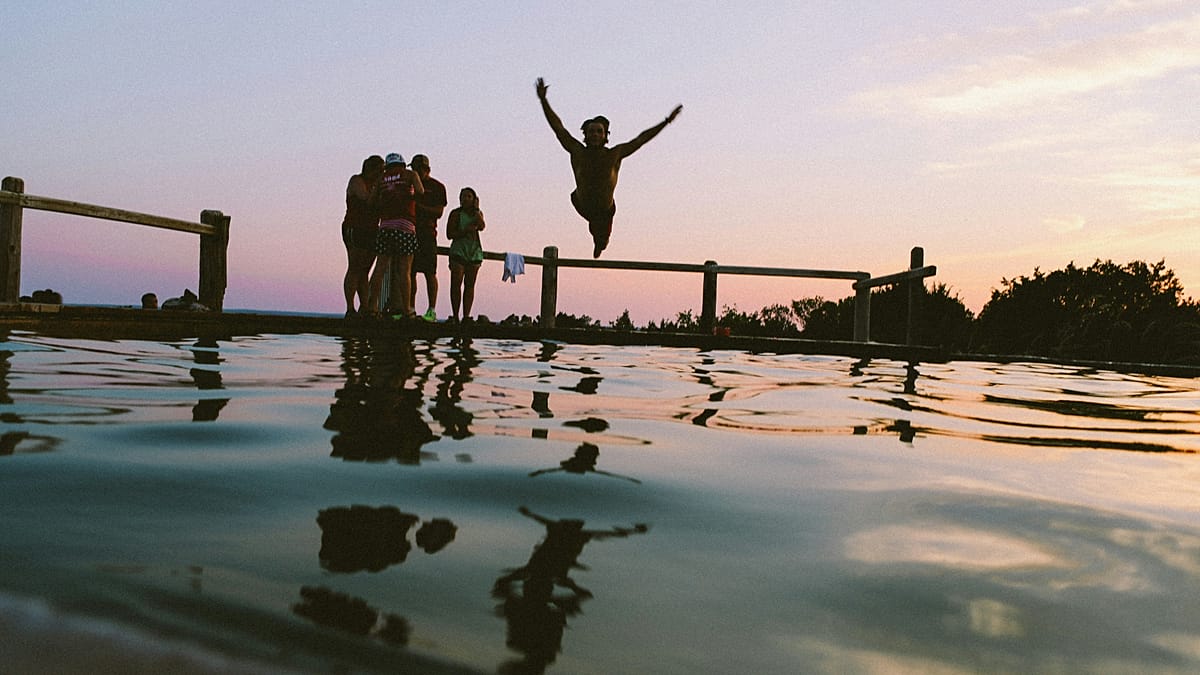
As a heatwave continues to pummel Europe, plunging into a refreshing lake or river seems like the only sensible thing to do right now.
ADVERTISEMENT

ADVERTISEMENT
But, tempting as these bodies of water are, many are not safe for bathing. As temperatures broke records in several cities across France this week, the country reported 40 people had drowned while swimming in unsupervised areas.
“There is a tragic scourge of drownings,” Prime Minister Sébastien Lecornu said on Tuesday. “The latest figures we’ve received are 40 deaths since 18 June. Most of the victims are young people.”
If you want to take a dip, you can do so safely by choosing only swimming spots that are supervised and paying attention to warning signs about water quality, strong currents or submerged hazards like tree branches and other debris.
Europe’s best lakes for safe wild swimming
A recent ranking by Iglu Cruise used data from the European Environment Agency (EEA) to rank European countries for their abundance of lakes rated as “excellent”, meaning their water quality is safe for swimming.
Only bathing lakes were used in the data, i.e. those officially designated and regularly monitored for swimming under the EU Bathing Water Directive.
Here are the best countries for lake dips and their top bathing spots.
Austria
In Austria, 96.5% of its inland bathing waters were rated as excellent by the EEA in 2025. Two-thirds of the country is covered by the Alps, resulting in high water quality due to the mountainous terrain forming natural reservoirs that provide pristine, clean waters.
Lake Klopein reaches summer temperatures of 26°C, while Attersee, the largest lake entirely within Austria, is known for its incredibly pure and clear water, offering underwater visibility of 7–9 metres in summer.
Hallstatt is another famous destination, with designated swimming areas like Badeinsel Hallstatt, a small artificial island perfect for sunbathing, complete with a grassy lawn and a diving board.
Finland
94.7% of Finland’s inland bathing waters are rated excellent quality. Finland is known as “the land of a thousand lakes” – or more specifically over 187,000 larger than 500 square metres – with many suitable for bathing in.
Lake Tuusula, located in Southern Finland, is one of the warmest lakes in the country, reaching 18-22°C in summer and was once a social hub for Finnish artists in the early 1900s.
Saimaa is the country’s largest lake, at 4,400 square kilometres and is the fourth largest lake in all of Europe; it has a complex labyrinthine structure with nearly 14,000 islands dotted within it and also offers a chance to spot one of the few ringed seals left in the wild.
Germany
Germany has 91.5% of its inland bathing waters rated as excellent quality.
Bathing facilities, known as “Strandbäder” or lidos, are exceptionally popular due to their high water quality. These public beach areas offer a complete day out with amenities like changing rooms, sunbathing lawns, playgrounds, and restaurants.
Lake Griessee is Germany’s warmest lake. Its shallow depth allows the water to heat up quickly, often reaching temperatures of 25°C or higher. Lake Constance, the country’s largest body of water, situated in the far south, offers breathtaking views and numerous bathing spots, with its shores extending into Switzerland and Austria.
Additionally, Lake Walchensee in Bavaria is celebrated for its Caribbean-like turquoise waters, a characteristic attributed to the high concentration of dissolved calcium carbonate, or “rock flour”, present in the water.
Italy
In Italy, 87.7% of its inland bathing waters were rated as excellent quality in 2025.
Italian lakes, thanks to the Mediterranean climate, tend to be warmer than those further north. Lake Kaltern in South Tyrol, often called one of the warmest swimming lakes in the Alps, can reach temperatures of up to 28°C.
The glamorous Lake Como is recognised for its exceptional open water swimming status. Other notable lakes include Lake Garda and Lake Maggiore, known for their many lidos.
Beyond swimming, many of Italy’s lakes, especially Garda and Como, serve as hubs for various outdoor activities such as windsurfing, sailing, kayaking, and hiking in the surrounding mountains.
Switzerland
84.4% of Switzerland’s inland bathing waters score as excellent.
Cities such as Zurich and Geneva are known for their lakes, creating a culture of wild swimming, especially in the spring and summer, thanks to the high water quality.
Popular in Switzerland are its “Badi”, or public swimming facilities. Many of these open-air swimming areas have been established for over a century, offering changing rooms, sunbathing lawns, diving boards and lifeguards. Some even feature historic wooden lakeside baths.
Lake Lugano is ideal for open water swimming. It’s Switzerland’s warmest lake in summer, often reaching up to 26°C in August.
France
71% of France’s inland bathing waters are rated as excellent.
Lake Aiguebelette in the Savoie region of the French Alps is considered France’s warmest lake, with summer temperatures reaching up to 28°C due to its shallow depth, geographic location and warm springs.
Lake Annecy is favoured for its deep turquoise waters and impressive mountain scenery, with many public beaches as well as its pretty old town, Annecy. Lake de Sainte-Croix is defined by its dramatic cliffs, while Lake Bourget, France’s largest natural lake, provides a mix of sandy beaches, marinas and a lively ambience.
Sweden
Sweden had 82.1% of its inland bathing waters scoring excellent in 2025.
With over 100,000 lakes, there’s a wide variety of wild swimming spots, from urban dips to remote lakes surrounded by nature. Some lakes may have a tea-like colour due to organic material from nearby forests, but this does not indicate poor water quality.
In Sweden, the concept of “Allemansrätten”, or the Right of Public Access, grants everyone the freedom to explore and enjoy nature, including swimming in lakes. This allows for the discovery of secluded swimming spots away from official beaches, provided that no disturbance is caused to the environment or private property.
Sweden offers numerous opportunities for wild swimming, even close to the capital. Lake Vänern, the largest lake in Sweden and third-largest in Europe, resembles a sea with its many islands, coves and sandy beaches. In Swedish Lapland, visitors can experience glacial swimming under the midnight sun during the summer.
Hungary
In Hungary, 64% of inland bathing waters were rated as excellent in 2025. As Hungary has no coastline, its lakes are very popular for swimming.
A key feature of Hungarian lakes is their thermal and mineral-rich waters, which are believed to have therapeutic properties, meaning the lakes are a popular destination for wellness seekers as well as open water swimmers.
While Frying Pan Lake in New Zealand holds the title as the largest thermal lake, its high temperatures make it unsuitable for swimming, meaning Lake Hévíz in Hungary is the world’s largest swimmable thermal lake. With temperatures ranging from 22°C in winter to 36°C in summer, Lake Hévíz is heated due to natural thermal springs emerging from a cave beneath its bed. It is also rich in minerals and famed for its healing benefits.
Lake Balaton is the largest freshwater lake in Central Europe and Hungary’s most popular summer destination. It also hosts the “Balaton Átúszás”, a popular 5.2 km cross-lake swimming competition.
The Netherlands
70.4% of the Netherlands’ inland bathing waters score as excellent.
Whilst it doesn’t have the grand alpine lakes of Switzerland or Austria, its numerous man-made and natural bodies of water provide a fantastic summer escape. Dutch lakes vary from large, open expanses to smaller recreational lakes, many of which originated from sand or gravel quarries.
Lake IJssel, a large freshwater lake, was once a North Sea bay. It is now a popular spot for water sports, including windsurfing and sailing, thanks to its expansive sandy beaches. With July temperatures reaching 24°C, the lake offers an experience like an inland sea.
Sloterplas is an artificial lake located in Amsterdam, featuring designated swimming areas and a beach. Lake Henschotermeer is renowned as one of the most picturesque lakes in the country.
Poland
Poland had 56.7% of its inland bathing waters rated as excellent in 2025.
Lake Śniardwy is the largest lake in the country, often called the Masurian Sea. Its vastness makes it feel like an inland sea, and it’s a hub for sailing and other water activities.
The Krutynia River Trail is a popular kayaking destination that winds through several lakes, all with crystal-clear water and lush forests.
Lake Licheńskie is Poland’s warmest lake, reaching 24°C in the summer months, making it warmer than other natural lakes in the country, which average at around 20°C.
