
NEWYou can now listen to Fox News articles!
Serbian President Aleksandar Vucic resigned from the presidency in September and is running for prime minister in parliamentary elections considered to be one of the most competitive elections for Serbia in recent memory.
“I think this is certainly the biggest challenge for the former President in his 14-year rule,” Helena Ivanov, associate fellow at the Henry Jackson Society, told Fox News Digital.
“The student protesters have been able to capture the hearts and minds of people and keep the momentum going in a way that the established opposition was never able to do,” Ivanov added.
ANTI‑CORRUPTION PROTESTS HIT EUROPEAN NATION AS CALLS FOR NEW ELECTIONS GROW
Serbian Foreign Minister Marko Djuric told Fox News Digital that he believes the student opposition is highly unlikely to win.
“The people of Serbia have seen through them: years of criticism have not persuaded the public that they have a credible program or a serious plan for the country’s future,” the foreign minister said.
Djuric touted Serbia’s economy under Vucic and the Strategic Dialogue with the U.S., which he said will foster greater cooperation and new opportunities for Serbs.
In an exclusive interview with Fox News Digital in June when he was still president, Vucic pointed to the country’s economic growth as evidence of its transformation. “Our GDP was 32 billion (euros) when I became the prime minister,” Vucic said. “This year it’s going to be over 100 billion euros, which is $120 billion.” Vucic first became prime minister in 2014 and president in 2017.
In that same interview, he said the improving relationship between Washington and Belgrade was increasingly centered on economics, investment and technological cooperation and mutual conservative values.
A bipartisan group of senators led by Sen. Chuck Grassley, R-Iowa., and Sen. Richard Blumenthal, D-Conn., introduced the Supporting the Rule of Law, Building Institutional Justice, and Accountability Act (SRBIJA) to address democratic backsliding in Serbia, promote the rule of law and accountability and improve the treatment of student-led civic protests.
Most importantly, the legislation would condition future aid on a presidential certification that Serbia made “significant and sustained” efforts toward judicial accountability, press freedom and alignment with the EU and NATO.
The bipartisan group of lawmakers, which also included Rep. Joe Wilson, R-S.C., and Rep. William Keating, D-Mass., took aim at President Vucic and his time in power.
EXCLUSIVE: SERBIAN PRESIDENT VUČIĆ SAYS SUPPORT FOR US ‘SURGED’ UNDER TRUMP, INVITES HIM TO VISIT BELGRADE
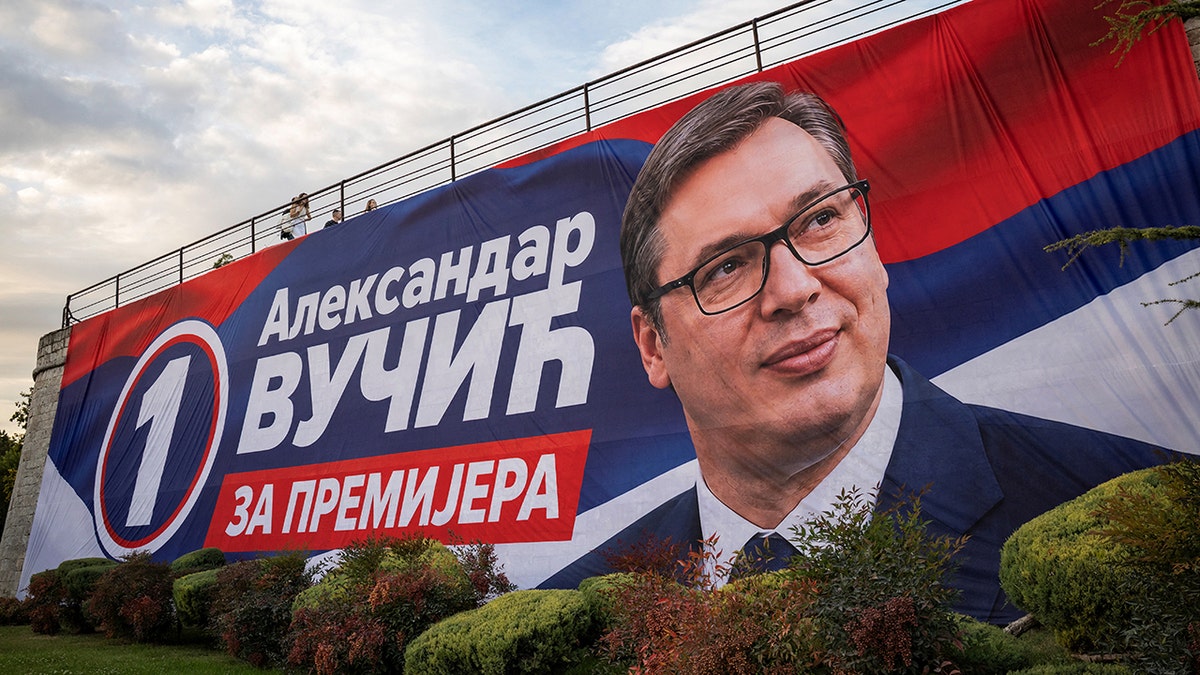
There are growing concerns from Congress and observers that the election will take place in a hostile environment and efforts to discredit and undermine the election are already underway.
Others fear the current government might not respect the outcome of the election if the Student List were to win.
Vucic had served as president of Serbia since 2017 and previously as prime minister from 2014 to 2017, but was term limited under the constitution. His exit from the presidency created the opportunity for him to remain in power by returning as prime minister.
Vucic resigned from the presidency and dissolved parliament in September, setting the stage for the snap election on Oct. 25.
As president, analysts say he has always straddled the geopolitical line between East and West, seeking European legitimacy and launching EU accession talks in 2014 while also maintaining close ties with Russian President Vladimir Putin even after the full-scale invasion of Ukraine in 2022.
Unlike previous elections, the student-led opposition garnered significant attention to their cause and mobilized popular support, becoming a legitimate political contender out of a spontaneous protest movement.
Serbia has been roiled by student-led anti-corruption protests since November 2024, demanding justice and accountability after the deaths of 16 people following the collapse of a railway station in the town of Novi Sad. One of the largest protests in Serbia’s history took place on March 15, 2025, with nearly 350,000 people gathered in Slavija Square in central Belgrade.
ZELENSKYY WARNS RUSSIA WANTS TO CAUSE ‘EXPLOSION’ IN THE BALKANS
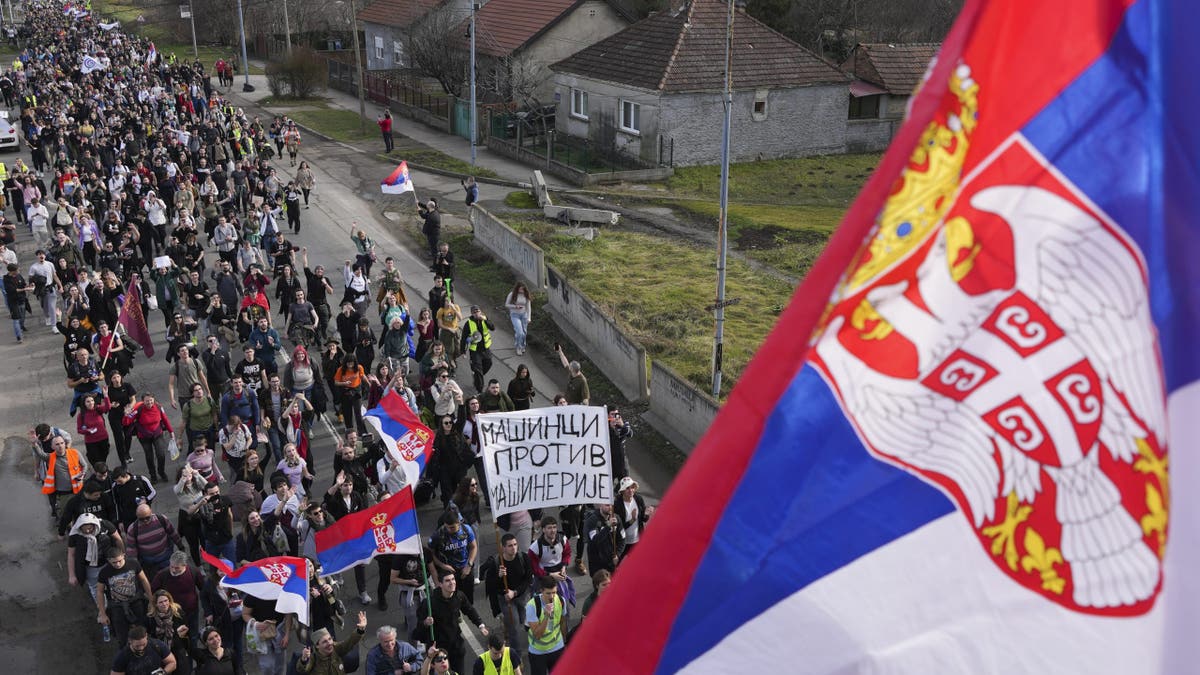
The protesters criticized the Vucic government for failing to hold anyone accountable for the canopy disaster as the government continued its heavy-handed crackdown on demonstrators. None of the original demands of the protesters were met, so the students turned to electoral politics to enact change the Serbian political opposition was never able to achieve.
The Student List, as the opposition is known, consists of a wide swath of civil society actors, many of whom come from the ranks of academia, but does not include anyone from Serbia’s traditional opposition parties that struggled to challenge Vucic and his ruling Serbian Progressive Party in the past.
The group operates in a decentralized manner and does not have an official leader. Their main priorities are to tackle corruption and promote transparency and the rule of law.
Filip Ubović, a student from the University of Belgrade and protest participant on the ground in Belgrade, has spoken with Fox News Digital over the course of the year-long protests.
SERBIA, CAUGHT BETWEEN EUROPE AND RUSSIA, COULD MOVE ONE STEP CLOSER TO NORMALIZING RELATIONS WITH KOSOVO
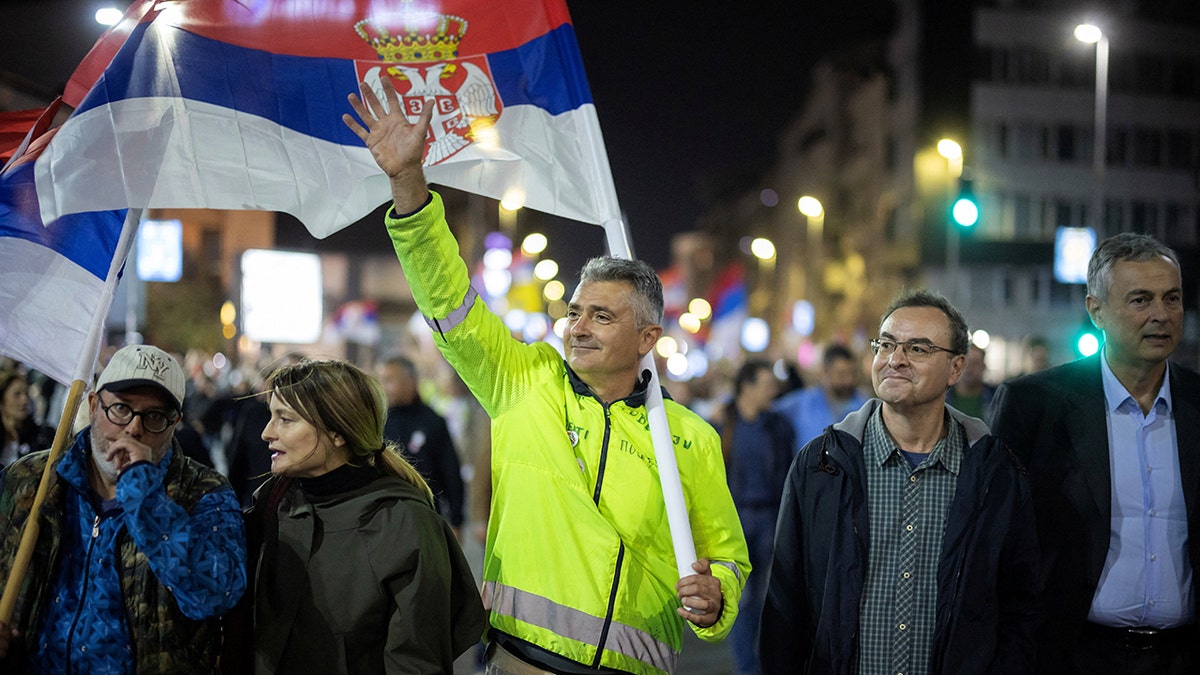
Ubović said he joined the protests because he was fed up with the current state of his country. This was the first opportunity, Ubovic said, to do something tangible, instead of just complaining.
“People had enough for quite some time but decided to fully embrace us because we are ‘their kids’, we are young, we are not professional politicians, we do not have a single face representing us, and we are very professional and principled,” Ubovic said.
Ivana Stradner of the Foundation for Defense of Democracies told Fox News Digital that corruption has held back democracy in the Balkans and progress for its people for a while.
“Corruption doesn’t just steal public money; it steals an entire generation’s future. Young people in Serbia and Albania are taking to the streets demanding accountability and a better future. The U.S. should pay attention, not out of charity, but strategic self-interest,” Stradner said.
‘VOTERS GET TO CHOOSE — JUST NOT THE RESULT’: RUSSIA’S PARLIAMENTARY ELECTION REACHES OCCUPIED UKRAINE
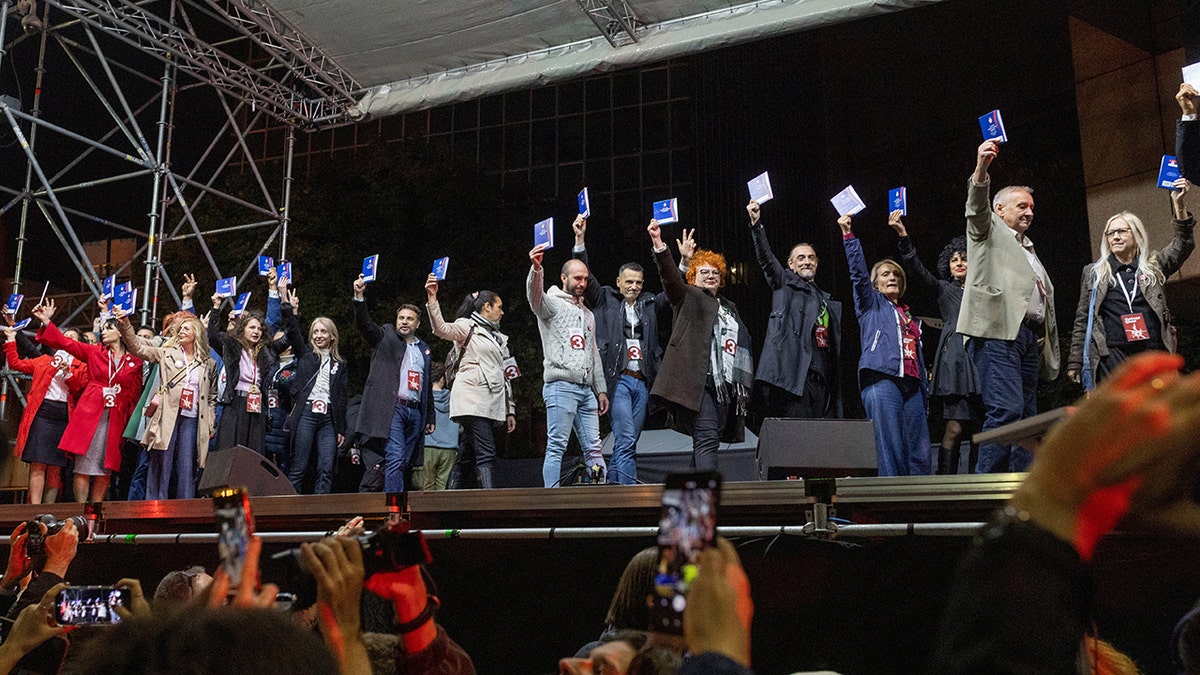
The test will be whether the Student List can transition their popular mobilization in the streets into a viable political option that can win an election and govern a country that hasn’t undergone a political transition in over a decade.
It’s also unclear, if the Student List were to win, how they might reorient Serbia’s foreign policy and its relations with the U.S.
“So far, the students have been remarkably reluctant to define foreign policy goals that would depart from the current government’s course. For now, the most realistic expectation is continuity,” Sinisa Vukovic, director of the Global Policy Program at the School of Advanced International Studies at Johns Hopkins University, told Fox News Digital.
Vuković said that Serbia’s foreign policy has remained mostly consistent dating back to Slobodan Milosevic, the former leader of Yugoslavia, and the Vucic government has left hot-button issues including the crisis over Kosovo and EU membership mostly unresolved.
While much might change in Serbia domestically, any resolution to the conflict with Kosovo or any substantial reorientation of foreign policy that shifts Serbia away from Russia and moves it much closer to the U.S. and EU remains unclear.
CLICK HERE TO DOWNLOAD THE FOX NEWS APP
“Another period of pseudo-hedging is likely, with Russia keeping a deep presence in the most vital sectors and dominating most of them,” Vukovic added.
Read the full article here
