
Tesla CEO Elon Musk said that the company is planning to end production of the Cybertruck at Gigafactory Texas around the middle of next year as it reallocates capacity to increase Cybercab production.
Musk said late Thursday in a post on his X platform that “Tesla will be winding down production of the Cybertruck at Gigafactory Texas around the middle of next year to make room for increased Cybercab production.”
The move serves as a retreat from what has been one of Musk’s pet projects, as the futuristic Cybertruck was once touted as a rival to legacy pickup trucks.
While it wasn’t immediately clear whether production of the Cybertruck would move to another Tesla facility or be phased out entirely, the Austin facility is the only known Tesla factory equipped to produce the Cybertruck.
TESLA RAISES CYBERTRUCK PRICES ON 2 US MODELS
Musk said in response to a user post on X that the Cybertruck is the “best vehicle Tesla has ever made” and said the move marks the “end of an era.”
Tesla began delivering the Cybertruck in late 2023 after years of delays. According to Kelley Blue Book, the company only sold 20,237 Cybertrucks in the U.S. last year – a 48% decline from 38,965 in 2024 – after Musk had predicted annual sales of 250,000 units when production started in 2023.
The Cybertruck was initially unveiled in 2019, an event which took an unexpected turn when Musk attempted to prove its windows were shatterproof by hitting them with metal balls – thrown by Tesla’s lead designer Franz von Holzhausen – but ended up cracking two of them after they were hit.
ELON MUSK SAYS TESLA-SPACEX MERGER WOULD BE ‘A GOOD IDEA’ AS COMPANIES FORM SPECIAL COMMITTEES
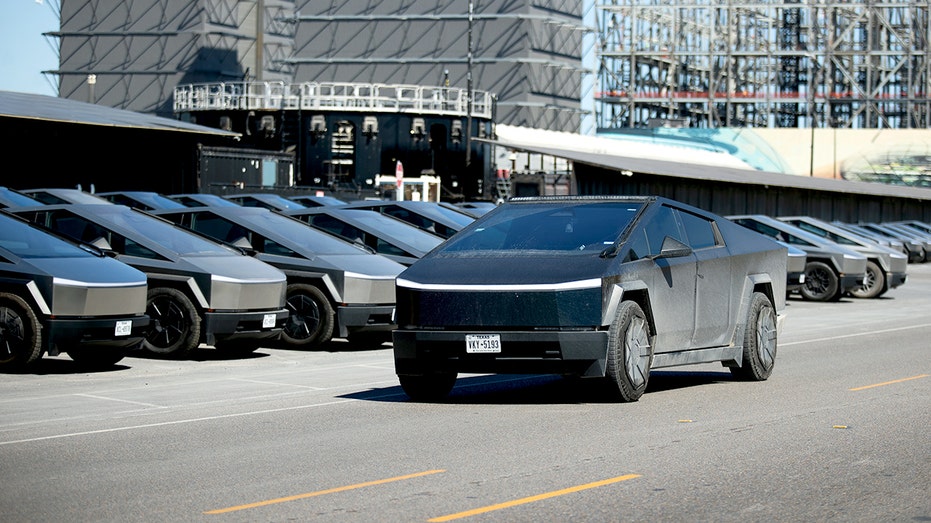
Since the Cybertruck officially debuted in 2023, Tesla has issued 11 recalls for the electric pickup, according to the National Highway Traffic Safety Administration. Some vehicles required physical repairs, while others were fixed with over-the-air software updates.
Musk and Tesla are focusing on the Cybercab as the automaker pivots to focus more on AI and robotics, as the Cybercab will play a critical role in showcasing those capabilities as the company envisions it serving as the basis for a global network of robotaxis.
Tesla’s self-driving technology has faced years of delays, but the company was able to begin offering paid rides in a small fleet of Cybercabs in Austin in September.
TESLA’S NEW ROADSTER MAKES A FLYING DEBUT, HITTING 60 MPH IN UNDER A SECOND
| Ticker | Security | Last | Change | Change % |
|---|---|---|---|---|
| TSLA | TESLA INC. | 358.22 | +14.53 | +4.23% |
The company is still facing scrutiny from U.S. auto regulators as to whether it has properly self-certified Cybercab to demonstrate compliance with federal motor vehicle safety standards, and NHTSA opened an audit in September to review that certification.
“Cybertruck was an incredible technology development platform and lives on through Cybercab,” said Cybertruck lead engineer Wes Morrill in a post on X.
Cybercab remains a relatively small program at the present time, as the two-seater robotaxi only entered production earlier this year. Tesla has listed an installed capacity of more than 125,000 units.
CLICK HERE TO DOWNLOAD THE FOX NEWS APP
About 570 of the more than 1,200 Tesla robotaxis operating in Texas are Cybercabs, with the rest mainly Model Y vehicles, according to the state’s Department of Motor Vehicles.
Reuters contributed to this report.
