

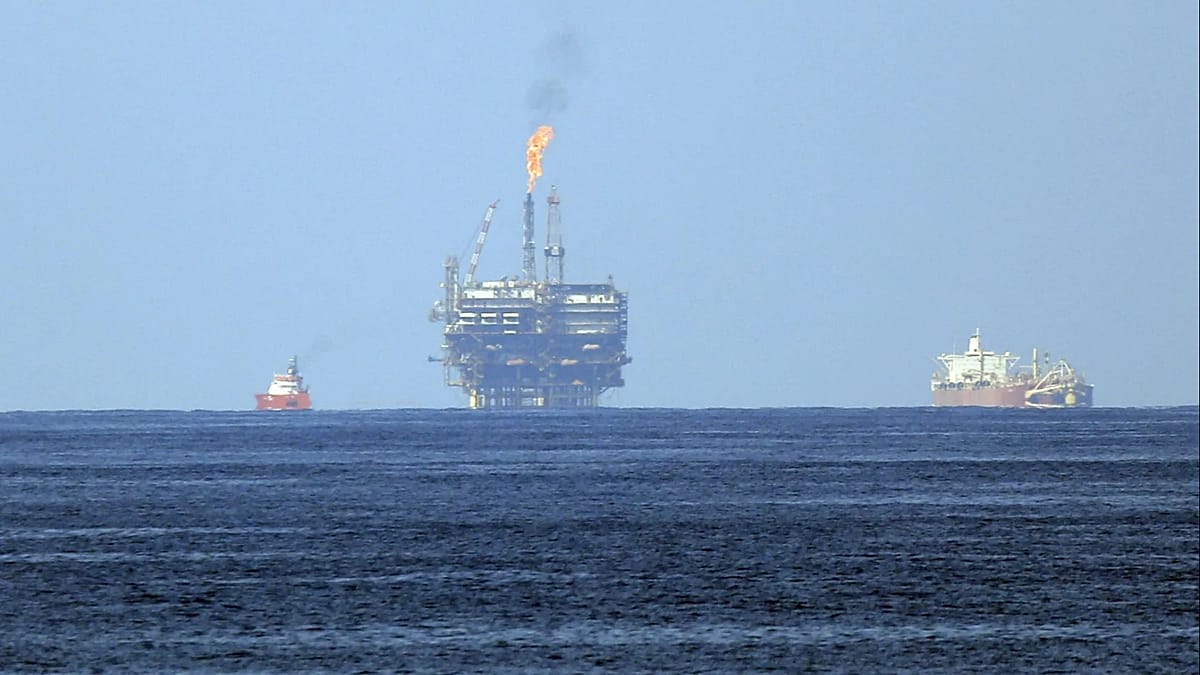
On 7 May, an imposing industrial infrastructure destined for the Bouri oil field, some 170 kilometres off the coast of Libya, set sail from the port of Ravenna. The offshore module, with a weight of more than 5,200 tonnes and a height of 45 metres, is designed to exploit the gas associated with oil extraction, which is largely dispersed or burnt off.
ADVERTISEMENT


ADVERTISEMENT
This is not a simple technical operation, but an initiative that is part of a broader energy and geopolitical strategy in the Mediterranean.
‘Made in Italy’ in the energy sector
The project was developed by Mellitah Oil & Gas, a subsidiary of Eni and the National Oil Corporation. Construction took place at the Rosetti Marino shipyard, while offshore installation will be entrusted to Saipem via the Saipem 7000 crane ship. The whole process highlights the central role of the Italian industry in offshore oil and gas, capable of covering all phases of the project, from design to installation.
The construction of the module involved hundreds of highly specialised workers including engineers, technicians and labourers at the Ravenna construction sites, generating significant spin-offs on the local and national supply chain. Operations of this kind, worth hundreds of millions of euros, feed a strategic supply chain for Italy, maintaining advanced skills and jobs in a highly specialised sector.
In a transforming sector such as energy, initiatives of this kind enable Italy to strengthen its competitive position at the international level.
Reducing flaring
At the heart of the intervention is the reduction of flaring, the practice of burning excess gas during oil extraction. This is one of the main sources of avoidable emissions in the global energy sector, with huge quantities of gas being released into the atmosphere every year.
The new module will enable this gas to be recovered, processed and fed back into the production cycle, turning a waste into an energy resource. For Libya, this means moving closer to the goal of zero flaring by 2030, while reducing the environmental impact.
The Bouri field is one of the most important in Libya and the installation of the module will help increase its efficiency and production capacity.
Strategic axis
For Italy, the project represents much more than an industrial order. Eni’s presence in Libya is one of the pillars of bilateral relations and has been further consolidated in recent years.
The collaboration with the National Oil Corporation is part of a broader framework of economic and diplomatic cooperation, in which Rome is one of Tripoli’s main European partners. This strengthens Italy’s role as an energy hub in the Mediterranean.
The increase in gas production in Libya also has direct implications for Europe. In a context marked by geopolitical instability and the need to diversify supplies, each new production capacity represents an element of stability. The Bouri project therefore contributes not only to Libyan growth, but also to European energy security, confirming the Mediterranean as a key area for future energy balances.
Meeting with Meloni
Libyan National Unity Government Prime Minister Abdulhamid Dabaiba is on an official visit to Rome, where he is meeting with Prime Minister Giorgia Meloni to consolidate bilateral cooperation on energy, security and the economy.
The mission, accompanied by a high-level government delegation from Tripoli, is part of a phase of renewed diplomatic activism between the two countries and aims to strengthen coordination on strategic dossiers in the Mediterranean.
The talks also focused on support for the stabilisation process in Libya promoted by the United Nations and supported by the United States, with the aim of fostering the institutional, economic and military reunification of the country.