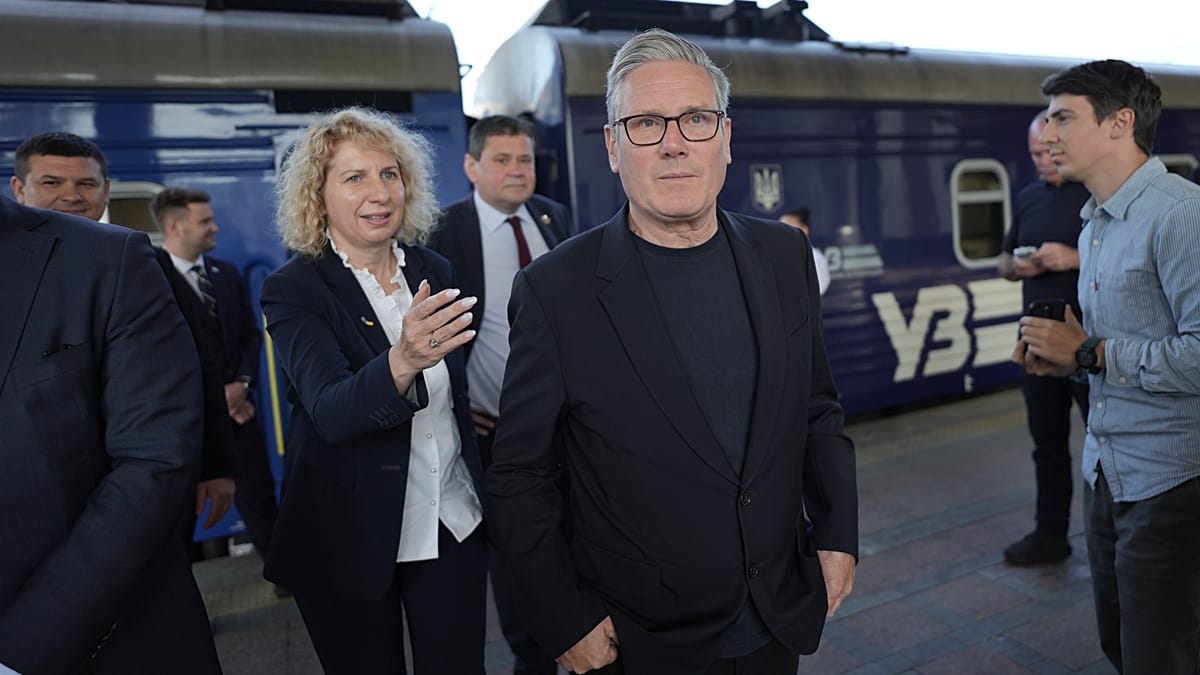

The last time that Ursula von der Leyen travelled to Kyiv, in late February, she arrived in the midst of a gruelling winter. Ukraine was suffering widespread blackouts caused by Russian strikes. The population endured sub-zero temperatures without heating.
ADVERTISEMENT

ADVERTISEMENT
This week, on her second trip this year, she declared upon arriving at the train station: “The tide is turning.”
It was a bold statement that captured a remarkable transformation in less than five months.
With the battle lines stuck in a war of attrition, Ukraine has moved the fighting to the skies, launching long-range drone strikes against Russia’s oil refineries, some of them thousands of kilometres away from the contact line. The strategy has strained Moscow’s war chest and forced the energy-rich country to restrict fuel exports.
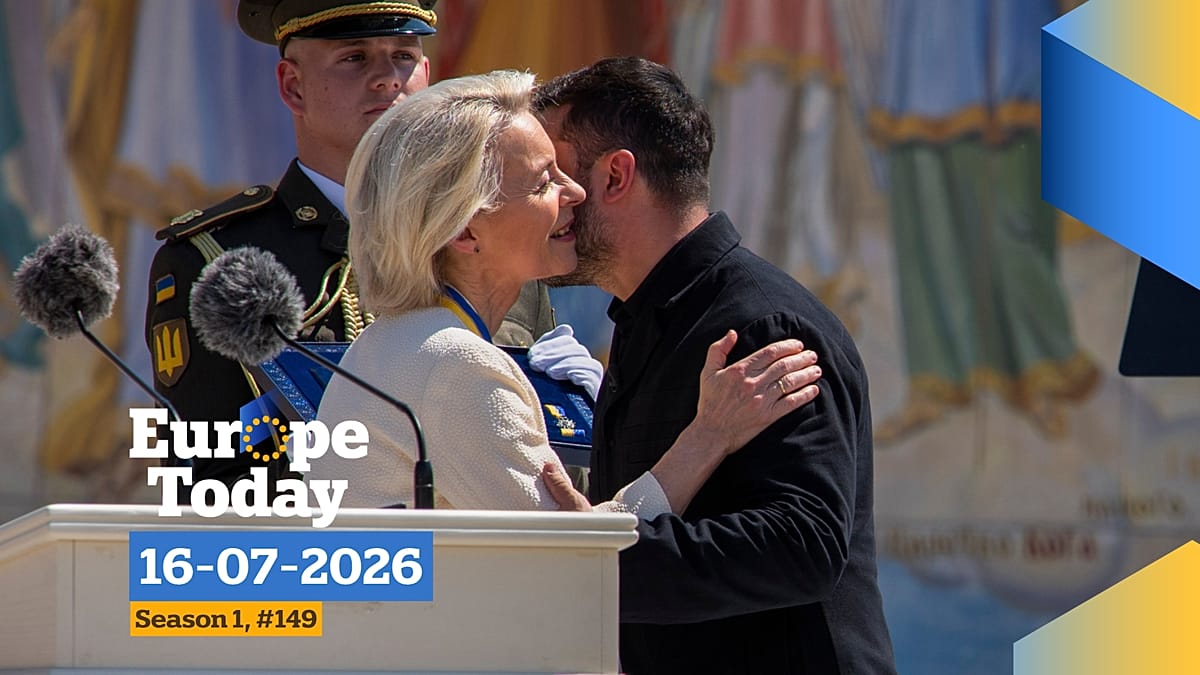
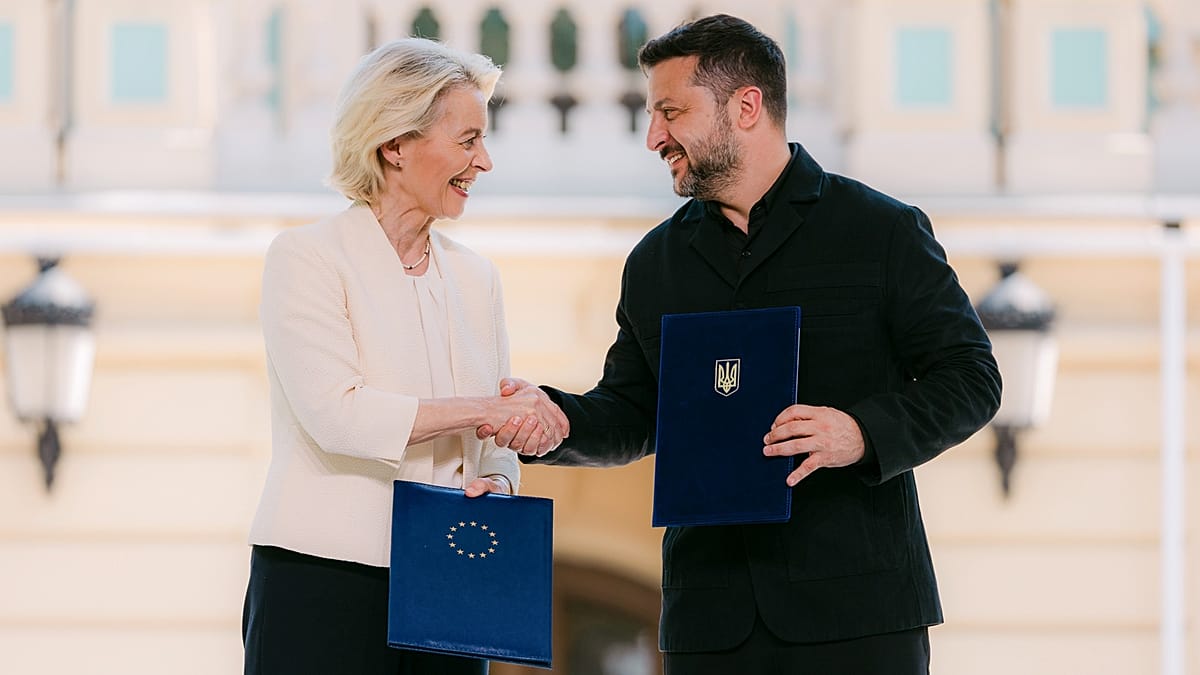
“Russia may have darkened your skies with smoke. But no one is fooled. No cloud of smoke can hide the reality on the battlefield,” von der Leyen said on Wednesday, standing next to Ukrainian President Volodymyr Zelenskyy.
“Russia’s momentum is weak. Ukraine, on the other hand, continues to resist.”
It was therefore fitting that her one-day trip, under the blazing July sun, had a special focus on drones.
Von der Leyen and Zelenskyy signed an EU-Ukraine defence industrial partnership to build unmanned aerial vehicles. The deal, the first of its kind, aims to merge the bloc’s industrial scale with Kyiv’s cutting-edge expertise into joint ventures. Notably, it will enable the storage of drones on EU soil before their deployment to Ukraine.
Funding will come from the military strand of the €90 billion support loan and the roughly €10 billion still available under the SAFE defence programme. Further down the line, the partnership intends to expand to missile technology.
But the fact that “the tide is turning” does not mean that Ukraine is necessarily winning.
Russia is exploiting Ukraine’s severe shortage of US-made Patriot interceptors, which are essential to deflect ballistic missiles, to pummel cities at a relentless pace. Residential blocks, supermarkets, warehouses, railway stations, schools and museums have all been hit in recent weeks, and hundreds of civilians have been killed.
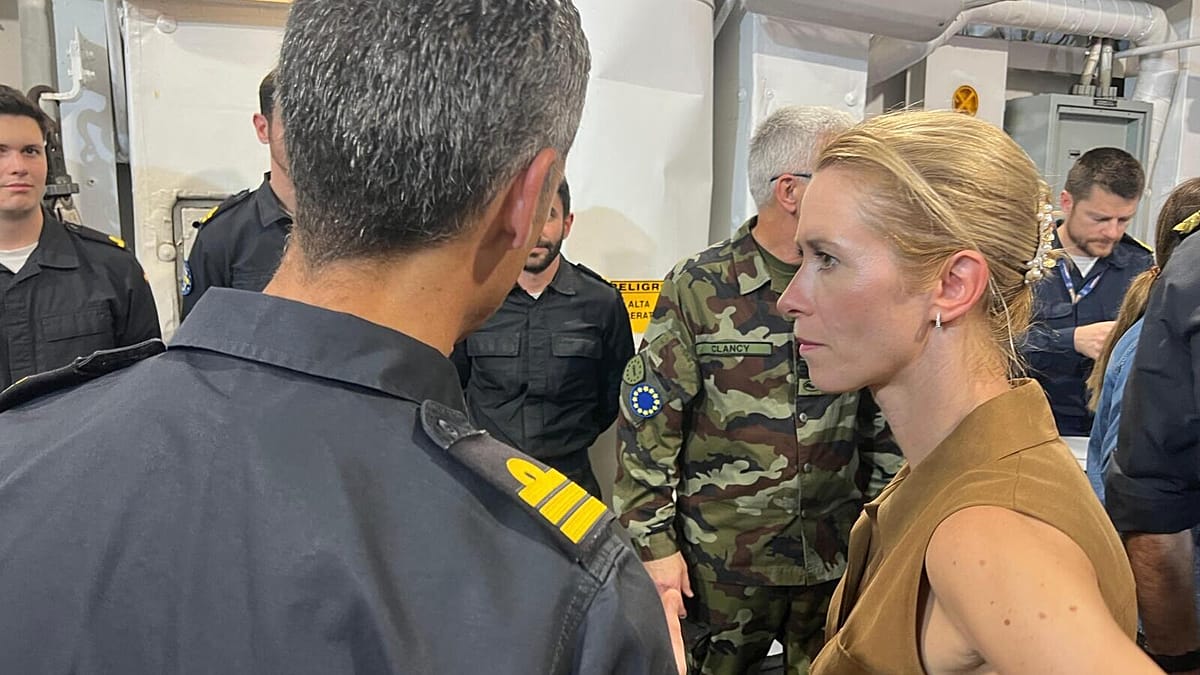
Von der Leyen was reminded of this extreme vulnerability when she was rushed to an underground shelter after an air raid alert was triggered. The intervention, which Euronews witnessed, proceeded calmly and lasted but a few minutes.
Shortly after leaving the shelter, she toured the Kyiv-Pechersk Lavra, a historic monastery whose golden-domed cathedral was set on fire in June by a Russian attack. As she marvelled at the frescoes, she spotted some areas still blackened by the flames.
It was another reminder that for Moscow, nothing, not even the holy, is off limits.
Meanwhile, murmurs of turmoil triggered by Zelenskyy’s sudden government reshuffling grew louder as the visit went on. The following day, when von der Leyen was gone, Ukrainians took to the streets to protest the dismissal of Mykhailo Fedorov, the highly popular defence minister credited with taking drone warfare to the next frontier.
A renewed synchrony
The tide that von der Leyen hailed is not only turning on the battlefield. Ukraine’s coveted path to EU membership has also experienced an impressive turnaround.
In February, the Commission president had little to show for. The accession process was under the tight grip of Hungary’s veto, thwarting any formal decision. Hope was virtually lost for as long as Viktor Orbán remained in office.
On top of the impasse, von der Leyen was met with an impossible request from Zelenskyy: full membership by 2027. The date had emerged during the US-led peace negotiations, with accession treated as part of future security guarantees.
“It’s true that we want a fast track for membership,” Zelenskyy said then.
By his side, a stone-faced von der Leyen resorted to her best diplomacy to shut it down.
“I understand very well that for you, a clear date is also important. The date you set is your benchmark that you want to match,” she told Zelenskyy.
“You know that from our side, dates by themselves are not possible, but of course, the support that you can reach your goal is absolutely clear on our side.”
This week, the accession story played to a vastly different tune.
Von der Leyen arrived in Kyiv just a day after Ukraine opened a new cluster of negotiations, the second in one month. The breakthrough, made possible after the Hungarian elections in April, has laid a reasonable path to unblocking the remaining four clusters after the summer break. Progress is finally tangible.
Much to von der Leyen’s relief, Zelenskyy has stopped talking about 2027 altogether. After backlash from leaders, his goalposts have moved from fantasy to reality. Now, his attention is on maximising the tried-and-tested methodology.
“Our relationship with Europe is now the strongest, most meaningful and most personal than at any other point in our history,” he said this time.
Privately, von der Leyen and her team welcomed what they saw as Zelenskyy’s improved understanding of enlargement as a step-by-step trajectory that can be politically sustainable only if its core rules are politically credible.
“You are preparing for your future as a member state of our Union,” she told him. “But the truth is, your actions are already shaping the future of our entire continent.”