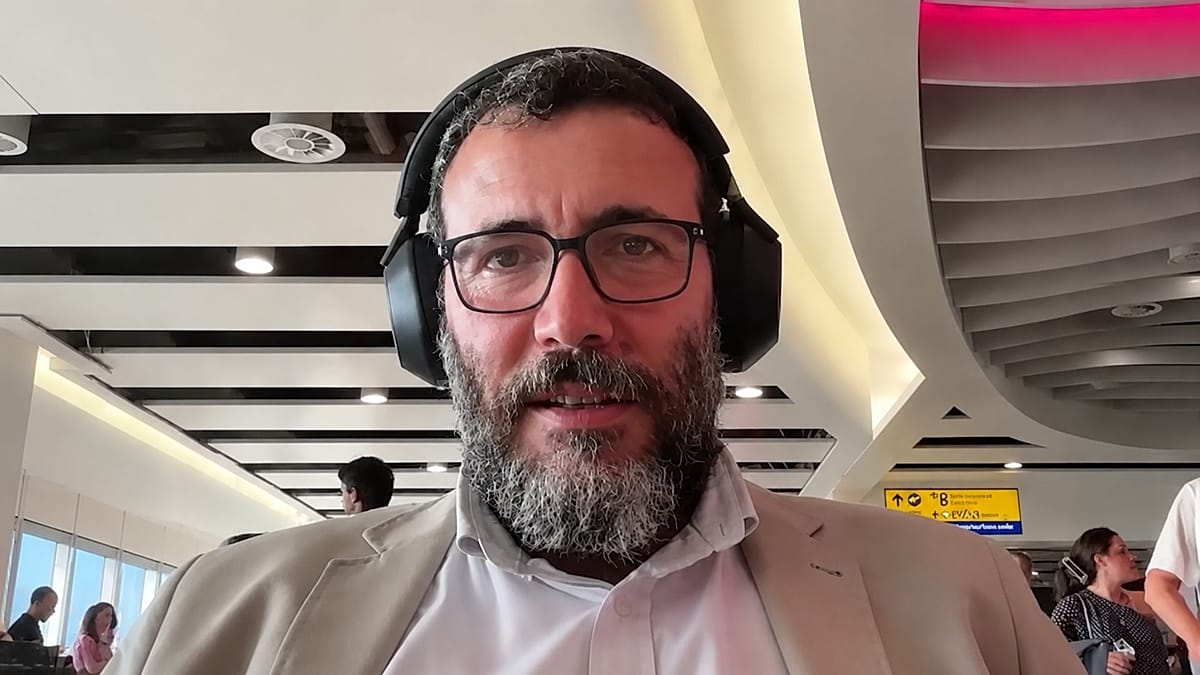


The United Nations should “reform, transform or die” in a world that is more “volatile” than the one it was created for, the President of the UN’s Cities Alliance, María Fernanda Espinosa, has told Euronews’ flagship morning show, Europe Today.
ADVERTISEMENT

ADVERTISEMENT
Espinosa, who previously served as the President of the UN General Assembly, and as Ecuador’s foreign affairs and defence minister, acknowledges the UN is “facing a crisis” but insists “the world cannot live without” the institution.
“The UN will survive. The big question is how the organisation will survive,” Espinosa said. “And I think the short-hand for that is: reform, transform, or die.”
“The real problem is that the UN needs to reinvent itself to face a different reality,” she added. “We really need to rethink and revitalise the organisation.”
The multilateral organisation is facing one of the most challenging periods in its history, as governments worldwide slash development aid. US President Donald Trump has halted funding to several UN agencies and pledged just $2 billion (€1.7 billion) to UN humanitarian programmes last December, a contribution that has amounted to as much as $17 billion (€14 billion) in previous years.
The UN has cut its annual budget for 2026 by 15% and in 2025 put forward the UN80 initiative, a cost-cutting and reform plan to adapt to today’s challenges, launched for the 80th anniversary of the organisation.
The institution also faces a crisis of legitimacy. President Donald Trump recently established the Board of Peace, an initiative several governments have described as encroaching on the UN’s mandate.
The Board, originally conceived to oversee Gaza’s post-war reconstruction, was later assigned a wider mandate, sparking criticism from EU countries like France and Spain.
“There are challenges in the world (where the UN) cannot be replaced by another organisation,” Espinosa said, referring specifically to the UN’s humanitarian programmes.
“But it can work in a more collaborative way with regional organisations, with cities, with other actors that are out there and that did not exist 80 years ago.”
She also acknowledged that Europe has a “vital role to play in the whole multilateral architecture” and as a “bridge-builder”.
“It (Europe) has had an important role. It has to continue having an important role as well,” she said, specifically mentioning Europe’s role in plugging financing gaps.
Espinosa spoke ahead of the Cities Alliance Assembly taking place in Brussels, designed to discuss global urban development issues, including the impact of the fraught geopolitical context on cities.
“If you look at conflicts, climate shock, displacement, poverty, the microcosms where this is happening in real time are in cities,” Espinosa explained. “If you look at Lebanon or Ukraine or Sudan, you see that where crises hit the most, especially in conflict situations, is urban settings. And yet investments are not enough to serve the needs of people in urban areas.”
She added that current investment level is neither sufficient to help the one billion people all over the world that live in slums: “This is not a world where we want to live in.”