
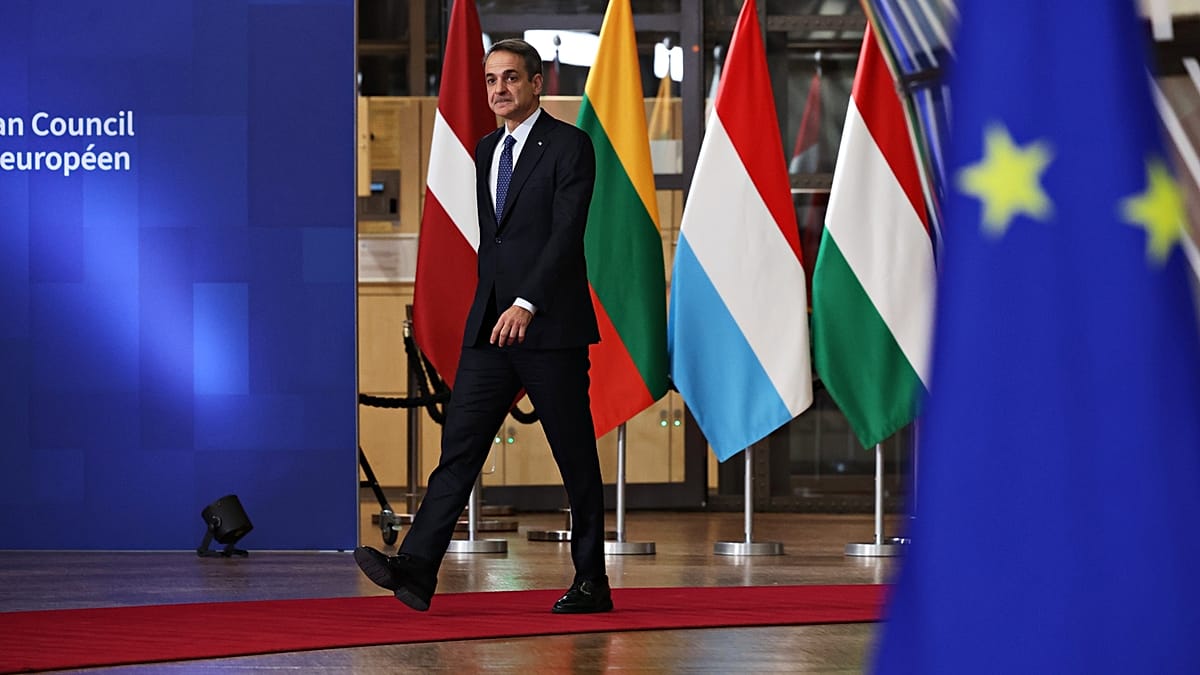
Greece is holding up the latest round of European Union sanctions against Russia over a ban on liquefied natural gas (LNG) that is scheduled to come into full force in 2027.
ADVERTISEMENT

ADVERTISEMENT
The ban, as agreed last year, will prohibit the “purchase, import or transfer, directly or indirectly,” of LNG that “originates in Russia or is exported from Russia”. But Greece, which hosts the world’s largest merchant fleet, wants the legal text revised to allow the transport of Russian LNG to continue past the cut-off date.
The main beneficiary would be Dynagas, a company specialised in shipping in sub-zero temperatures and owned by Greek billionaire George Prokopiou. Dynagas and its subsidiary have chartered 11 vessels, including seven Arctic-resistant icebreakers, to Russia’s largest gas facility, Yamal LNG.
The Greek government and Dynagas argue that the ban on Russian LNG will damage Europe’s maritime services industry, destroy employment opportunities, empower foreign competitors and ultimately fail to weaken Moscow’s war chest.
As the dispute drags on, Euronews examines three possible ways to break the deadlock.
Option 1: Push back until veto drops
The wider EU’s frustration with Greece is palpable. The other member states are aghast at the sudden attempt to revisit a decision that was unanimously endorsed in October and is unrelated to the package on the table.
Diplomats fear that reopening the legal text risks setting a dangerous precedent that would invite a cascade of similar requests, weakening the sanctions from within.
The European Commission, which last year hailed the LNG ban as a major step in the pressure campaign, is also standing firm.
“The ban is in place and remains in place,” a Commission spokesperson said on Monday.
Their preferred course of action is to push back, as they have so far done, until Athens relents and drops its veto. It would not be the first time that a member state, feeling increasingly isolated, concludes that its lone battle is not worth fighting.
In a bid to pave the way for an off-ramp, the Commission is preparing to circulate an economic analysis to counter the Greek arguments and show that banning LNG transport would, in fact, have a detrimental effect on Russia’s war economy.
Option 2: Delay the ban (briefly)
If Greece nonetheless fights on, member states will be compelled to offer a compromise, as they have done in the past when obstacles proved insurmountable.
As of now, the ban on imports and transport of Russian LNG is set to take full effect on 1 January 2027. As a middle ground, countries could agree to briefly delay the transport ban’s entry into force while leaving the import ban untouched.
Imports are the central component as they provide Moscow with a direct revenue stream: EU purchases from Yamal reached almost €6 billion in the first half of this year. The 136 cargoes and 9.97 million metric tons were a record for the period.
A delay would give Dynagas more time to prepare for the phase-out and allow Greece to save face, lift the veto and approve the new sanctions.
In practice, though, this solution would kick the can down the road, and Brussels might soon find itself facing the same conundrum.
“Many sympathy points are currently not collected by Greece,” a senior diplomat said.
Option 3: Grant an exemption
The most controversial step would be to simply amend the legal text and remove the wording that forbids the transport of Russian LNG.
This is Athens’ preferred option: a tailor-made exemption that would indefinitely permit shipping to non-EU clients. Asia would be the likeliest destination.
According to its website, Dyangas provides LNG carriers that can sail through the Northern Sea Route, which runs across the Arctic and crosses the Bering Strait to reach Japan and mainland China. It is significantly shorter than the safer route that connects the Mediterranean Sea, the Suez Canal and the Indian Ocean.
But Brussels has a thorny track record with derogations.
In 2022, Hungary and Slovakia secured an open-ended clause to buy Russian crude via the Druzhba pipeline, piercing a glaring hole in an otherwise stringent ban. The provision is still applicable today and was at the centre of a contentious veto earlier this year.
Another example of derogation is the price cap on Russian seaborne oil, which allows EU countries, such as Greece, to service tankers that comply with it. A price cap on Russian LNG is considered impractical due to the EU’s lack of global leverage.
This explains why member states and the Commission are so reluctant to change the text and undermine yet another energy sanction – and Ukraine too is worried about the message such a concession would send.
“Sometimes, in the pursuit of profit, people forget the price the Ukrainian people pay every day,” Vladyslav Vlasiuk, the Ukrainian president’s commissioner for sanctions policy, said on Monday.
“A reminder as discussions on the EU’s 21st sanctions package continue.”
