


Published on •Updated
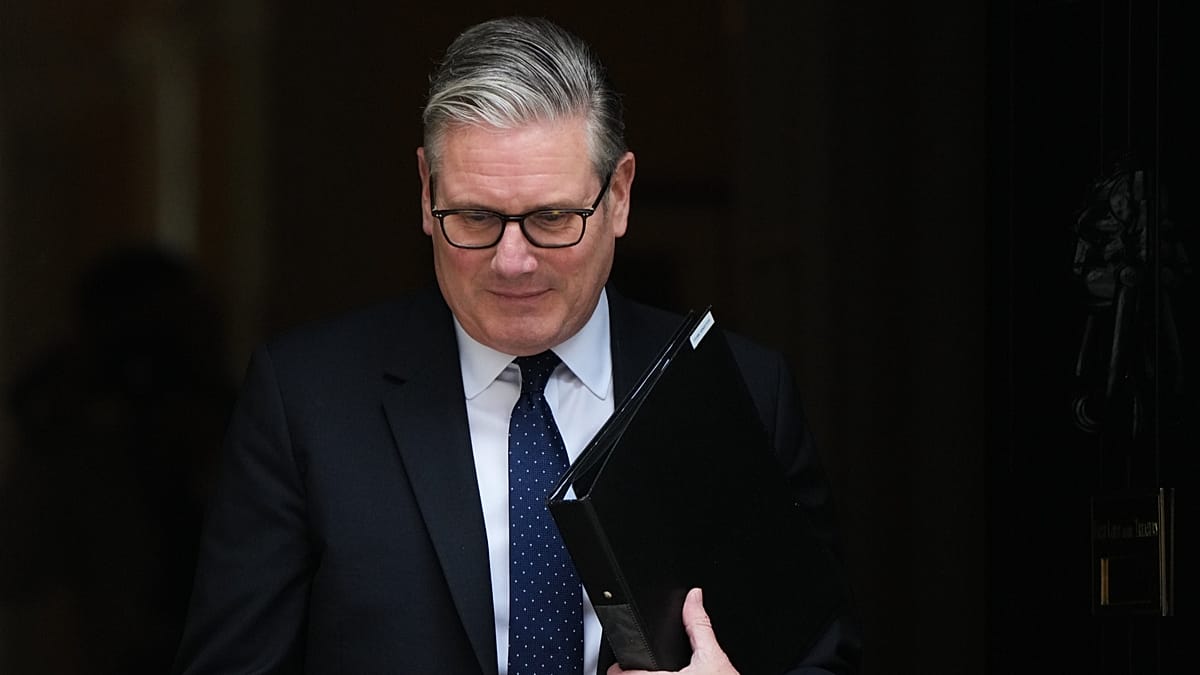
British Prime Minister Keir Starmer has announced he will step down as leader of the Labour Party but will remain as caretaker prime minister until a new candidate is elected.
ADVERTISEMENT

ADVERTISEMENT
Following mounting pressure within the party for a change in leadership, Starmer has begun the process of mapping out a timeline to hand over power.
His departure comes after the former Greater Manchester mayor Andy Burnham, a favourite to replace Starmer, won a local election to gain a seat in the House of Commons.
“Every decision I have taken has been about putting the country I love first. That is why I will resign as leader of the Labour Party,” Starmer said as he choked up in an emotional speech outside 10 Downing Street.
Starmer said the process of picking a new Labour Party leader would be launched in July and he would remain as prime minister until his successor is chosen, to be in place in September.
Burnham has called for an “orderly and responsible” transition, posting on social media: “I will put myself forward as part of this process.”
Reform UK leader Nigel Farage has demanded a general election stating “If Labour thinks it can shove another professional politician into No 10, it has another thing coming”.
The former MEP said Reform UK “demands an election, and we are ready to deliver radical change”.
President of the EU Commission Ursula von der Leyen praised Starmer for bolstering “European” security.
“It can take many leaders years to grow into the statesman you became in just two years. European and Ukrainian security is stronger because of you. Thank you, dear Keir,” von der Leyen posted online.
The new prime minister will be the seventh leader of the country in the last 10 years, following David Cameron, Theresa May, Boris Johnson, Liz Truss, Rishi Sunak and Starmer.
Under Labour’s rules, the leader of the party must be a member of parliament and Burnham will take up his position on Monday after winning a by-election in Makerfield.
Until this week, the beleaguered Starmer had insisted he would fight any leadership challenge. His defiance was surrounded by growing concerns sparked by a bruising round of local elections that saw the Labour Party suffer big losses to Farage’s Reform UK.
Troubled tenure
Starmer’s time in office was littered with controversy, from failing to declare gifts in the first few months of his stewardship to appointing Peter Mandelson as ambassador to the US despite common knowledge of his close association with the convicted paedophile Jeffrey Epstein.
The decision to sack Mandelson was one of a number of policy U-turns that drew criticism from both sides of British politics, including backing down on plans for welfare reform, introducing digital IDs and scrapping winter fuel payments.
The actions of some of his colleagues, including Deputy Prime Minister Angela Rayner, who resigned for not initially paying duty on a new flat, were a distraction from the achievements of his administration, such as improving relations with the EU.
Starmer has been undermined by the recent abrupt departures of his health and defence secretaries, with major figures within the Labour Party lining up to challenge his leadership.
The former health secretary Wes Streeting claimed in May that he had secured the required support of 81 Labour lawmakers to trigger a leadership contest, although Burnham is tipped by most to succeed Starmer.
Additional sources • AFP, AP