
NEWYou can now listen to Fox News articles!
West Virginia leaders are escalating the debate over data centers, with Gov. Patrick Morrisey unveiling a seven-point plan developed with lawmakers to reduce and eventually eliminate the state income tax while addressing concerns about natural resources and infrastructure.
The plan comes as data centers are becoming a political flashpoint nationwide, with states looking to cash in on billions of dollars in investment and new jobs while communities raise concerns about utility costs, water use and local control. The massive facilities needed to power the artificial intelligence boom are also driving electricity demand higher, putting new pressure on power grids across the country.
Under the plan, West Virginia would dedicate 50% of revenue generated by approved hyperscale data center projects to reducing and eventually eliminating the state personal income tax, while directing some remaining revenue to counties and infrastructure projects.
“Today, as the world stands on the cusp of a new digital and economic frontier, West Virginia is stepping forward once again to lead, not by repeating the mistakes of other states, but by implementing a proactive, 20-year development strategy on our terms,” Morrisey said in a statement obtained by Fox News Digital.
‘BACKYARD BRAWL’ IGNITES AS WEST VIRGINIA’S MORRISEY MOVES TO POACH BLUE STATE RIVAL SPANBERGER’S JOBS
The second listed “principle” in Morrisey’s plan says all West Virginians should benefit from data center projects approved through Charleston’s “High Impact Data Center Designation (HIDC)” process and the revenue they generate. The process was established under a separate 2025 state law.
Morrisey’s plan includes “direct tax relief for citizens,” with none of the HIDC revenue entering the state general fund.
AN OVERLOOKED RED STATE QUIETLY BUILT ONE OF AMERICA’S MOST COMPETITIVE TAX SYSTEMS
“By law, 50 percent of project revenue is dedicated directly to reducing and ultimately eliminating the State Personal Income Tax,” the plan reads.
Counties hosting data centers would receive 30% of the revenue for schools and local government, while 10% would be distributed to all 55 counties and another 10% would fund infrastructure upgrades, including public water systems. Water infrastructure has become a flashpoint across parts of southern West Virginia that have struggled since the coal industry’s decline.
ONE MONTHLY BILL AMERICANS CAN’T AVOID IS QUIETLY SURGING THANKS TO EMERGING INDUSTRY: DATA

“This shared framework gives us the exact blueprint we need to attract billions in private investment, create thousands of high-paying construction and technology jobs, lower taxes for our citizens, and revitalize economically distressed regions, all while preserving the wild and wonderful state we call home,” Morrisey said.
But the promise of tax relief comes as some West Virginians are raising concerns about who could bear the costs of the state’s data center expansion.
The bipartisan bill underpinning the governor’s plan also sought to protect utility customers from added costs — a major concern across the Eastern Panhandle, which borders the Washington, D.C. metro area.
MARXIST ORGANIZER LEADS CAMPAIGN AGAINST VIRGINIA AI DATA CENTER AS FOREIGN INFLUENCE CONCERNS MOUNT
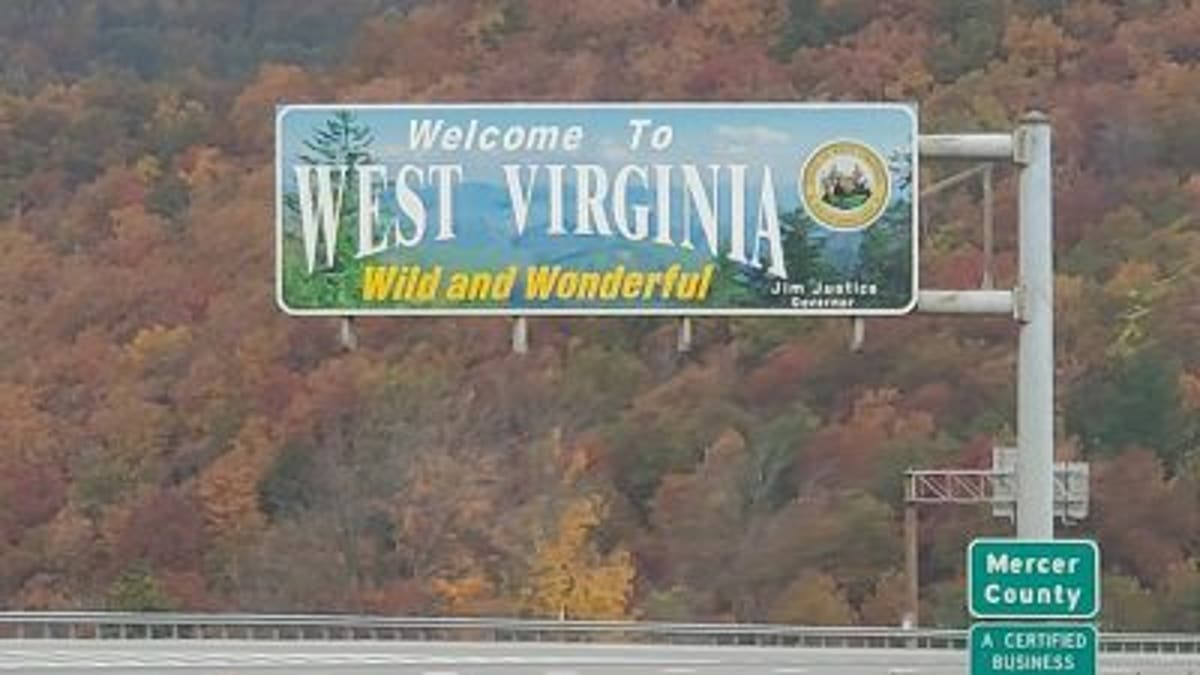
“No Data Centers” signs are becoming common along roads in Jefferson and Berkeley counties and neighboring Clarke County, Virginia, as residents point to nearby Loudoun County, Virginia, where sprawling data center development has increasingly pushed up against residential subdivisions and commercial centers.
“We are a cautionary tale for the rest of the country,” Rep. Suhas Subramanyam, D-Va., of Ashburn said in recent remarks critical of the data center explosion. “[I]f my district were a country, it would have more data centers than almost every other country in the world.”
TEA PARTY FOUNDER LAUNCHES NATIONWIDE ‘DATA CENTER REVOLT’ AGAINST AI DATA CENTER EXPANSION
Back in West Virginia, some state lawmakers are pushing for additional safeguards as data center development accelerates.
West Virginia House Minority Leader Sean Hornbuckle, D-Huntington, was listed as a sponsor of the 2025 bill that helped set the plan in motion but recently said the law should be amended to allow some local control over data center development.
FOX NEWS POLL: COOL YOUR SERVERS! VOTERS REJECT DATA CENTERS
“We are not going to allow a hostile takeover in our communities. It’s not going to happen on our watch,” Hornbuckle said in June, according to the Steubenville Herald-Star.
“We all know what House Bill 2014 did, and it’s setting a very dangerous precedent in the state of West Virginia, [where] we all know we love our property rights,” he added.
But Morrisey emphasized in comments to Fox News Digital that “all West Virginians must directly benefit from data center revenue.”
“By statute, 50% of the proceeds … will be dedicated to directly reducing and ultimately eliminating the state income tax.”
“[It’s] very powerful [and] it’s going to benefit many, many West Virginians.”
West Virginia income taxes have already been falling. Sen. Jim Justice, R-W.V., signed a record 21% cut while serving as governor, and Morrisey followed with another 5% reduction this year. The top marginal rate stands at 4.58%.
A spokesperson for West Virginia House Speaker Roger Hanshaw said the plan came from the governor’s office but echoes what the legislature enacted in the 2025 law.
SIGN UP TO GET THE POLITICS NEWSLETTER
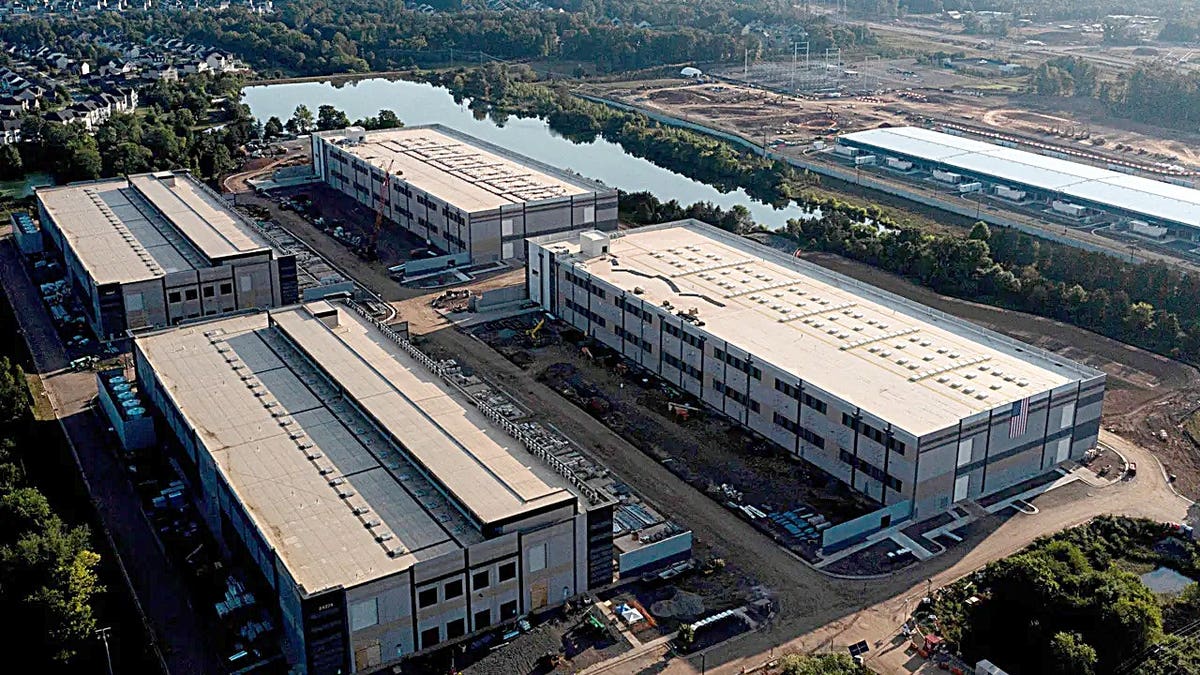
Hanshaw has supported data center development in West Virginia, previously telling the Warren Tribune-Chronicle that Charleston is “not only working with industrial partners as friends and allies to grow and diversify an economy, but also to regulate appropriately industries that are important to the communities in which they’re situated to the people of West Virginia and to the residents that we all collectively represent.”
CLICK HERE TO DOWNLOAD THE FOX NEWS APP
Morrisey’s plan also focuses on power grid reliability, requiring data center developers to work directly with PJM and other interstate grid operators. The plan also casts data centers in West Virginia as strategic infrastructure with national security implications in the nation’s competition with China.
