

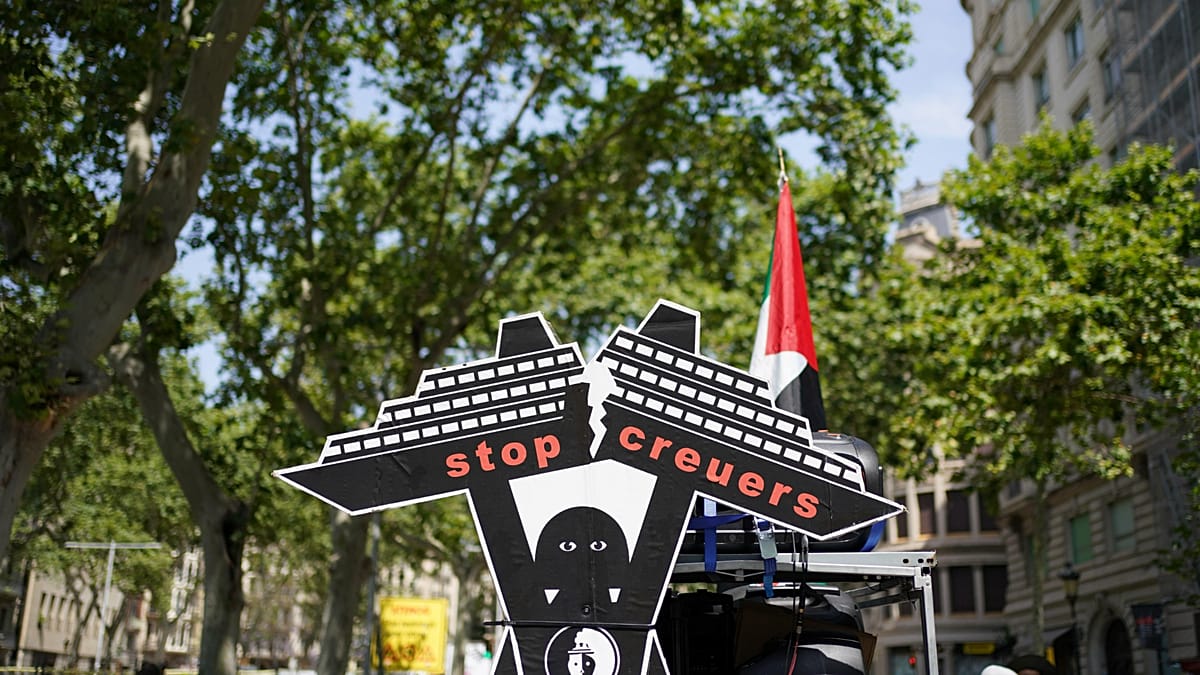
Politicians in Barcelona are in favour of raising the tourist tax for cruise ship passengers in a bid to curb overtourism.
ADVERTISEMENT

ADVERTISEMENT
The proposal has been agreed upon by parties in the Barcelona City Council, but the Parliament of Catalonia still needs to give its approval before the change can become law.
If signed off, it would see the fee nearly tripled to €30 a day. Currently, cruise passengers pay €11 if spending less than 12 hours in the city, made up of a €5 municipal surcharge and a €6 regional levy.
Hiked passenger fee should deter short-stay cruise tourism
The hiked fee would only apply to cruises that make port calls and spend less than 12 hours docked, as critics consider these to bring little benefit to the local economy compared with the disruption they cause.
Itineraries that begin or end in Barcelona would not have to pay the increased fee, as these sailings are considered to bring more of an economic boost for the city, such as through hotel stays and transport services.
There is still debate over what increasing the tax aims to achieve. Marc Serra, from the left-wing BComú party, emphasised that raising the fee should not just be a move to generate more revenue.
He urged that it should function as a deterrent for this type of tourism and send a clear message about the role Barcelona wants cruise arrivals to play, according to local news outlet APD.
Other parties are pushing for a hard cap on the number of cruise passengers that arrive in the city each year, but the council has said this is a more complex measure to impose.
Cruise passengers make up 7.5% of the city’s daily visitors during peak season, and typically spend an average of 5.7 hours in the city.
‘Sudden tax hikes rarely produce the intended outcomes’
The World Travel & Tourism Council (WTTC) has expressed concern over the proposal, warning that the measure could weaken the city’s competitiveness and have unintended consequences for the local economy.
“While we understand the complex challenges of managing a world-class destination, the proposal […] could place Barcelona at a competitive disadvantage compared to other Mediterranean ports,” Gloria Guevara, President and CEO of WTTC, said in a statement.
“Evidence WTTC has gathered from other destinations shows that sudden tax hikes rarely produce the intended outcomes. Additional costs to visitors to Barcelona would likely reduce the overall economic contribution generated by the cruise industry as tourists adjust their spending habits ashore.”
She added that Barcelona is one of the world’s leading cruise homeports, welcoming around 4.0 million passengers each year and generating an average local spending of around €255 per homeport passenger, among the highest globally.
“The broader impact of such measures could be particularly significant, not only in terms of visitor demand but also in the fiscal contribution that supports local and regional economies. The cruise industry alone contributed €11.9 million in taxes to the Barcelona City Council in 2024,” she said.