
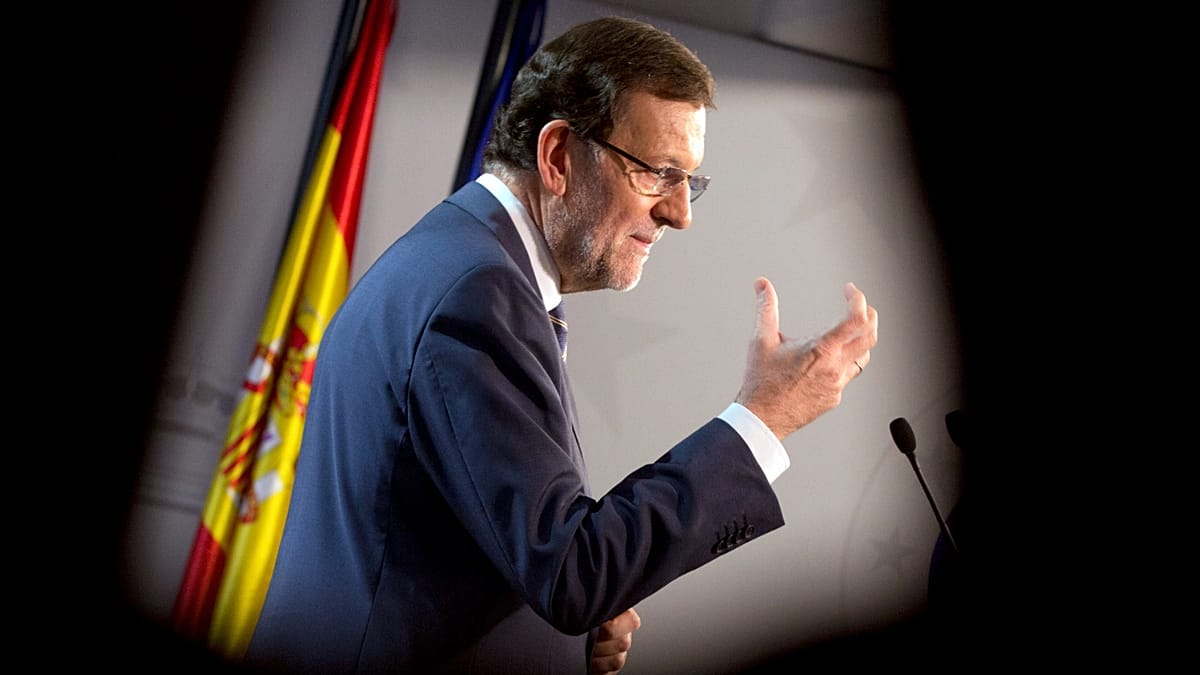
A four-word phrase has sparked an intense political and media row in Spain and France just days before the World Cup semi-final between the two national sides. The phrase “that is, without the French”, used by former prime minister Mariano Rajoy in a column published in El Debate, has been interpreted by politicians in both countries as a remark of a racist nature.
ADVERTISEMENT

ADVERTISEMENT
In his op-ed (source in Spanish), entitled “Hoy llegó el desquite” (“Today payback arrived”), the former leader of the conservative People’s Party (PP) examined Belgium’s elimination at the hands of La Roja and Spain’s upcoming clash with France. In the piece he described the French national team as a rival “of the very highest level” and a “formidable opponent”, before introducing the contentious aside about a team “without Frenchmen”, apparently alluding to the fact that many of its players have roots in former French colonies and that some of them, such as Michael Olise and Marcus Thuram, were not born in the country.
The first reaction came from the Spanish government. Socialist prime minister Pedro Sánchez posted a message on the social network X in which he wrote that “Spain belongs to those who love it and work for it, not to those who disgrace it with xenophobic statements”, ending with: “may the best team win and may racism be defeated”.
On Monday, People’s Party spokesperson Borja Sémper tried to play down the controversy, insisting the phrase was “sarcastic” and saying that, unlike the Socialist leader, his party wants Spain to win on Tuesday “even if they play worse” than their opponents. “We, unlike Mr Sánchez, want Spain to win in any way, shape or form“, Sémper added.
A comment “without ill intent” that sparks an outcry
At first, people close to the former prime minister told daily newspaper El Mundo that there was “no ill intent” in his words and argued that the controversy had been blown out of proportion. According to the same sources, Rajoy considers it to be a “minor issue” and does not wish to be drawn into a political tussle.
Later, the former leader himself, who headed the Spanish government between 2011 and 2018, took a firm line, telling the same outlet in a statement that “I am not going to stoop to the level of certain members of the Spanish government“.
From the left, Podemos secretary for organisation Pablo Fernández branded the former PP leader’s words “xenophobic” and “execrable”, arguing that they fuel racist rhetoric. “We condemn and regret these xenophobic and racist statements by Mr Mariano Rajoy, who (…) will go down in history as a vile and thoroughgoing racist on the basis of comments like this”.
France’s minister delegate for equality between women and men and the fight against discrimination, Aurore Bergé, reacted on Sunday via social media, saying that “these repeated racist excesses are intolerable. It is time they stopped and for sport to become sport again: a place where people are judged on their talent and on no other grounds”.
That same day, national secretary of the French Communist Party Fabien Roussel demanded in a post on X that the former leader be “condemned”, comparing his opinion piece with the racist comments recently voiced in Paraguay by senator Celeste Amarilla against Les Bleus captain Kylian Mbappé.
For its part, the French Embassy in Spain responded to the controversy by stressing that every member of the squad holds French nationality.
In a message posted on X, it specified that 23 of the 26 players called up were born in France and only three abroad: Brice Samba, born in the Democratic Republic of Congo, and the aforementioned Olise and Thuram, born in the United Kingdom and Italy respectively. All of them, however, are French citizens.
Diversity, one of La Roja’s hallmarks
As it happens, Spain themselves field Aymeric Laporte, who was born in the French city of Agen. Another regular in La Roja squads in recent years, although he was ultimately left out of Luis de la Fuente‘s list for the 2026 World Cup, Robin Le Normand, was also born on French soil, in his case in the town of Pabu.
Two of the Spanish national team’s stars, Lamine Yamal and Nico Williams, also have African roots. Yamal was born in Barcelona to a Moroccan father and an Equatoguinean mother. Williams was born in Pamplona to parents from Ghana, the country for which his brother Iñaki Williams plays.
In fact, in this summer’s tournament, as many as 11 players and three coaches born in Spain, have represented another national team.
